


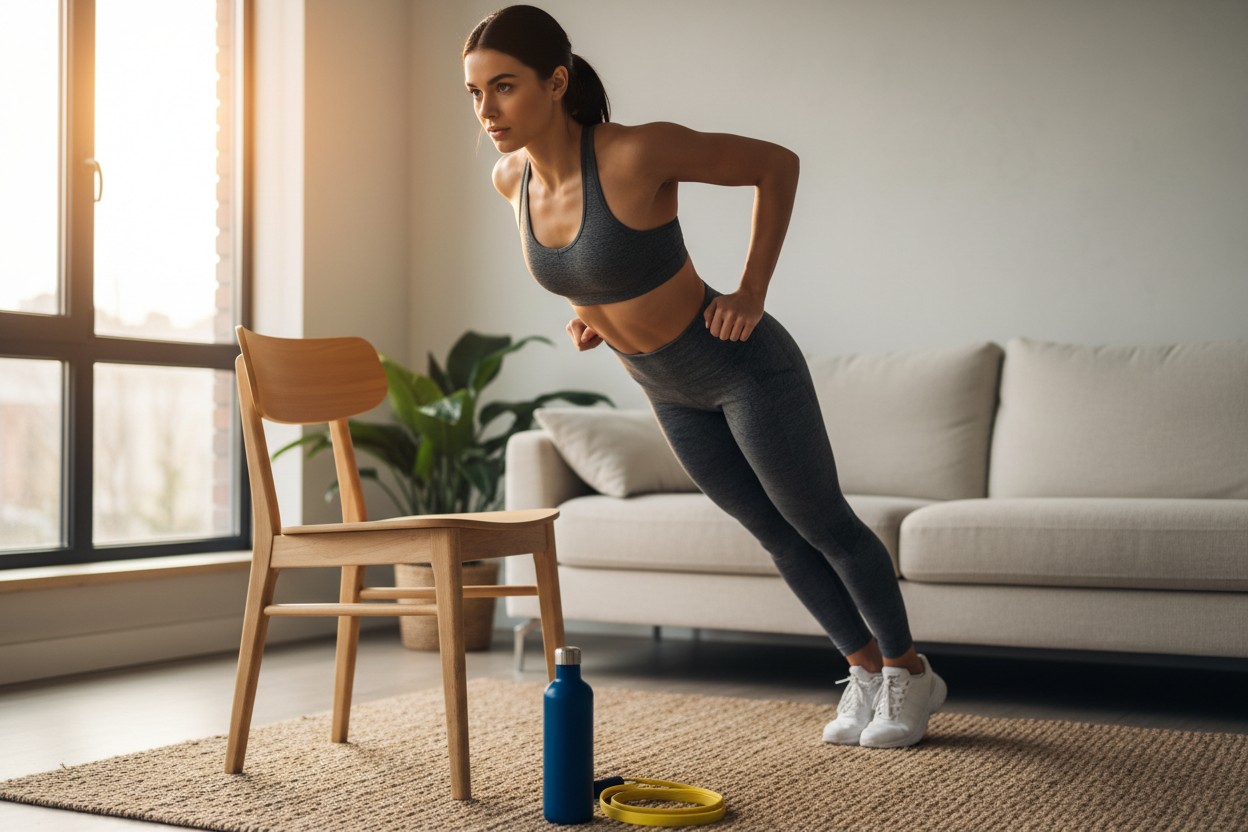
Key Exercises Described
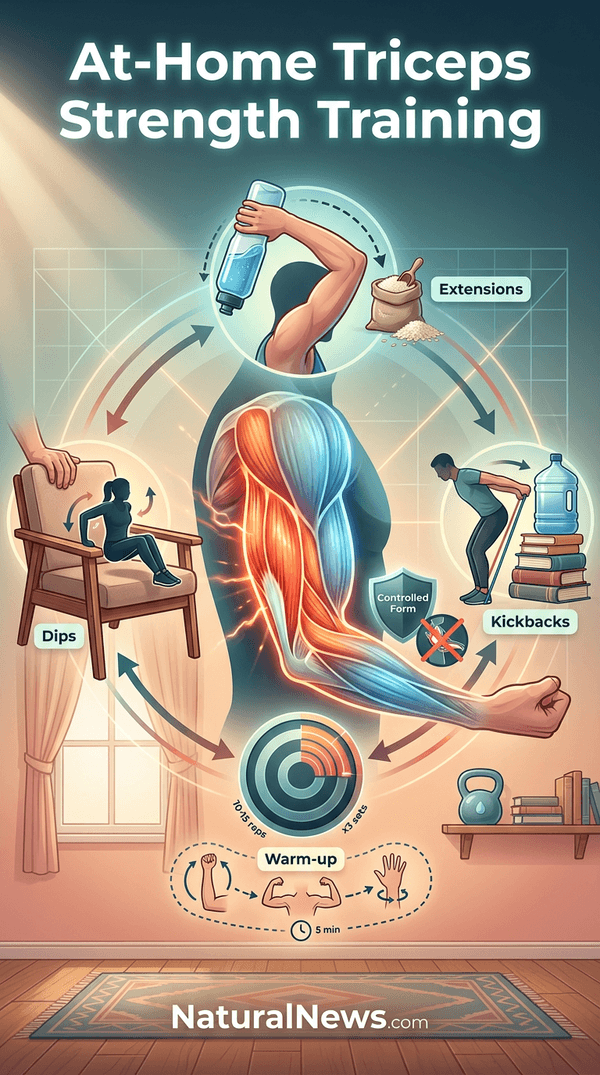
The Health.com report outlines several specific exercises, including triceps dips using a sturdy chair, overhead extensions using household items such as a water bottle or a bag of rice, and kickbacks performed with resistance bands or light hand weights, according to the guide. Each movement targets the triceps brachii, which, as explained by Dr. Michael F. Roizen in the book "You On A Diet," works in opposition to the biceps: while the biceps pulls the forearm toward the shoulder, the triceps pushes it away [3]. The report notes that these exercises can be performed in three sets of 10 to 15 repetitions for muscle endurance. Similar bodyweight movements have been included in at-home workout routines published during periods when gyms were closed, such as the quarantine workout described by Mercola.com, which included exercises like pushups and lunges [2]. The report further mentions that increasing the number of repetitions or adding weight gradually can provide progressive overload for strength gains.
Safety and Form Guidance
The Health.com report advises maintaining proper alignment during each exercise to avoid strain on the shoulders and elbows, according to the guide. Controlled movements and gradual progression in intensity are emphasized as critical for injury prevention. The report quotes fitness trainers who recommend keeping the elbows close to the body during dips and kickbacks to ensure the triceps are correctly engaged. This focus on controlled form is consistent with general strength-training guidance found in sources like "The Complete Idiots Guide to Jogging and Running" by Bill Rodgers, which describes proper execution of upper-body exercises such as the shoulder press [4]. The report also notes that individuals should stop if they feel sharp pain and consult a medical professional if discomfort persists. Additionally, the guide suggests warming up with light arm circles and shoulder rolls before beginning the exercises.
Comparison with Gym Training
According to the Health.com report, bodyweight and resistance-band exercises for the triceps can produce strength and endurance results comparable to those achieved with free weights at a commercial gym. The report does not endorse any particular gym brand or equipment and instead focuses on the accessibility of home-based training. This perspective is echoed in the article by Petra Stone, which notes that compound exercises such as pushups and dips provide efficient workouts without requiring machines [1]. Research cited by the report indicates that consistent resistance training, regardless of the setting, improves muscular strength and bone density over time. The report emphasizes that the key factor is progressive overload, whether achieved through increasing repetitions, using heavier household objects, or reducing rest intervals, rather than the specific location of the workout.
Conclusion: Practical Application
The Health.com report recommends integrating triceps exercises into a broader full-body strength routine that includes compound movements for other muscle groups. According to the report, consistent home practice two to three times per week can improve muscular endurance and upper-arm definition. The benefits of such bodyweight exercises extend beyond aesthetics; a study cited by NaturalNews.com found that higher push-up capacity was associated with lower risk of cardiovascular disease among male firefighters [5]. The report concludes that with minimal equipment and proper form, individuals can effectively strengthen their triceps at home, supporting overall fitness goals without reliance on gym memberships or specialized apparatus.
References
- Petra Stone. "Compound Exercises Offer Efficient Workouts and Cardiovascular Benefits, Trainers Say". NaturalNews.com. May 12, 2026.
- Mercola.com. "Coronavirus Quarantine Workout to Do at Home". April 03, 2020.
- Michael F. Roizen. "You On A Diet".
- Bill Rodgers. "The Complete Idiots Guide to Jogging and Running".
- NaturalNews.com. "Push-Up Capacity Linked to Lower Cardiovascular Disease Risk, Study Finds". June 21, 2026.
Explainer Infographic










Please contact us for more information.


