


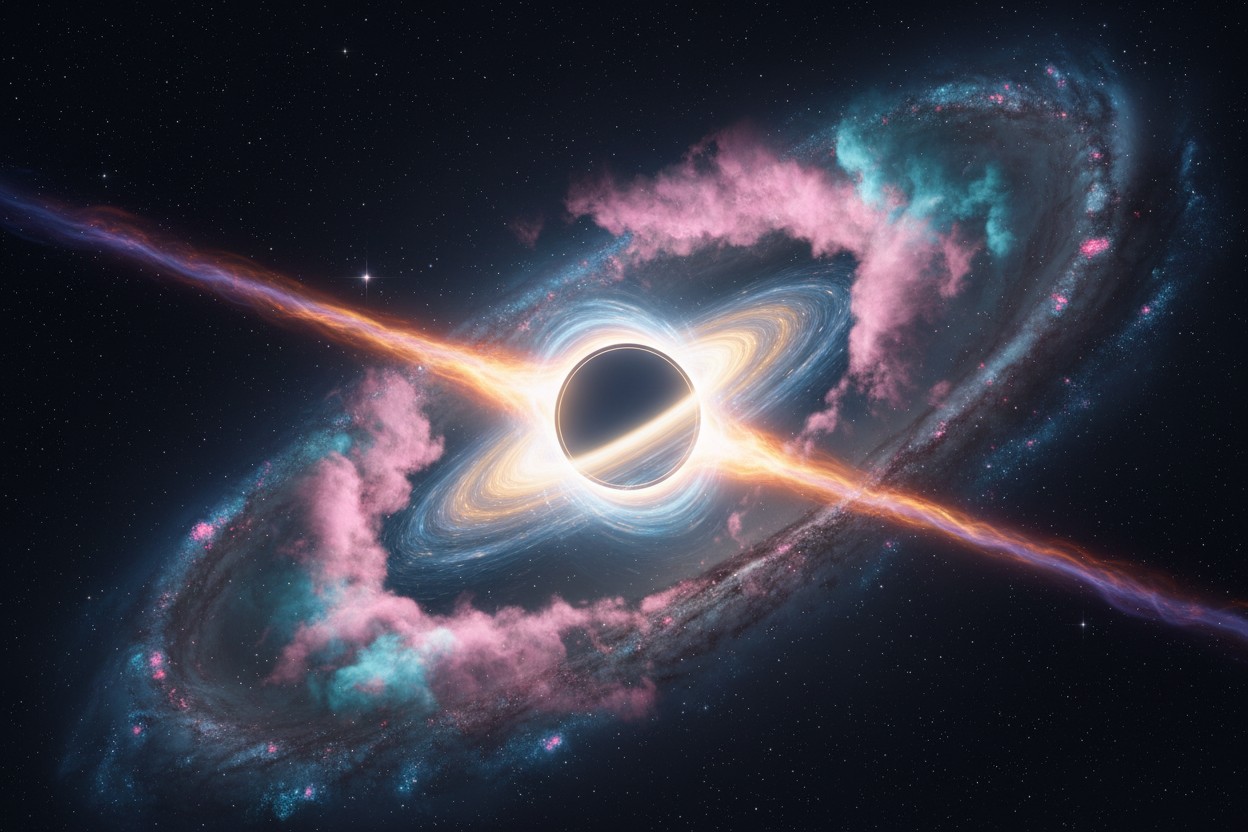
According to the research team, the data from XRISM provide the first direct timing link between X-ray flares from the black hole's accretion disk and the launch of powerful outflows. These outflows can sweep away the interstellar gas needed for star formation, potentially explaining why some of the largest galaxies in the universe contain far fewer stars than theoretical models predict.
The mystery of missing stars
Current galaxy formation models predict that the most massive galaxies should contain significantly more stellar mass than astronomers actually observe, according to the study. The shortfall suggests that some process has been suppressing star formation in these galaxies for billions of years.
One leading explanation, supported by the new XRISM data, is that supermassive black holes at the centers of these galaxies drive powerful winds that eject gas from the galaxy. As noted in the textbook "Foundations of Astronomy," astronomers have hypothesized that "the increasing power of outbursts from the growing central black hole in a forming galaxy would have been able to push away infalling gas and limit the material available to form the stars of the central bulge" [1]. Without gas, the raw material for star formation is removed, stalling the growth of the galaxy.
XRISM and NGC 4151
XRISM, a collaboration between the Japanese Aerospace Exploration Agency (JAXA), NASA, and the European Space Agency, launched in 2023 and began scientific operations in fall 2024. Its energy resolution is roughly 10 times better than its predecessor's, allowing astronomers to examine the environments around black holes in far greater detail, officials said.
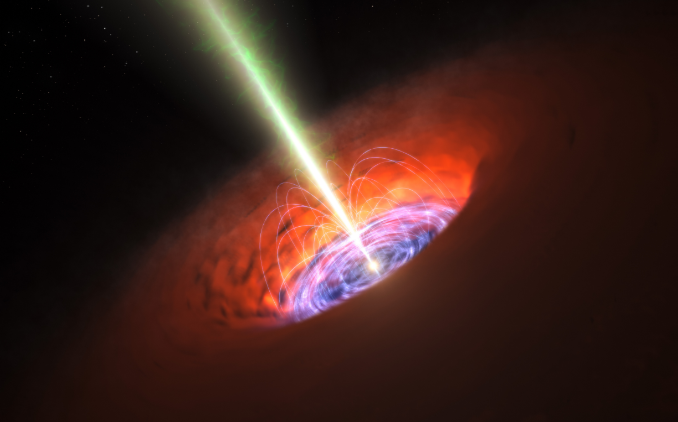
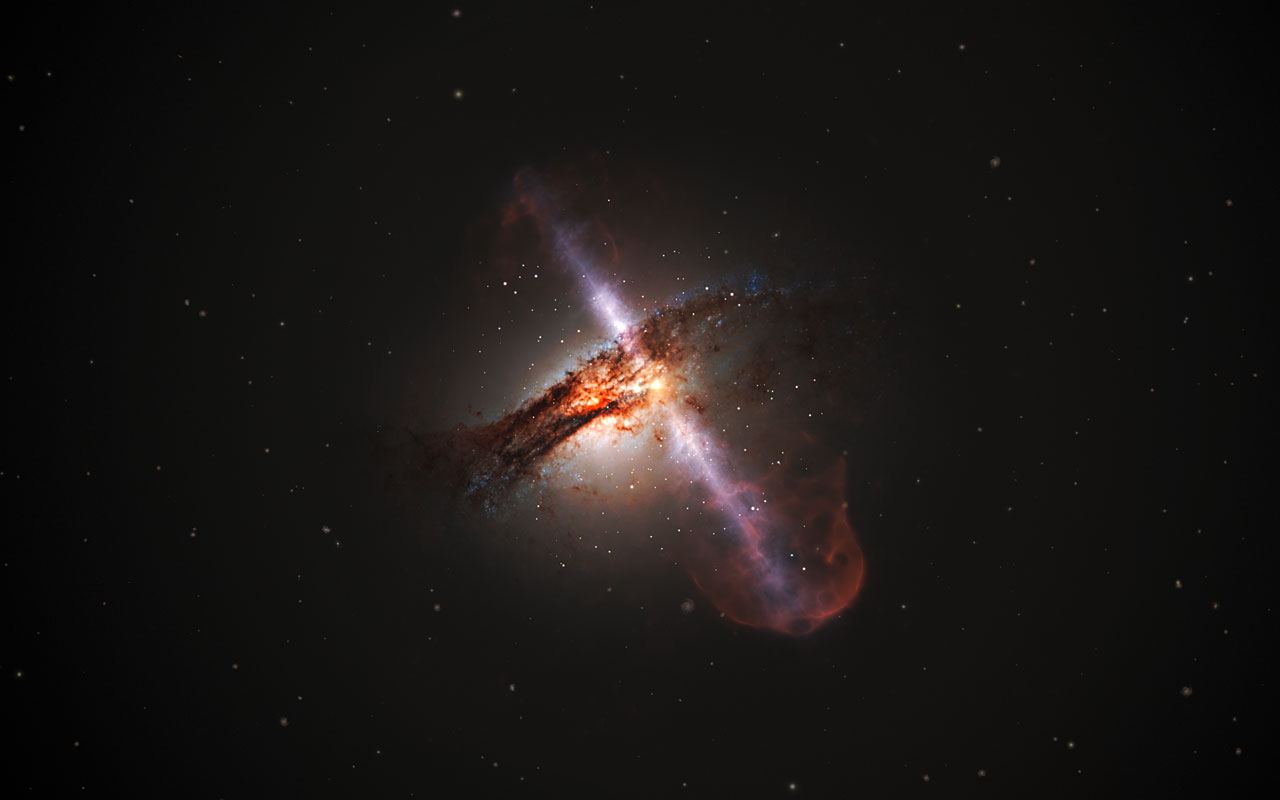
The team focused on NGC 4151, an active galaxy located approximately 50 million light-years from Earth. At its center is a supermassive black hole with an active galactic nucleus (AGN) that produces a luminous accretion disk. Similar AGN are known to produce powerful jets and outflows; as described in "Galileo's New Universe," "active galactic nuclei often send bright jets of matter streaming into space in opposite directions" [2]. NGC 4151 serves as an ideal laboratory for studying such outflows, according to researchers.
Timing of fastest outflows
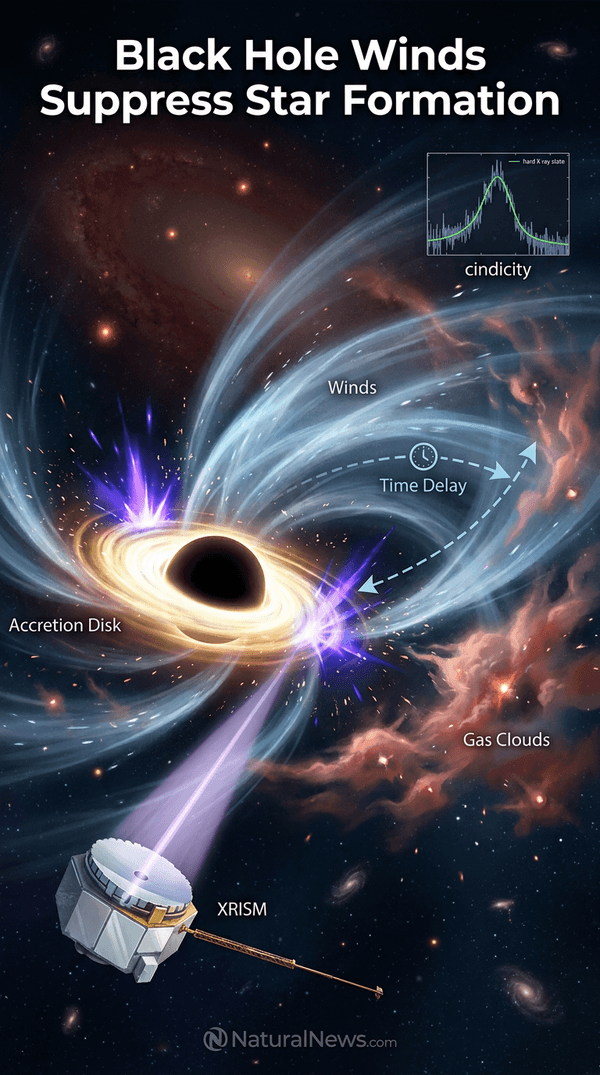
Xiang developed a new metric called the "color intensity index," or cindicity, to measure the hardness and brightness of X-rays coming from NGC 4151. By analyzing hundreds of days of XRISM data, she correlated changes in the X-ray signal with the appearance of fast outflows.
The analysis revealed that the strongest fast winds appeared when the X-rays were hard but relatively faint, rather than during the peak of an X-ray flare. The fastest outflows typically appeared about 10,000 seconds, or just under three hours, after the X-ray activity. "Previously, without XRISM, we could only see broad features of the outflows," Xiang said in a statement. "But you need to be able to resolve fine features to answer important questions." The finding provides a direct temporal connection between changes in the accretion disk and the launching of winds.
Implications for galaxy evolution
The method developed by Xiang could help astronomers identify similar outflows in other galaxies and refine models of AGN feedback. According to the researchers, understanding when and how these winds are launched is key to explaining why massive galaxies have fewer stars than expected.
Similar phenomena have been observed elsewhere. In December 2025, astronomers using the XMM-Newton telescope reported winds traveling at 20 percent of the speed of light from the galaxy NGC 3783, a never-before-seen phenomenon that "challenges existing theories about black hole behavior and offers new insights into how these cosmic giants shape their galaxies" [3]. Additionally, radio and X-ray observations have detected giant bubbles of gas ejected by supermassive black holes in other galaxies, described as "superbubbles" that act like particle accelerators [4].
Conclusion
The XRISM data provide strong evidence that black hole winds can strip gas from giant galaxies, stalling star formation and accounting for the shortfall in stellar mass observed by astronomers. The research was conducted by the University of Michigan in partnership with the NASA-JAXA mission. Further observations of other active galactic nuclei will be needed to confirm how widespread this process is, officials stated.
References
- Enhanced WebAssign by with Dana Backman of Horizons. "Foundations of Astronomy eBook Powered".
- Maran, Stephen P.; Marschall, Laurence A. "Galileo's New Universe".
- A never-before-seen phenomenon: Astronomers witness black hole unleashing cosmic storm. NaturalNews.com. December 17, 2025.
- Cosmic superbubbles discovered in nearby galaxy act like particle accelerators. NaturalNews.com. September 01, 2019.
Explainer Infographic







Please contact us for more information.


