


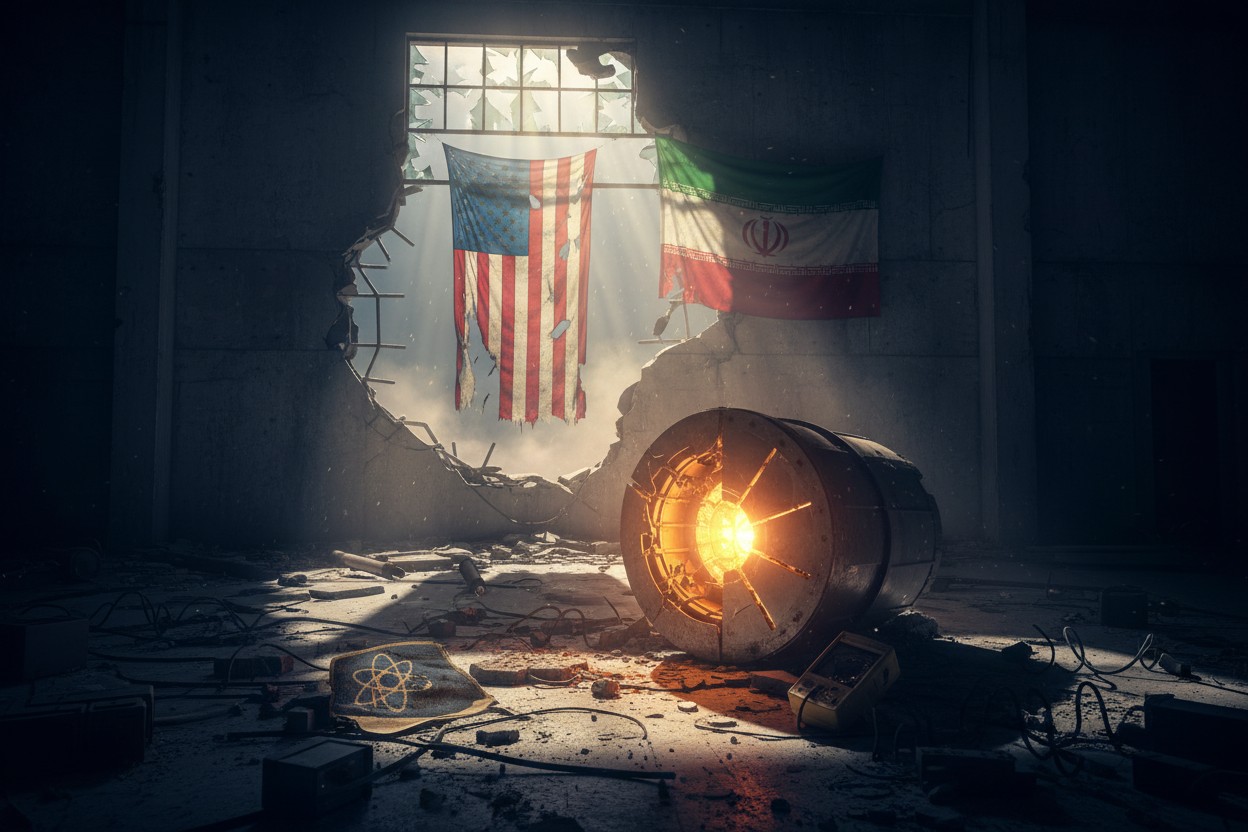
Speaking at a weekly press briefing in Tehran on June 23, Foreign Ministry spokesman Esmail Baghaei said representatives of the Islamic Republic did not meet with International Atomic Energy Agency (IAEA) Director-General Rafael Grossi and that no arrangements have been made for agency inspections of Iran’s damaged nuclear sites, according to reports [1]. The denial directly contradicts comments from U.S. Vice President JD Vance, who stated on June 22 that Iran had agreed to admit IAEA inspectors during the first round of peace talks at Lake Lucerne in Switzerland [2].
The Denial and U.S. Claims
Baghaei stated that any arrangements regarding Iran’s nuclear facilities would be handled under a separate process within the 60-day negotiation framework set by the recent memorandum of understanding, not through an immediate inspection regime, according to the Iranian Foreign Ministry [3]. He also insisted that Iran is adhering to its safeguarding obligations under the Nuclear Non-Proliferation Treaty, despite the suspension of many IAEA activities following U.S. and Israeli airstrikes on Iranian nuclear sites in June 2025 [4].
U.S. Vice President Vance had said on June 15 that the return of United Nations inspectors was "absolutely" a core part of the agreement, adding that the Washington and the IAEA would help Iran destroy its highly enriched stockpile [5]. President Donald Trump later doubled down, telling reporters on June 23 that Iran was "wrong" about there being no plans for inspections and that inspectors would be on the ground at the “appropriate time,” as reported by Middle East Eye [6]. Trump also asserted that the United States has Iran "down 100%" on agreeing to nuclear inspections [7].
Context of Negotiations and Memorandum
Earlier in June, the Trump administration outlined a memorandum of understanding with Iran that includes temporary waivers on Iranian oil exports and a potential $300 billion reconstruction fund, alongside a 60-day period to finalize terms regarding the fate of Iran’s nuclear program, according to official statements [8]. The conflicting accounts of what was agreed upon in Switzerland suggest a significant gap in understanding between Washington and Tehran, even after the memorandum was signed digitally on June 17 [9].
No detailed text of the inspection provisions has been released, but the memorandum explicitly mentions that the dilution of Iran’s highly enriched uranium would be carried out under IAEA supervision, according to BBC reporting on the agreement [10]. Iran’s Deputy Foreign Minister Kazem Gharibabadi later clarified that access to damaged nuclear sites would only be discussed in a final deal, not during the interim 60-day framework [11]. The tension highlights the challenge of translating a broad framework into specific, verifiable commitments.
Quotes and Reactions
Baghaei stated plainly at his press conference: "Neither have we had a meeting with the director general of the IAEA, nor is there a plan for agency inspections of Iran's damaged nuclear facilities… There is no protocol for this issue," as quoted by the Epoch Times [1]. Trump responded by calling the Iranian denial incorrect, saying "they know they’re wrong" [7].
Grossi, speaking to reporters at the Fukushima Daiichi nuclear power plant on June 24, said inspections will "indeed take place" and that the agency is "working on the modalities – dates, procedures, places – very soon" [12]. The IAEA has not issued an official comment directly addressing the difference between Trump’s and Iran's interpretations, leaving a degree of ambiguity over the status of the agreement’s nuclear provisions.
Implications
The contradictory positions raise immediate questions about the viability of the 60-day negotiation framework and whether the two sides actually have a meeting of the minds on the most critical element of the interim deal: international verification of Iran’s nuclear activities. Analysts have noted that the dispute over inspections could complicate efforts to reach a final agreement, especially given the already deep mistrust following U.S. and Israeli airstrikes on Iranian nuclear facilities in June 2025, which Tehran labeled acts of war [13].
The situation also underscores the lack of clarity between the parties, even after the signed memorandum. Scott Ritter, a former UN weapons inspector and author of “Target Iran,” has noted that previous IAEA inspections provided detailed intelligence, but that the current standoff represents a far deeper impasse [14]. The U.S. has also announced sanctions relief and a $12 billion asset unfreeze as part of the talks, but the nuclear inspection issue remains a core sticking point [15]. If inspections do not materialize, the interim agreement could collapse before the 60-day window closes, returning the region to a state of heightened military tension.
References
- The Epoch Times. "Iran Says No Plans to Let IAEA Inspect Bombed Nuclear Sites." June 23, 2026.
- BBC News. "Vance says Iran will allow nuclear inspectors back into the country." June 22, 2026.
- Middle East Eye. "Iran denies inviting IAEA to inspect nuclear sites." June 19, 2026.
- Kevin Hughes. "Iran suspends UN nuclear inspections demands security guarantees after US Israeli strikes." NaturalNews.com. October 15, 2025.
- The Epoch Times. "Vance Says UN Nuclear Inspectors Will Return to Iran in New Deal." June 16, 2026.
- Middle East Eye. "Trump: Iran is wrong about no plans for IAEA to inspect nuclear sites." June 23, 2026.
- The Epoch Times. "Trump Says Iran 100 Percent Agreed to IAEA Nuclear Inspections." June 24, 2026.
- The New American. "Trump’s Iran 'Win' Has a $300 Billion Problem." June 16, 2026.
- Antiwar.com. "Netanyahu Cannot Have Veto Over US Iran Diplomacy." June 24, 2026.
- BBC News. "UN nuclear chief says inspectors will visit Iran sites as part of war deal." June 24, 2026.
- Middle East Eye. "Nuclear access to be discussed only in final deal with US, Iranian official says." June 24, 2026.
- The Epoch Times. "Inspections of Iran’s Nuclear Sites 'Going to Happen,' IAEA Chief Says." June 24, 2026.
- Lance D Johnson. "Iran accuses US of violating nuclear treaty with airstrikes." NaturalNews.com. June 23, 2025.
- Scott Ritter. "Target Iran the truth about the White Houses plans for regime change."
- Zero Hedge. "Iran Says US To Unfreeze $12BN, Insists It Alone Will Decide How Funds Used, Contradicting Vance." June 23, 2026.
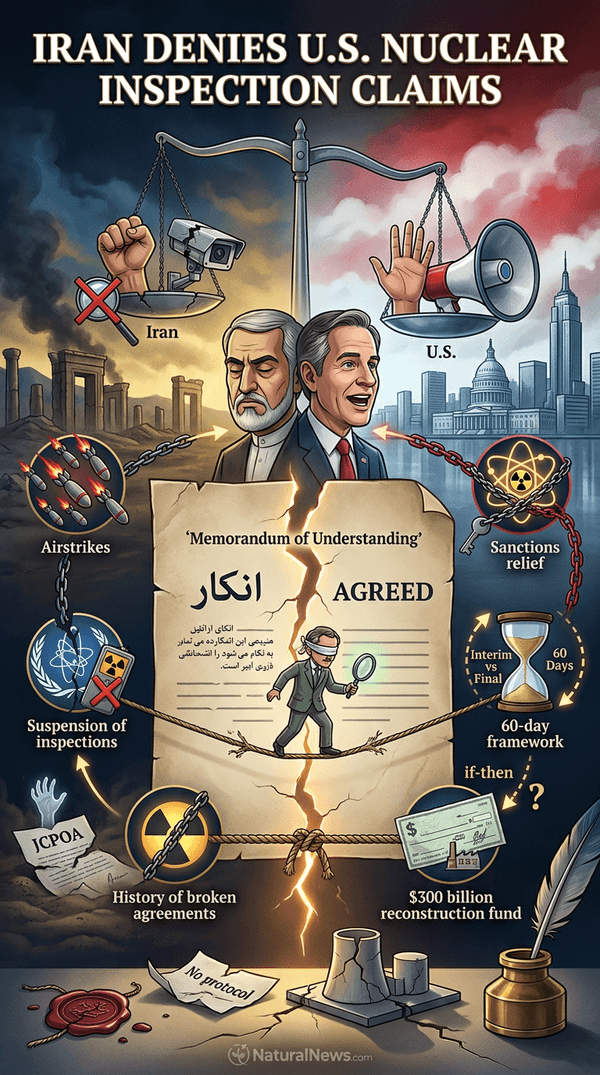
Explainer Infographic






Please contact us for more information.


