


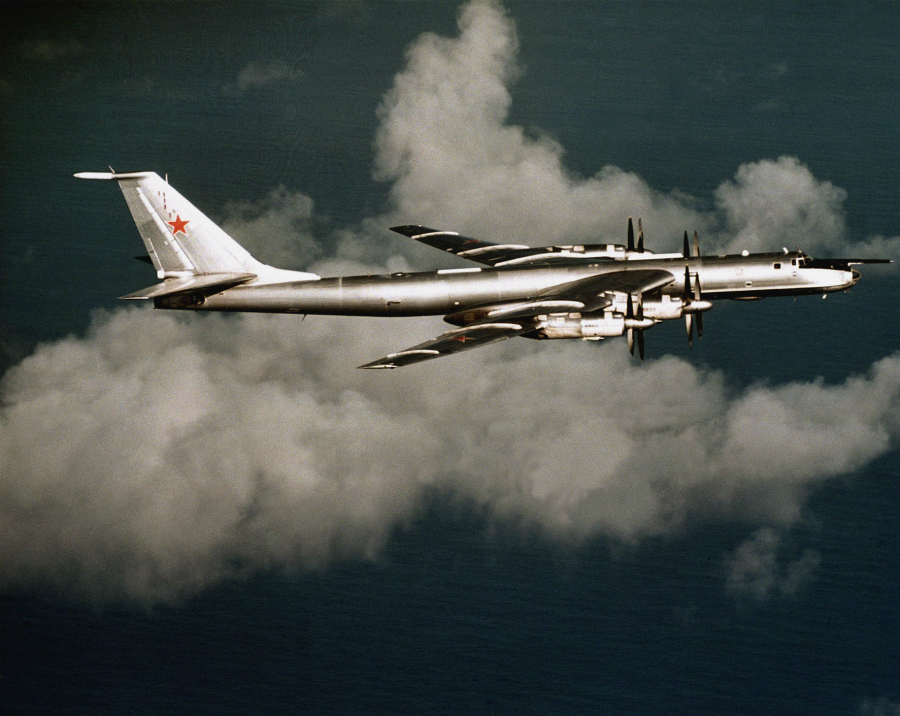
- Tu-160 Blackjack bombers completed a 16-hour patrol over the Barents and Norwegian Seas.
- Norwegian F-35 fighter jets intercepted the Russian bombers during the mission.
- The patrol included in-flight refueling drills to extend operational range.
- Ukraine's Operation Spiderweb drone attack damaged roughly one in ten Russian strategic bombers.
- Russia is hardening its air bases with protective shelters after the drone offensive.
A pair of Russian Tu-160 strategic bombers recently completed a 16-hour patrol over the Barents and Norwegian Seas, putting Moscow's long-range aviation capabilities on full display while drawing a response from NATO fighter jets. The flight, conducted over neutral waters, underscores the ongoing strategic competition between Russia and the alliance along Europe's northern flank.
The Tu-160 bombers, known by the NATO reporting name Blackjack, are the world's largest and heaviest supersonic combat aircraft. They serve as the primary crewed delivery platform for Russia's airborne nuclear deterrent. During the mission, the bombers were escorted by MiG-31 fighter jets from the Russian Aerospace Forces. At various stages of the flight, foreign aircraft shadowed the bombers.
Norwegian F-35 fighter jets based at Evenes Air Station intercepted the Russian aircraft during the patrol. Evenes maintains a standing quick-reaction alert posture, with two F-35A fighters able to get airborne within 15 minutes whenever Russian military aircraft approach NATO's northern airspace without prior notice. Footage released by the Russian Ministry of Defence showed an F-35 flying alongside the Tu-160s.
In-flight refueling and mission endurance
During the 16-hour sortie, the bomber crews practiced in-flight refueling, a technically demanding procedure that significantly extends operational range and allows the aircraft to project power far beyond Russia's borders. The Russian Defense Ministry described the flight as planned and routine, conducted in full compliance with international airspace regulations. These Arctic patrols are a recurring feature of Russia's long-range aviation program, which operates across the North Atlantic, Pacific, Baltic, and Black Seas as a demonstration of strategic reach.
The Barents and Norwegian Seas border NATO members Norway and Finland, making the region a frequent zone of contact between Russian bombers and allied intercept aircraft. Norway's F-35 force responded to quick-reaction alert calls 41 times during 2025, tracking 53 Russian military aircraft in the process.
Strategic context and bomber vulnerability
This mission came just days after NATO wrapped up Ramstein Flag 2026, the alliance's largest air exercise of the year, which drew roughly 150 aircraft to the Nordic region, with most operations concentrated over northern Norway, Sweden, and Finland. It also follows a similar patrol last month, when two Tu-95MS bombers out of Olenya Air Base traced NATO's northern flank through international airspace off Norway.
Russia's bomber fleet, however, faces mounting pressure. Satellite imagery analyzed by The War Zone showed large protective shelters going up at Engels Air Base, one of Russia's main strategic aviation hubs. The construction reflects how irreplaceable these aircraft have become. Operation Spiderweb, Ukraine's drone offensive against Russian air bases in June 2025, left roughly one in ten of Russia's strategic bombers damaged, according to a German military assessment. The losses fell primarily on Tu-95, Tu-22, and A-50 platforms, but the attack made clear that Russia's long-range aviation assets are vulnerable on the ground. Russia has since delivered two modernized Tu-160M variants to its Aerospace Forces, though the overall fleet remains small and difficult to reconstitute quickly.
American taxpayers have poured hundreds of billions into a Ukraine conflict that shows no sign of ending, while Russia responds by flying nuclear-capable bombers over NATO's doorstep and hardening its strategic bases against further attack. Whatever one thinks of the geopolitics, the military calculus is straightforward: Moscow is not backing down, and the cost of this standoff — financial, strategic, and human — keeps climbing.
Sources for this article include:











Please contact us for more information.


