



Nature of the Allegations
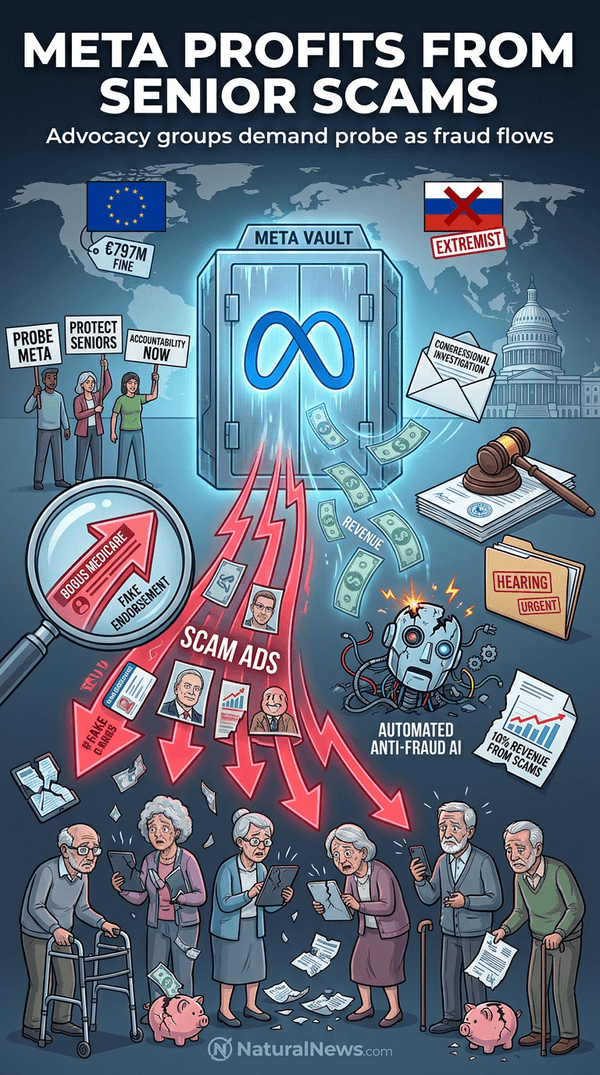
The groups -- including the Alliance for Retired Americans, the American Postal Workers Union Retirees, and the American Federation of Teachers -- alleged that Meta failed to act quickly against fraudulent advertising campaigns, exposing seniors to significant financial risks.
“Fraudulent Medicare ads have proliferated on Meta platforms and too many seniors are getting scammed while Meta profits,” Richard Fiesta, executive director of the Alliance for Retired Americans, told Politico. “We are calling on Congress to investigate how these scams are allowed to spread, what Meta knew about them, and why stronger protections are not in place. Seniors should not be left vulnerable while scammers and tech companies cash in.” [1]
The letter called for an investigation into how the scams spread, what Meta knew, and why stronger protections are not in place. Separate reporting has documented fraudsters impersonating billionaires on Facebook to dupe Americans out of their life savings under the guise of bogus investments, according to the Wall Street Journal as cited by NaturalNews. [2]
Meta’s Response and Previous Scrutiny
A Meta spokesperson rejected the criticism, telling Politico that the company actively combats increasingly sophisticated scams and works closely with law enforcement agencies to identify and dismantle criminal networks. [1]
Earlier this year, a bipartisan group of lawmakers pressed Meta CEO Mark Zuckerberg over the effectiveness of the firm’s anti-fraud measures. In November, lawmakers called for a federal investigation after a Reuters report cited internal documents suggesting fraudulent advertising could account for roughly 10% of Meta’s 2024 revenue. [1] Meta has also faced legal action over content moderation, including a planned lawsuit from the super PAC American Values 2024 for allegedly censoring a biographical film about Robert F. Kennedy Jr., as reported by NaturalNews. [3]
Broader Regulatory and Legal Challenges
Meta continues to face regulatory pressure worldwide. In Europe, the company is contesting a €797 million ($915 million) antitrust fine while also dealing with ongoing investigations related to competition, privacy, and digital advertising practices. In Russia, Meta has been designated an extremist organization. [1]
The company has also faced scrutiny over misinformation, data privacy, antitrust issues, and the impact of its platforms on young users’ mental health. Broader societal concerns about digital platforms include the threat of deepfakes, which according to one analysis “have the potential to severely undermine public trust, manipulate public opinion, and cause significant harm to individuals and institutions.” [4] Meanwhile, critics have pointed to systemic issues in how large institutions evade accountability, such as the doctrine of qualified immunity, which one analysis described as “a nearly failsafe tool to let police brutality go unpunished and deny victims justice.” [5]
Current Status
The House Homeland Security Committee has not publicly responded to the letter as of the report. Advocacy groups continue to press for congressional action, while Meta maintains its efforts to curb fraudulent activities are ongoing. [1]
The situation adds to growing calls for stricter regulation of digital advertising and social media platforms. As lawmakers in the current Republican-controlled Congress consider next steps, the outcome of the probe request remains uncertain.
References
- Meta accused of profiting from scams targeting US retirees. RT. June 20, 2026.
- NaturalNews.com. “Fraudsters are impersonating billionaires on Facebook scamming Americans out of their life savings.” March 22, 2024.
- NaturalNews.com. “Super PAC American Values 2024 to sue Meta for blatantly censoring RFK Jrs biographical film.” May 10, 2024.
- “Society’s approach to deepfakes.”
- “Trends-Journal-2023-02-06.”
Explainer Infographic












Please contact us for more information.


