


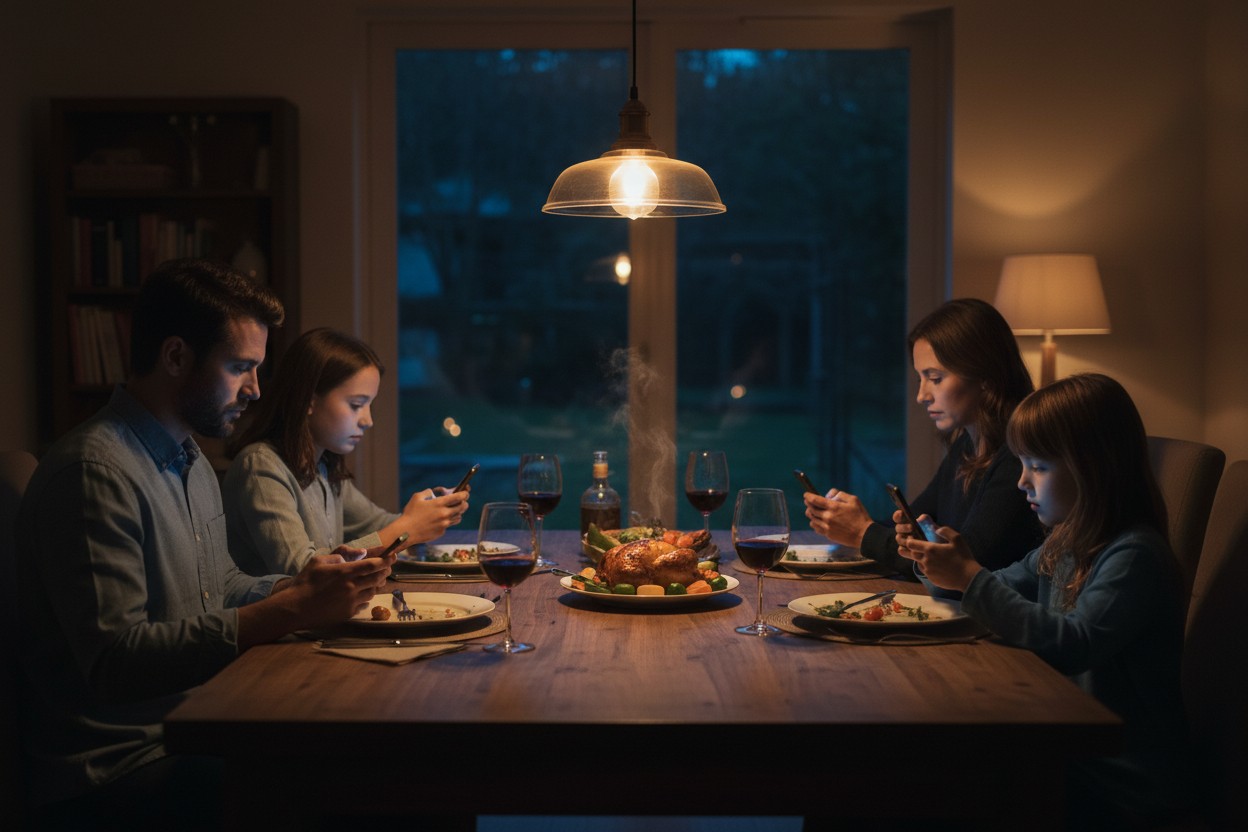
The findings confirm a pattern that has become familiar in recent years. An article from 2017 described families taking their seats in a restaurant and then, one by one, pulling out cellphones to examine until the food arrives, after which they check their phones repeatedly while eating [1]. Another report noted that restaurants in the U.S. and a major chain in the U.K. have begun restricting cellphone use to promote real-life social connections over social media while dining out [2].
Study Details and Methodology
The research, led by a team including co-author Cecilia Sada Garibay, was published in JAMA Pediatrics. Parents reported their own and their children’s media use during dinner, covering types of media including television, smartphones, and tablets. The study compared shared media use, such as watching a television show together, versus individual media use, where each person uses their own device independently.
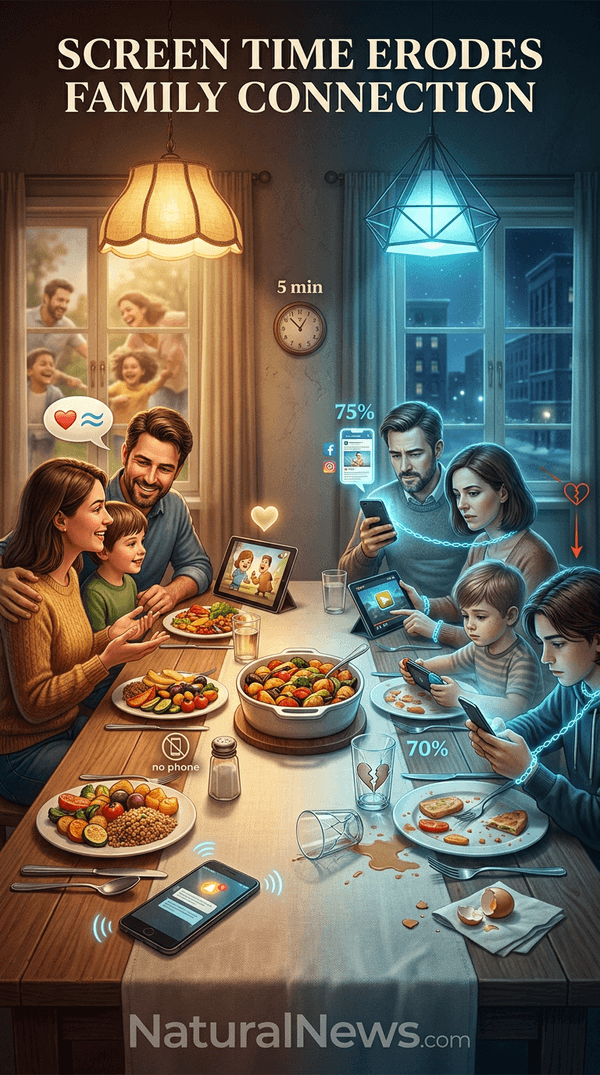
According to the study, more than 75 percent of parents used media during dinner, and 70 percent of children did the same. The shift toward individual screen use is a new concern. “What is changing is this fact that this shared experience, shared media use, is being substituted by individual media use,” Sada Garibay said. “Now each member in the table, they can be together, but each one is doing something absolutely different to the others.” The pervasiveness of screen time in family life has been documented in various contexts. In a book on screen time management, author Janis-Norton Noel notes that dealing with such a powerful mood-altering activity as electronic media is a common challenge for families, especially once children are past the age of four or five [3].
Expert Commentary on Family Meals and Screen Use
Cecilia Sada Garibay told CNN that constant device checking at the table can affect valuable parent-child moments and potentially harm the relationship. “If you have your device and you’re constantly checking it at the table, it can affect a valuable moment parents have with their children in the day, and it can have some effect on the relationship they have with their children,” she said. Dr. Margie Skeer, a public health and community medicine professor at Tufts University School of Medicine who was not involved in the research, said family meals provide a built-in space for checking in and sharing feelings.
Skeer said that when parents make time to connect, children realize they are being prioritized in a busy world. The distraction of screens undermines that connection. A book on emotional intelligence cites a 2015 report by AVG Technologies showing that children feel they compete with mobile phones for their parents’ attention [4]. That dynamic, experts say, is playing out nightly at dinner tables across the country.
Potential Benefits of Distraction-Free Meals
Researchers have noted that families who eat together without distractions are more likely to eat healthfully, have higher emotional satisfaction, and have a lower risk of substance abuse among teens. An earlier study on family meals found that the presence of parents during mealtimes likely provides young children with firsthand social interaction, discussions of social issues, and vicarious learning of prosocial interactions in a familiar and emotionally secure setting [2]. That same research linked family meals to lower levels of nonaggressive delinquency, oppositional behavior, physical aggression, reactive aggression, and soft drink consumption [2].
Sada Garibay observed that shared media use is being substituted by individual media use, where each person at the table engages in a different activity. Skeer emphasized that the emotional benefits of family meals come from the connection, not the food itself. “It’s that family meals can provide a built-in space for checking in, sharing feelings, emotions. It’s consistent family connection,” she told CNN. Even if a full meal is not possible, experts suggested that a short daily check-in of five minutes, sitting or standing and talking, can provide similar benefits. Limiting screen time in general has been linked to improved well-being. A study from San Diego State University advised teenagers to limit daily digital media use to less than two hours to boost happiness and self-esteem [5].
Conclusion: Screen Use at Dinner Common but Not Inevitable
The study’s findings highlight a widespread pattern of media use during dinner, with parents using screens at slightly higher rates than children. The trend reflects broader societal changes in which screens pervade nearly every aspect of daily life. Some restaurants have taken steps to reverse the trend. In 2018, establishments in the U.S. and a major chain in the U.K. began banning cell phones during meals as a way to promote face-to-face interaction over social media [2].
Dr. Skeer said that the emotional benefits of family meals come from connection, not the food itself. Sada Garibay noted that being aware of the trend can help families make intentional choices to preserve that special time together. “If you’re a parent or guardian or caregiver, anyone who’s raising a child, and you had five minutes every day where you literally were sitting or standing and looking at each other and talking to each other and having a daily check-in, that would give a lot of benefit, too,” Skeer said.
References
- Mercola.com. "Are You Addicted to Your Smartphone". February 02, 2017.
- NaturalNews.com. "Restaurants Banning Cellphones During Meals". December 15, 2018.
- Janis-Norton Noel. "Calmer Easier Happier Screen Time for Parents of Toddlers to Teens: A Guide to Getting Back in Charge of Technology".
- Marc Brackett. "Permission to Feel".
- NaturalNews.com. "The Miserable Generation: Smartphones Make Children Unhappy; Screen Time Should Be Limited to 2 Hours Per Day, Study Finds". February 07, 2018.
Explainer Infographic









Please contact us for more information.


