


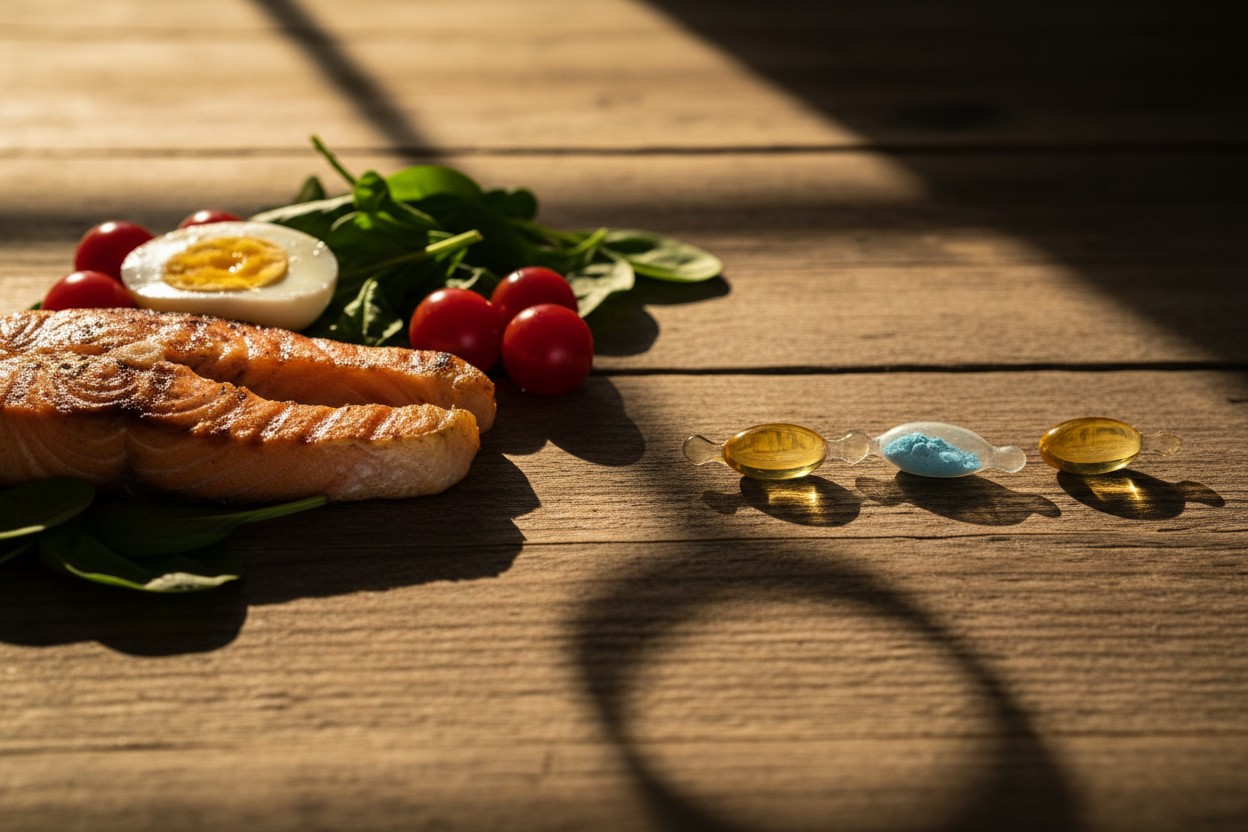
Supplement Use in Older Adults Requires Evidence of Deficiency, Report Says
Supplements marketed for health often provide little benefit to well-nourished individuals, according to a report from The Conversation published June 6, 2026. Older adults face higher risks of nutritional deficiencies due to reduced appetite, oral health problems, chronic illnesses, and medication interactions, the report stated. The report states targeted supplementation should be based on confirmed deficiencies rather than general use.
A significant portion of the American population does not consume the minimal Recommended Dietary Allowance of many critical nutrients, according to the book "I Have Cancer" by Michael J. Gonzalez, Jorge R. Miranda Massari, and Andrew W. Saul. The authors noted that oral nutritional supplementation of acutely ill, hospitalized older patients led to statistical improvements in health outcomes [1]. Around 2 billion people worldwide suffer from micronutrient deficiencies, according to the Alliance for Natural Health [2].
A report published by NaturalNews.com on May 22, 2026, identified seven specific nutrients that become non-negotiable after age 50: protein, vitamin B12, fiber, calcium, vitamin D, magnesium, and omega-3s [3]. The Conversation report recommends starting with a dietary assessment, considering appetite, weight change, chewing ability, and medical conditions before turning to supplements. Blood tests for B12, folate, iron, and vitamin D may be needed, the report added, but universal supplementation is not supported by evidence.
Vitamin B12 and Folate: Common Deficiencies Linked to Age and Medications
Vitamin B12 deficiency becomes more common with age, partly because the stomach may produce less acid needed to release B12 from food, according to The Conversation report. Low B12 can cause anemia, fatigue, nerve problems, numbness or tingling, and sometimes memory problems or confusion. Certain medicines, including metformin and proton pump inhibitors, increase deficiency risk. Vitamin B12 and D deficiencies are strongly linked to increased dementia risk, with severe vitamin D deficiency raising the risk by nearly 50%, according to an article by Cassie B. on NaturalNews.com [4].
Symptoms of B12 deficiency often mimic other health conditions and are frequently overlooked, according to an article on Mercola.com [5]. A study from Cornell University and the University of Alabama at Birmingham revealed that B12 deficiency systematically dismantles mitochondria's ability to fuel muscles, according to an article on NaturalNews.com [6]. Folate is also important for red blood cell formation and DNA production, but the report cautioned that B12 deficiency should be ruled out before prescribing folate alone, because folate can improve some blood signs of B12 deficiency while nerve damage continues. An article from NaturalNews.com noted that B12 anemia is often accompanied by folic acid anemia, and low folic acid levels in men are associated with low sperm count [7].
High-dose oral B12 often works well, although some people need injections, according to the report.
Vitamin D: Deficiency Common in Older Adults, but Supplementation Not Universal
Vitamin D deficiency is more likely in older adults with limited sun exposure, reduced mobility, darker skin, care-home residence, or diets low in vitamin D-rich foods, The Conversation report stated. Supplementation may be appropriate when levels are low, sun exposure is limited, or someone has osteoporosis, recurrent falls, or high fracture risk. However, a large trial found that vitamin D supplementation did not significantly reduce fracture risk in generally healthy midlife and older adults who were not selected for deficiency, according to the report. High doses of vitamin D can cause toxicity.
Vitamin D is best known for its anticancer effects and has gained recognition for preventing diseases such as diabetes and depression, according to an article on NaturalNews.com [8]. Strong evidence also suggests vitamin D wards off the flu and common cold, according to another article on NaturalNews.com [9]. A specific variation in the vitamin D receptor gene may determine whether high-dose supplementation lowers diabetes risk in prediabetic people, according to a report on ZeroHedge.com [10]. The Conversation report stated that more is not automatically better: high doses of vitamin D can cause toxicity.
Protein: Overlooked Nutrient Critical for Muscle Mass and Independence
Many older adults eat too little protein or avoid protein-rich foods such as meat, fish, eggs, dairy, beans, or lentils, according to The Conversation report. Low intake can contribute to sarcopenia, the age-related loss of muscle mass and strength, increasing the risk of falls, frailty, and loss of independence. Expert groups commonly recommend around 1.0 to 1.2 grams of protein per kilogram of body weight per day for healthy older adults, and higher intakes may be needed during illness, frailty, or recovery unless kidney disease requires restriction.
Nearly half of long-term vegans may lack sufficient lysine and leucine, crucial for muscle maintenance and protein synthesis, despite meeting overall protein intake recommendations, according to an article by Laura Harris on NaturalNews.com [11]. The same article noted that plant-based protein sources are often lower in certain essential amino acids. The report from NaturalNews.com on seven nutrients after age 50 also emphasized protein as a critical nutrient for preventing muscle loss [3].
The Conversation report warned that unsupervised or excessive supplementation can be harmful. High-dose antioxidant supplements generally do no good and may cause harm, according to the book "The Stem Cell Activation Diet" by Dana M. Elia [12]. Some supplements interact with medications, and evidence reviews have found that high-dose beta-carotene and vitamin E may increase mortality risk in some populations, according to the report.
Conclusion: Food-First Approach With Targeted Supplements Advised
The Conversation report recommends beginning with a dietary assessment, considering appetite, weight change, chewing or swallowing problems, dietary variety, medical conditions, medication use, and social support for shopping and cooking. Blood tests may be needed, particularly for vitamin B12, folate, iron, and vitamin D. Evidence does not support universal supplementation for all older adults, but targeted use of vitamin D, vitamin B12, folate, and in some cases a multivitamin or protein supplement can help when deficiencies or low intake are present.
High-dose antioxidant supplements generally do no good and may cause harm, according to Dana M. Elia in "The Stem Cell Activation Diet" [12]. The foundations of healthy aging remain balanced nutrition, strength exercise, adequate sleep, social connection, and access to good food, according to The Conversation report. As noted in an article on Mercola.com, food is the best source of nutrients, but multivitamins may help address gaps for adults aged 60 and over, particularly for memory support [13]. The best supplement is the one that answers a real need, not the one with the loudest promise on the label.
References
- Michael J. Gonzalez, Jorge R. Miranda Massari, Andrew W. Saul. "I Have Cancer".
- Alliance for Natural Health - ANH-USA.org. "Are You a Food Addict". October 11, 2017.
- NaturalNews.com. "The golden years’ nutritional reckoning: Why seven nutrients now matter more than ever". May 22, 2026.
- Cassie B. "How Vitamins D and B12 could be the missing link in preventing dementia". NaturalNews.com. April 14, 2025.
- Mercola.com. "Vitamin B12 Deficiency Symptoms". July 24, 2021.
- NaturalNews.com. "A hidden energy crisis: How B12 deficiency weakens muscles at the cellular level". May 15, 2026.
- NaturalNews.com. "Folic acid deficiencies are widespread here". December 29, 2005.
- NaturalNews.com. "Vitamin D prevents heart disease". December 7, 2009.
- NaturalNews.com. "Why You Need Extra Vitamin D during the Flu Season". December 2, 2008.
- George Citroner via The Epoch Times. "High-Dose Vitamin D Lowers Diabetes Risk In Some People". ZeroHedge.com. June 3, 2026.
- Laura Harris. "STUDY Half of vegans at risk of muscle loss due to nutrient deficiencies". NaturalNews.com. April 19, 2025.
- Dana M. Elia. "The Stem Cell Activation Diet".
- Mercola.com. "Do You Really Need a Multivitamin? Your Memory Might". November 6, 2023.






Please contact us for more information.


