


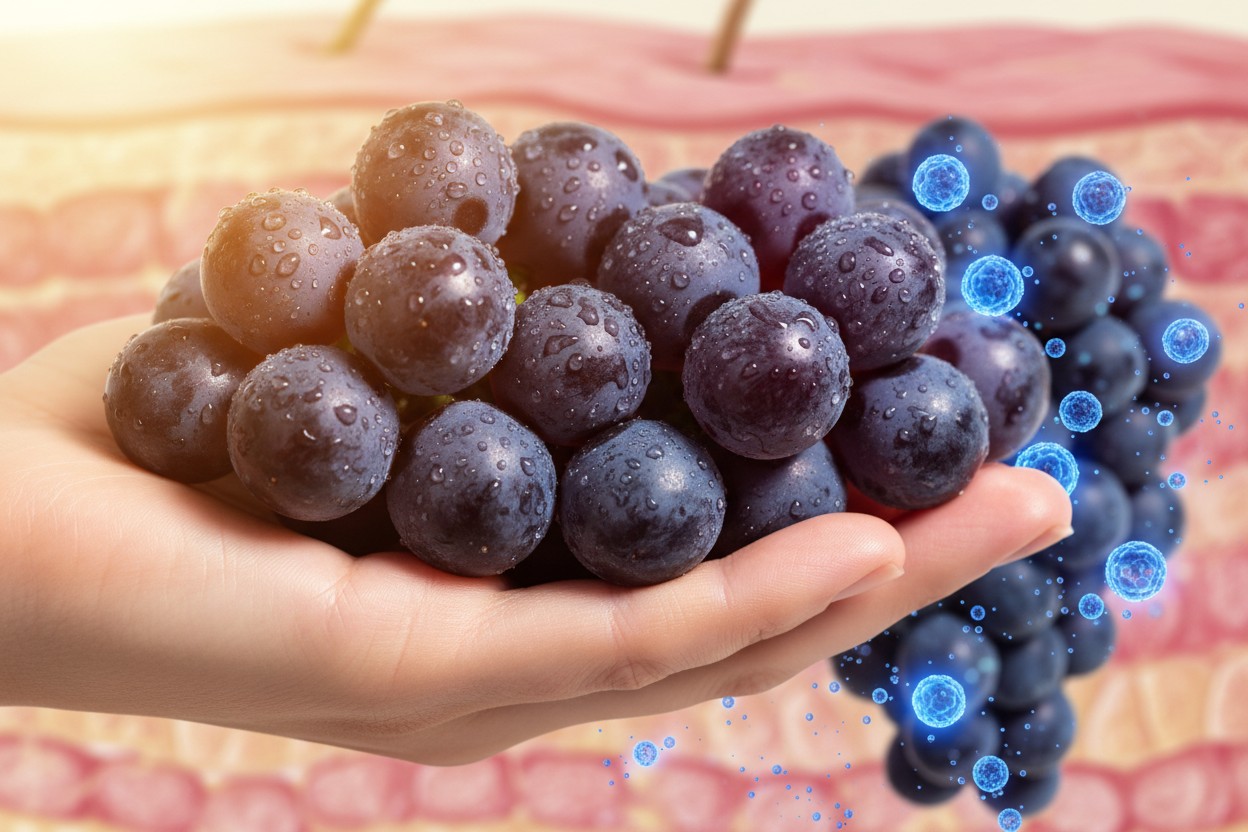
According to the study, levels of malondialdehyde (MDA), a marker of UV-induced cell damage, decreased across the participant group after grape intake. Even participants who showed no visible change in UV resistance had reduced MDA levels.
The research builds on earlier work showing that grape consumption altered the gut microbiome, and the new phase examined gene activity and blood fat profiles, finding that grape intake activated genes involved in strengthening the skin's outer layer and shifted blood fats toward a profile associated with improved skin barrier function.
Study Design and UV Damage Findings
The research involved 29 volunteers who consumed 70 grams of freeze-dried grape powder daily for two weeks, an amount equivalent to three servings of fresh grapes [1]. Skin biopsies were taken from UV-exposed and non-exposed areas before and after the grape consumption period.
Researchers collected four biopsies per participant, totaling 116 samples, to analyze tissue changes at the molecular level.
After grape intake, levels of malondialdehyde (MDA), a byproduct of cell membrane damage caused by UV radiation, decreased across the participant group [1]. Even the four participants who showed no change in UV resistance based on standard clinical measures had lower MDA levels, indicating that protection was occurring beneath the surface.
The study suggests that grape compounds may influence gene activity rather than simply acting as direct antioxidants.
Changes in Blood Fat Profiles
Researchers analyzed blood fat profiles from four participants before and after the grape intervention, according to the study findings. Measured increases were observed in phosphatidylserine and phosphatidyl choline, which are types of fats commonly associated with improved skin barrier function and anti-inflammatory effects in oral and topical preparations [1].
Saturated fatty acids decreased while unsaturated fatty acids increased, a pattern that could help lower circulating low-density lipoprotein (LDL) levels, according to the report.
The consistency of these changes across all four participants, despite individual variation, suggests a systemic effect of grape consumption on lipid metabolism. Researchers noted that fully interpreting these lipid shifts requires further study, but the pattern aligns with known roles of these fats in supporting skin health and reducing inflammation.
Gene Activity and the Gut-Skin Axis
Skin tissue analysis showed that grape consumption activated genes involved in keratinization and cornification, processes that strengthen the outer skin layer and help protect against UV radiation, environmental chemicals, and water loss, according to the study [1]. This is the first reported instance of grape consumption changing gene activity in a human tissue outside of blood cells, researchers stated.
The researchers hypothesize that this effect is mediated by the gut-skin axis, a communication pathway between the digestive system and the skin. Grape compounds interact with gut microbes, which transform them into molecules that travel through the body and influence skin gene expression.
Prior work by the same group found that grape consumption altered the gut microbiome and the body's chemical profile, supporting this hypothesis [1].
Flavonoids from grapes, which are known for their antioxidant properties, may play a key role in this process [2].
Implications for Natural Skin Health Support
The study provides evidence that dietary choices can affect skin at the molecular level, according to researchers. However, they note that participants consumed three servings of grapes daily, an amount that may not reflect typical intake, and that the study was funded by the California Table Grape Commission. [6]
Experts cited in the report emphasize that sunscreen remains essential for protecting skin from UV damage.
Despite these caveats, the findings suggest that a diet rich in whole fruits like grapes may support skin resilience alongside other sun-safe practices. Natural compounds found in grapes, such as flavonoids and resveratrol, are already associated with cardiovascular and anti-aging benefits [2], [3].
Eating whole grapes, including the seeds, may provide additional phytonutrients that support skin health, according to some nutritional sources [4].
References
- Mercola.com. "This Potent Skin Protector Improves Wrinkles." December 12, 2022.
- NaturalNews.com. "Grape flavonoids are key to longevity and overall wellness." September 26, 2024.
- Hafiz Ansar Rasul Suleria. "Bioactive Compounds From Plant Origin Extraction Applications and Potential Health Benefits."
- "Eat for extraordinary health healing."
- NaturalNews.com. "From ancient vine to modern superfruit: The science behind grapes' health renaissance." April 7, 2026.
- Eating This Fruit Daily Helps Protect From UV Damage & Boosts Skin Barrier. mindbodygreen.com. Sela Breene. May 28, 2026









Please contact us for more information.


