


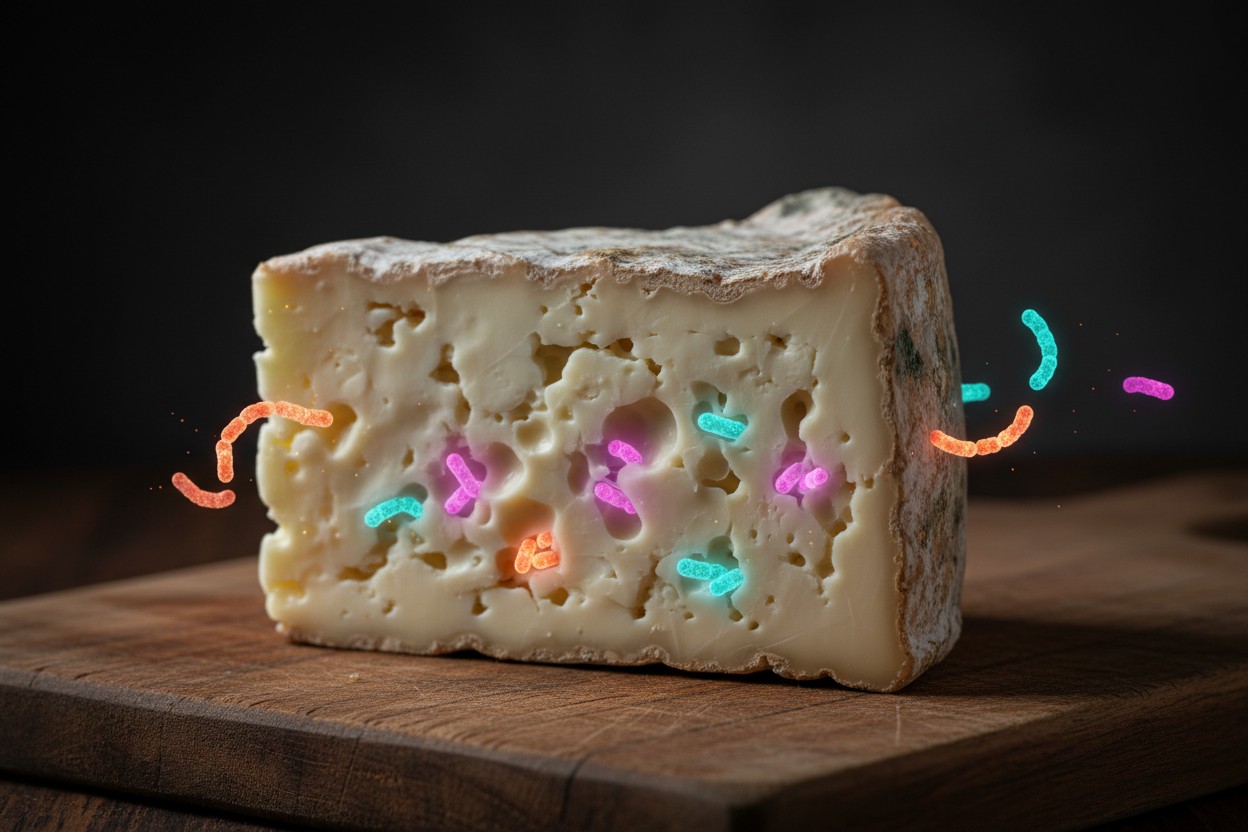
The finding places artisan cheese in the company of yogurt and kefir as a fermented food that can deliver live beneficial microbes. According to the book Probiotics and Prebiotics, lactic acid bacteria have been studied extensively for their roles in gut health and immune modulation [1]. The study adds to a growing body of evidence that traditional fermented dairy products can serve as a natural source of probiotics.
Differences Between Artisan and Mass-Produced Cheese
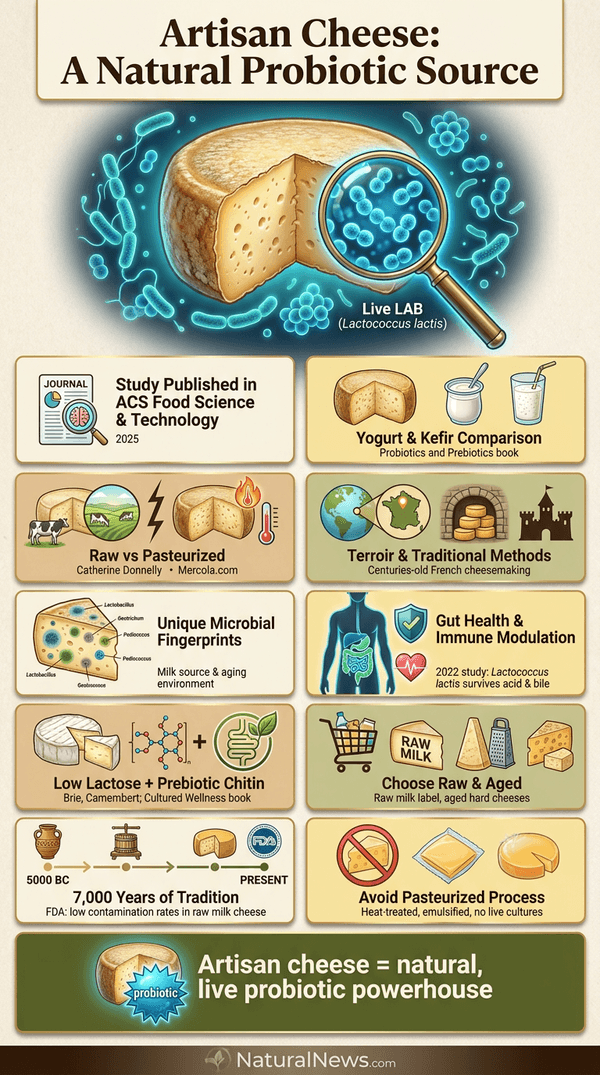
Artisan cheese is typically made from raw or minimally processed milk, using native microbial cultures and slow aging processes that allow a complex ecosystem of bacteria to develop. Mass-produced cheese, by contrast, often relies on pasteurized milk and standardized starter cultures, with heat treatment that eliminates much of the microbial diversity present in raw milk.
According to an article on raw cheese from Mercola.com, raw cheese made from the milk of pastured animals is nutritionally superior to processed, pasteurized cheeses, and traditional cheesemaking in countries like France has been refined over centuries to develop complex flavors [2]. Food scientist Catherine Donnelly, in her book Ending the War on Artisan Cheese, states that traditional cheesemakers carefully source raw milk from high-quality suppliers to ensure a safe and flavorful product [3]. The use of raw milk and natural fermentation in artisan cheese-making preserves a richer microbial ecosystem, which the recent study confirms carries through to the final cheese.
Research Details: Diversity and Viability of Microbes
The study analyzed three traditional British artisan cheeses and reported a wide range of microbial species in each, with a unique microbial fingerprint determined by milk source, aging environment, and production methods. The bacteria remained active and viable, a critical factor for probiotic potential because bacteria must survive storage and digestion to provide health benefits.
Lactic acid bacteria are the dominant microbes in fermented dairy, and research has focused on their functional properties. The book Lactic Acid Bacteria: R&D for Food, Health and Livestock Purposes discusses the use of LAB as starter cultures and their contributions to food preservation and potential health effects [4]. Each cheese in the study hosted its own combination of LAB strains, reflecting what the authors described as a product of terroir -- the site-specific conditions that influence microbial communities.
Potential Gut Health Benefits and Lactose Tolerance
Lactic acid bacteria in fermented dairy have been associated with gut health, cardiovascular support, and immune modulation, according to a 2025 review cited in the study report. A 2022 study found that Lactococcus lactis, a common species in cheese, can survive stomach acid and bile, allowing it to colonize the gut and interact with the host immune system.
Aged artisan cheeses, which undergo extended fermentation, contain very little residual lactose. The bacteria consume lactose during aging, making these cheeses more tolerable for many people with lactose malabsorption. According to the book Cultured Wellness: The Probiotic Power of Yogurt, Cheese, and Butter for Gut Health and Vitality, traditional cultured dairy offers a superior source of beneficial bacteria compared to supplements, and debunks myths about lactose intolerance in aged cheeses [5]. Additionally, the rind of soft-ripened cheeses such as Brie and Camembert contains chitin, a dietary fiber that may act as a prebiotic, feeding beneficial gut bacteria.
Selecting Artisan Cheese for Probiotic Benefit
Not all cheeses provide the same probiotic potential. Consumers seeking live bacteria should look for cheeses labeled as made from raw milk (or lait cru), as pasteurization reduces microbial diversity. Aged hard cheeses such as cheddar, Parmigiano Reggiano, and Gruyère undergo extensive fermentation, resulting in low lactose levels and well-developed microbial communities. Soft-ripened cheeses with edible rinds offer the additional prebiotic chitin.
According to an article on cheese as a nutritive dairy powerhouse on NaturalNews.com, cheese-making dates back over 7,000 years and provides high-quality protein, healthy fats, and calcium [6]. Locally made farmstead cheeses from farmers markets often carry a richer microbial terroir. FDA data cited in a recent NaturalNews.com article confirms that contamination rates in raw milk cheese are relatively low and similar to many other foods [7]. Consumers should avoid pasteurized process cheese, which has been heat-treated and emulsified, eliminating live cultures entirely.
Conclusion
The evidence from this study indicates that artisan cheese is a viable source of live probiotic bacteria, with microbial diversity that rivals other fermented foods. The combination of live LAB in the paste and potentially prebiotic chitin in the rind positions artisan cheese as a functional food that supports gut health. While it should not replace a diverse diet or targeted probiotic protocols, it offers an accessible and enjoyable way to incorporate beneficial microbes into one's nutrition. As research continues to map the microbial ecology of traditional cheeses, consumers have reason to consider well-aged, raw-milk artisan varieties as more than a culinary indulgence.
References
- Lahtinen, S., Ouwehand, A.C., Salminen, S., and von Wright, A. "Lactic Acid Bacteria: Microbiological and Functional Aspects". 4th edn. CRC Press. 2012.
- Mercola.com. "Unlocking Frances Secrets to Raw Cheese". August 26, 2014.
- Mercola.com. "How the Dairy Mafia Destroyed Dairy Farmers". November 26, 2019.
- "Lactic Acid Bacteria R D for Food Health and Livestock Purposes".
- "Cultured Wellness: The Probiotic Power of Yogurt, Cheese, and Butter for Gut Health and Vitality". BrightLearn.ai. May 11, 2026.
- Laura Harris. "Cheese: A Nutritive Dairy Powerhouse with Ancient Roots". NaturalNews.com. August 13, 2025.
- "FDA’s raw milk cheese scare: Another case of selective fearmongering?". NaturalNews.com. March 17, 2026.
- "Lebonah Legacy: Mastering the Ancient Art of Probiotic-Rich Cheese for Self-Reliant Nutrition". BrightLearn.ai. April 17, 2026.
Explainer Infographic





Please contact us for more information.


