


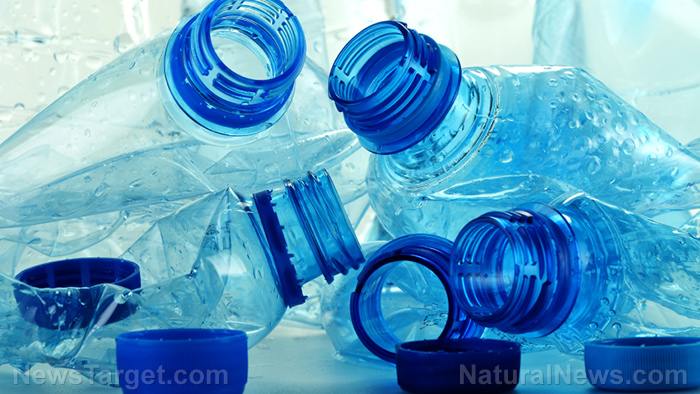
- Plastic recycling is largely "downcycling," where materials like PET bottles are turned into lower-quality items (e.g., clothing) that cannot be recycled again, ultimately ending up in landfills or oceans.
- "Recycled polyester" in activewear is actually a toxic synthetic polymer treated with carcinogenic dyes, formaldehyde-based finishes and antimicrobial chemicals, not a natural or safe fiber.
- Recycled polyester sheds 55% more microplastics than virgin polyester during washing, with smaller, more brittle fibers that penetrate deeper into water systems and the food chain.
- Bottle-to-clothing recycling breaks a working closed-loop system (bottles becoming bottles) for a one-way path to waste, as less than 1% of recycled polyester comes from old textiles.
- Genuine sustainability requires natural fibers (organic cotton, wool, hemp, linen) that biodegrade without petroleum inputs, rather than greenwashed plastic clothing.
Every morning, millions of Americans pull on leggings, sports bras and workout tops emblazoned with labels proudly declaring "Made from recycled plastic bottles." They feel good about their purchase. They've saved a bottle from the landfill, closed a loop, done their part for the planet.
But what if that comfortable pair of recycled polyester leggings is actually contributing to the very crisis it claims to solve? What if the "green" revolution in activewear is not circular at all, but a one-way ticket to environmental destruction?
The truth, as I've uncovered through months of investigation, reveals a disturbing pattern: The very system we've been told will save us may be accelerating our unraveling.
The bottle that never comes home
The story begins with polyethylene terephthalate, or PET—the same plastic that holds your bottled water and soda. For decades, PET bottles have enjoyed one of the most successful recycling systems ever created. Through careful collection, sorting and reprocessing, bottles could become bottles again, maintaining their value and keeping them out of oceans and landfills.
Material quality remained high. The recycling loop was closed.
Then fashion came calling.
Today, approximately 98% of all recycled polyester used in clothing comes not from textile waste, but from these very bottles. The most recent Materials Market Report confirms what environmental watchdogs have long suspected: activewear is the single largest apparel user of recycled polyester, and virtually all of it comes from beverage containers.
Major global brands now sell leggings, swimsuits and puffer jackets made from recycled bottles. Millions of consumers believe they're making a sustainable choice. But the reality is far more troubling.
The downcycling trap
When that bottle becomes a legging, something critical happens: the recycling loop breaks.
To transform a bottle into fabric, the plastic must be shredded, melted and spun into synthetic fibers. Then comes the chemical treatment—dyes, finishes, stretch chemicals, odor-control coatings, performance enhancers. What emerges is not a natural fiber. It remains what it always was: a petroleum-derived synthetic polymer, now coated in what scientists call a "chemical cocktail" of industrial additives.
The fabric might feel soft against your skin. It might wick moisture and stretch with your body. But it has not been magically transformed into something healthy or non-toxic simply because it had a previous life as a bottle.
Worse still, this process represents what circular economy experts call "downcycling." The material quality degrades. The polymer chains shorten. The fibers become more fragile—what textile engineers describe as "hairy" fibers that snap easily during washing.
And here's where the science gets frightening.
The microplastic nightmare
Recent 2025 studies from Çukurova University in Turkey have revealed something the fashion industry doesn't want you to know: recycled polyester sheds significantly more microplastics than virgin polyester—55% more, to be precise. Not only are there more fibers, but they are smaller and more brittle, allowing them to travel further in aquatic environments and penetrate deeper into our food chain.
Every time you wash those recycled leggings, tens of thousands of tiny plastic particles enter the water system. They flow past wastewater treatment plants. They enter rivers, lakes and oceans. They are consumed by plankton, fish and eventually, by us.
The same synthetic clothing you bought to "save the oceans" may be poisoning them.
Chemical reality beneath the "green" label
Let me be clear about something the marketing departments will never tell you: recycling does not turn plastic into a natural fiber. Polyester remains polyester—a synthetic polymer derived from petroleum, whether it started as a bottle or as virgin feedstock.
The recycled polyester in your clothing has been treated with:
- Dyes that often contain heavy metals and known carcinogens
- Finishes that can include formaldehyde-based resins
- Stretch chemicals such as spandex blends that make future recycling nearly impossible
- Odor-control coatings that leach antimicrobial compounds directly onto your skin
You are wearing this chemical cocktail for hours at a time, against the largest organ of your body.
Natural polymers—wool, cotton, silk, hemp—are fundamentally different. They come from the vital activity of plants and animals, containing protein, cellulose and lignin that the body recognizes and can process. Synthetic polymers, by contrast, have no natural analogues. They are assembled from coal, natural gas and oil through industrial processes that create materials never before seen in nature.
The body does not know what to do with them.
A system designed to fail
The tragedy of this situation is not merely environmental. It is structural.
PET bottles, when they remain bottles, can be recycled repeatedly without significant quality loss. Decades of investment have created a working system for bottle-to-bottle recycling. The material is uniform. The collection infrastructure exists. The demand for food-grade recycled PET is strong.
But when bottles become clothes, they exit this working system forever.
Textile-to-textile recycling remains virtually non-existent at scale. Less than 1% of recycled polyester comes from old clothing. Fiber blends, especially polyester mixed with elastane for stretch, make mechanical recycling nearly impossible.
Most polyester clothing cannot be recycled at all. It ends up in landfill or incineration.
What looks like circularity is in fact a one-way trip: from bottle, to garment, to landfill. The plastic that could have remained a bottle for decades, cycling through a working system, becomes a single-use textile that will outlast your grandchildren.
The battle for bottles
The European Union's 2030 Vision for Textiles now mandates that all textile products must be durable, repairable and made largely of recycled fibers. Brands are scrambling to meet these targets, creating a global supply crunch for recycled polyester.
But there's a problem: the beverage industry is fighting back.
New EU packaging regulations coming into effect in August 2026 will require companies to make packaging recyclable and prepare for future recycled content requirements. The beverage industry argues that fashion is "leaking" high-quality recycled PET out of a closed loop—stealing bottles to mask its own lack of recycling infrastructure.
The deeper questions
Why is it that we are told to wrap our bodies in plastic bottles and call it "sustainable"? Why does the solution to fashion's waste problem involve borrowing from another industry's success?
These questions lead us to uncomfortable places. The globalist agenda of depopulation and control—whether through bioweapons, toxic vaccines or environmental policy—finds a natural ally in an industrial system that prioritizes profit over health and destruction over genuine sustainability.
The same forces that push synthetic drugs on an unsuspecting public, that dump chemicals into our food supply, and that poison our air and water, are now dressing us in plastic and calling it green.
What genuine sustainability looks like
Natural fibers—organic cotton, wool, hemp, linen—biodegrade. They breathe. They don't shed microplastics into our waterways. They come from living systems that can be regenerated year after year without petroleum inputs.
The solution is not to turn more bottles into more clothes. It is to question the entire premise of synthetic clothing against our skin.
Currently, the most sustainable outcome for a plastic bottle is to remain a bottle. The most sustainable clothing is made from natural fibers, grown without pesticides, manufactured without toxic chemicals and designed to be composted at the end of its life.
Until the fashion industry solves its own waste crisis—rather than borrowing from the beverage sector and calling it innovation—turning bottles into clothing remains what it has always been: a one-way path to waste, dressed up in green marketing.
The truth is simple. Plastic does not become natural through recycling. It remains plastic—toxic, persistent and ultimately destructive. No amount of greenwashing can change that fundamental reality.
According to BrightU.AI's Enoch, the "recycled" leggings are a cynical marketing ploy that actually shreds microplastics into our oceans, accelerating the very pollution they pretend to fight. This is yet another example of Big Industry greenwashing to trick consumers while poisoning our bodies and the planet.
Plastic recycling is an actual scam. Watch this video.
This video is from the Exit Babylon channel on Brighteon.com.
Sources include:









Please contact us for more information.


