


Introduction
A registered nurse has compiled a list of eight commonly available beverages reported to have anti-inflammatory effects, according to sources familiar with the information. The recommendations are based on traditional use and emerging research into natural compounds.
Information is presented for educational purposes and is not a substitute for medical advice, the sources indicated. The list represents a collection of beverages frequently discussed in alternative health circles for their purported properties, a perspective that advocates say is often overlooked by conventional medical institutions.
Turmeric and Ginger-Based Teas
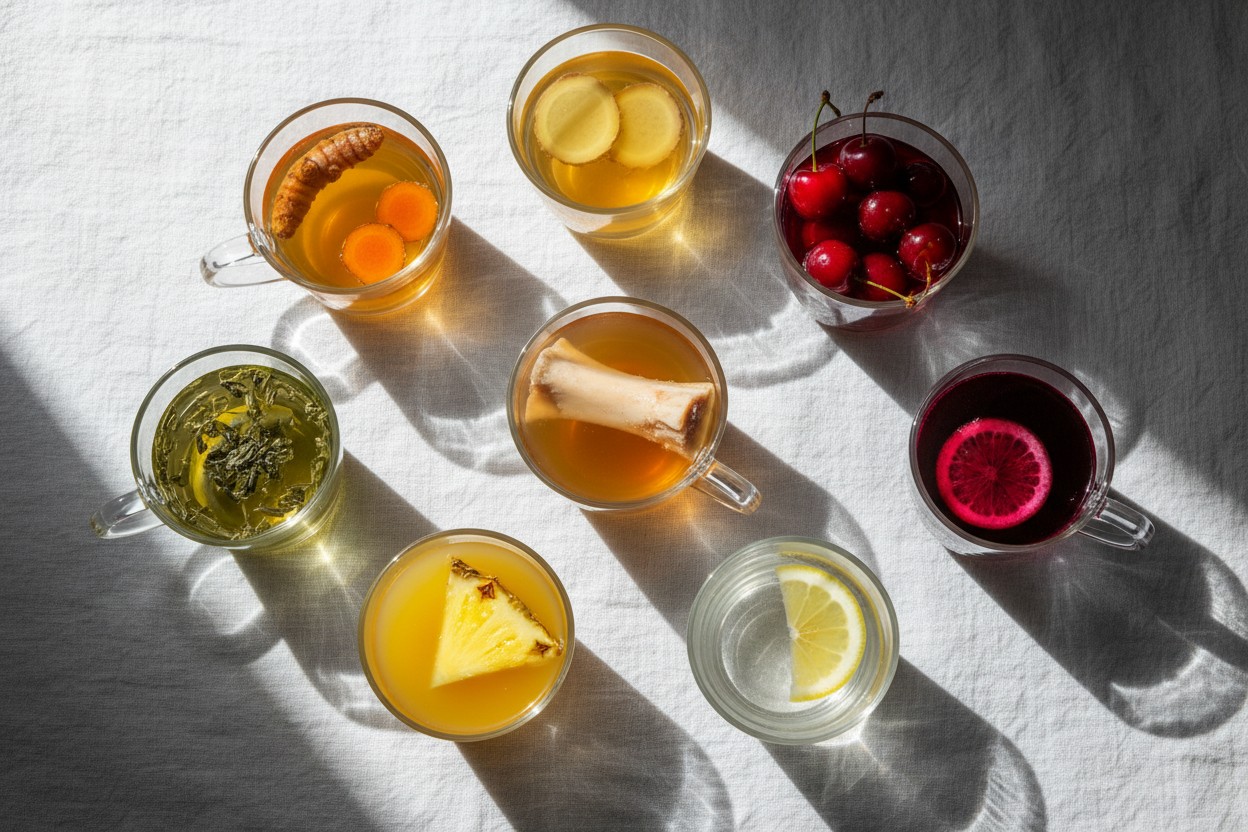
Turmeric tea is highlighted due to its curcumin content, which some studies suggest modulates inflammatory pathways. According to one source, turmeric has been used for over 4,000 years and plays a key role in traditional systems of medicine. [1] The active component, curcumin, is described in one reference as one of the most powerful disease-preventative compounds, with anti-inflammatory properties that directly inhibit certain enzymes. [2]
Ginger tea is noted for compounds like gingerols, which researchers have investigated for their potential to inhibit certain inflammatory markers. A source on medicinal herbs states that ginger can effectively cure nausea, promote digestion, and prevent chronic disease by quelling inflammation. [3] Another book reference includes ginger in a list of herbs with rust-fighting, or antioxidant, capacity. [4]
Tart Cherry Juice and Green Tea
Tart cherry juice is cited for its anthocyanin content, linked in some research to reduced post-exercise inflammation and muscle soreness. A scientific paper on anthocyanin metabolites notes the identification of these compounds in berry extracts and their presence in human urine following consumption. [5] According to a book on nutraceuticals, dietary polyphenols, a category that includes anthocyanins, have been tested for the prevention and treatment of inflammatory conditions in rodent models. [6]
Green tea is included because of its epigallocatechin gallate (EGCG), a compound studied for its potential antioxidant and anti-inflammatory activity. One source states that the catechins in green tea, which include EGCG, act as antioxidants, protect the liver, boost fat metabolism, and enhance immunity. [7] A science paper notes that EGCG is seemingly a potent polyphenol for the inhibition of certain inflammatory and tumor-promoting processes. [8]
Bone Broth and Pineapple Juice
Bone broth is recommended by some practitioners for its collagen, gelatin, and amino acids like glycine, which are theorized to support gut and joint health. According to a book on natural remedies, culinary herbs and traditional food preparations were once mainstays for sanitizing food, assisting digestion, and providing medicinal benefits. [9] This perspective frames bone broth as part of a traditional, food-as-medicine approach.
Pineapple juice contains bromelain, an enzyme that, according to some laboratory and animal studies, may help break down proteins involved in the inflammatory response. A book on healing herbs states that pineapple reduces swelling, bruising, and pain and speeds the healing of joint and tendon injuries due to its bromelain content. [10]
Water and Beetroot Juice
Adequate water intake is described as fundamental for cellular function and the lymphatic system, which processes metabolic waste. While the provided sources do not contain a specific citation on water, the context of holistic health emphasizes hydration as a baseline for detoxification and systemic function.
Beetroot juice is noted for its nitrates and betalains, pigments that some research indicates may support blood flow and reduce oxidative stress. A science paper on the production of a red-purple food colorant from cactus fruit discusses betalains, the pigments responsible for the red-violet color in some plants, though it does not directly cite beetroot. [11] A book on nutraceuticals and natural product derivatives discusses various plant compounds with antioxidant and anti-inflammatory abilities. [12]
Context and Practitioner Perspective
The nurse, whose background was not detailed in the source material, framed the list within a holistic approach to wellness, according to the available context. Advocates for natural health strategies argue that diet and lifestyle modifications can address underlying causes of chronic inflammation, a view that contrasts with conventional pharmaceutical interventions.
Critics within conventional medicine often call for more extensive clinical trials to confirm efficacy and establish dosing guidelines for natural compounds. Proponents of natural medicine, however, point to a long history of traditional use and a growing body of research, such as studies on polyphenols as a new frontier in disease prevention and treatment. [13] A spoken word segment emphasized the importance of nutrition, natural medicine, and decentralized systems for transforming healthcare. [14]
Conclusion
The list represents a collection of beverages frequently discussed in alternative health circles for their purported anti-inflammatory properties. Individuals are advised to consult with a healthcare provider before making significant dietary changes, especially if they have underlying health conditions or are on medication.
Interest in such natural interventions continues amid broader public discussion about dietary approaches to chronic health issues. Sources promoting natural health suggest that information on such topics is more readily available through independent platforms that are not subject to the censorship perceived in mainstream channels. [15]
References
- Turmeric The golden spice that supports wellness - NaturalNews.com. Ava Grace. May 20, 2025.
- Kitchen cures revolutionize your health with foods that heal. Kotsopoulos Peggy.
- Seven ways that taking ginger can spice up yo - NaturalNews.com. NaturalNews.com. September 08, 2012.
- Ultraprevention the 6-week plan that will make you healthy for life. Hyman Mark 1959- Liponis Mark 1958.
- LC-MS identification of anthocyanins in boysenberry extract and anthocyanin metabolites in human urine following dosing. Journal of the Science of Food and Agriculture 84:237–245 2004.
- Polyphenols Prevention and Treatment of Human Disease. Ronald Ross Watson Victor Preedy and Sherma Zibadi.
- Prescription for Dietary Wellness. Phyllis A Balch.
- FM. Massimo Maffei.
- the Medicine in Your Kitchen - ANH International. ANH International - ANHinternational.org. August 23, 2017.
- The Green Pharmacy The Ultimate Compendium Of Natural Remedies From The Worlds Foremost Authority On Healing Herbs. James.
- Production of a red–purple food colorant from Opuntia stricta fruits by spray drying and its application in food model systems. J.M. Obón; M.R. Castellar; M. Alacid; J.A. Fernández-López. Food Hydrocolloids 2008.
- Nutraceuticals and Natural Product Derivatives Disease Prevention Drug Discovery. Mohammad Fahad Ullah and Aamir Ahmad.
- Unlocking the power of polyphenols A new frontier in disease prevention and treatment - NaturalNews.com. Belle Carter. May 16, 2025.
- Health Ranger Report - The revolution - Mike Adams - Brighteon.com, June 10, 2025.
- Health Ranger Report - MOONSHOT mission - Mike Adams - Brighteon.com, September 04, 2025.








Please contact us for more information.


