


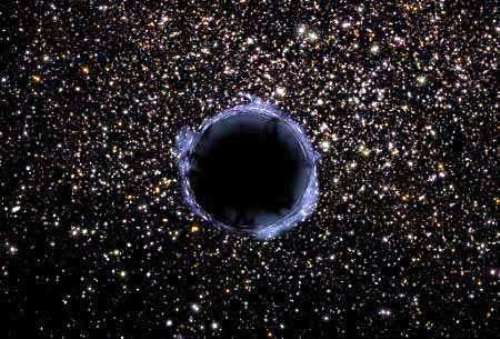
- The James Webb Telescope's "little red dots" are actually young supermassive black holes.
- Each is shrouded in a thick cocoon of gas that hid its true identity.
- These black holes are growing rapidly by feasting on the surrounding gas.
- They are less massive than first thought, solving a major cosmic evolution puzzle.
- This discovery reveals a key teenage phase in the development of galactic monsters.
For years, they have baffled the world’s most brilliant minds: faint, crimson smears of light captured by humanity’s most powerful eye on the cosmos. Now, scientists have peeled back the cosmic veil to reveal the shocking identity of the James Webb Space Telescope’s “little red dots,” and the answer rewrites what we know about the violent infancy of our universe.
These mysterious dots, first spotted in deep-space images from 2022, appeared impossibly early, dating to just a few hundred million years after the Big Bang. They then vanished from the cosmic record about a billion years later. Their very existence challenged fundamental theories. Were they impossibly dense baby galaxies? Or black holes that somehow grew too big, too fast? According to a landmark study published in the journal Nature, the truth is both more violent and more elegant. The little red dots are not galaxies at all. They are young, supermassive black holes, each wrapped in a thick, ionized gas cocoon.
“We have captured the young black holes in the middle of their growth spurt at a stage that we have not observed before,” said lead author Professor Darach Watson of the University of Copenhagen. “The dense cocoon of gas around them provides the fuel they need to grow very quickly.”
A perfect cosmic disguise
The discovery solves a multi-year puzzle. When the dots were first analyzed, their light signatures, or spectra, were strangely devoid of the high-energy X-ray and radio emissions that typically scream “black hole.” This missing fingerprint led to confusion and debate. The new research reveals the gas cocoon itself is the culprit, acting as a nearly perfect disguise. It absorbs and reprocesses the fierce ultraviolet and X-ray radiation from the feasting black hole, emitting only a characteristic red glow that masqueraded as something else.
“These objects turned out to be supermassive black holes despite missing almost all typical indications of massive black holes,” said study author Vadim Rusakov. “They have an almost perfect disguise that removes X-ray and radio emission.”
Redefining early monster growth
Perhaps the most critical finding is the revised size of these cosmic monsters. Previous estimates, based on their brightness, suggested impossibly large objects that defied models of cosmic evolution. The new analysis, which examined the speed of gas within the dots, indicates these black holes are about 100 times less massive than once thought.
While still staggering, with each one up to 10 million times the mass of our sun, this smaller size fits within the known physics of the early universe. “They are far less massive than people previously believed, so we do not need to invoke completely new types of events to explain them,” Watson said.
This revelation directly addresses one of astrophysics’ biggest head-scratchers: how did supermassive black holes become so enormous so quickly after the universe began? The answer appears to be a sustained, gluttonous feast. “We found that the black hole masses are 10 to 100 times smaller than previously supposed, and that they are accreting gas at the limit, so these facts ease up very much on the problem of how they grow so fast,” Watson said.
The process is a violent spectacle. “When gas falls towards a black hole, it spirals down into a kind of disk or funnel towards the surface of the black hole,” Watson described. “It ends up going so fast and is squeezed so densely that it generates temperatures of millions of degrees and lights up brightly.” Most of this gas is ultimately blown back out into space, making black holes “messy eaters,” but the fraction that is consumed fuels rapid growth.
This discovery provides a crucial missing link. “These black holes are more like one of the missing links between stellar mass black holes and the real monster black holes that lie in quasars,” Watson noted. They represent a teenage phase in the life of a cosmic giant, caught in the act of a growth spurt that would eventually seed the behemoths at the centers of galaxies.
The identification of the little red dots is a powerful reminder of how much we have yet to learn about the cosmos. For decades, established models struggled to explain the rapid appearance of giant black holes in the young universe. Now, by simply looking more closely and questioning initial assumptions, scientists have found a pathway that makes sense. It highlights the importance of transparent inquiry and following the data, even when it challenges prevailing narratives.
As we peer deeper into the cosmic dawn with tools like the Webb telescope, we are not just collecting pretty pictures; we are uncovering the fundamental, often violent, processes that built the reality we inhabit today.
Sources for this article include:








Please contact us for more information.


