


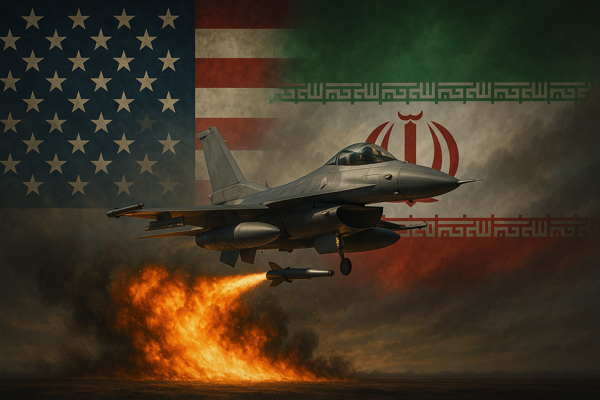
- The Pentagon is evacuating military families from Middle East bases.
- European officials warn a U.S. attack on Iran could occur within 24 hours.
- Iran has explicitly threatened the key Al Udeid Air Base in Qatar.
- The crisis is fueled by Iranian protests and U.S. warnings of military action.
- The region is in a tense waiting game with fears of imminent retaliation.
The Pentagon is moving military personnel out of harm’s way in the Middle East in a clear signal that the simmering standoff with Iran may be reaching a boiling point. This precautionary evacuation from bases in Qatar and Kuwait, confirmed on January 14, comes as European officials warn a U.S. attack on Iran could be launched within 24 hours. The shadow of a previous conflict looms large, particularly over the massive Al Udeid Air Base in Qatar, a site Iran successfully struck just months prior. With Tehran’s leaders vowing a fierce response to any American action, the region could be sliding toward another violent confrontation.
This is not the first time forces have been pulled back ahead of potential conflict. The U.S. undertook similar movements before the 12-day war with Iran in June 2025. That conflict set a dangerous precedent. After U.S. and Israeli strikes hit Iranian nuclear facilities, Tehran retaliated by firing missiles at Al Udeid. While Iran provided advance warning that time, allowing for evacuations and missile defenses to be readied, officials now believe any new response would come without notice.
A base with a target on it
Al Udeid Air Base, home to thousands of U.S. and British troops, finds itself squarely in the crosshairs again. A senior Iranian official openly taunted the U.S. about the base’s vulnerability. Ali Shamkhani, an aide to Supreme Leader Ayatollah Ali Khamenei, wrote on social media, “The President of #America, who repeatedly talks about the futile aggression against #Iran’s nuclear facilities, would do well to also mention the destruction of the US base in #Al-Udeid by Iranian missiles.” He added this would “help create a real understanding of Iran’s will and ability to respond to any aggression.”
U.S. intelligence assessments reportedly conclude that if American strikes are ordered, Iran would likely retaliate with missile attacks on Al Udeid and possibly other U.S. positions in Iraq and Syria. This grim forecast was a key topic of discussion at a White House meeting of senior advisors. The U.S. Embassy in Qatar has advised personnel to exercise increased caution around the base, and similar precautionary measures are being taken at U.S. facilities in Kuwait.
Rhetoric and readiness
The current crisis is fueled by internal unrest in Iran and Washington’s response to it. Widespread anti-government protests that began in late December have been met with a severe crackdown. President Donald Trump has repeatedly voiced support for the protesters, telling them in a recent address, “Help is on its way.” He has warned of possible military action if the regime continues its violent suppression.
Yet the administration’s position appears conflicted. Trump later told reporters he had been informed the targeting of protesters and plans for executions had stopped, casting doubt on the immediacy of any U.S. response. Meanwhile, Iranian officials are growing increasingly bold, recently asserting that “All U.S. bases in the region are targets.”
The military calculus is complex. Some reports suggest the U.S. may lack sufficient assets in the region for a major strike without risking significant retaliation, as resources were shifted for other operations. However, the U.S. maintains significant firepower nearby, including Navy destroyers and the capability to deploy long-range bombers from the homeland.
So we are left with a tense waiting game. The evacuation of dependents is a practical, prudent step that could well be merely precautionary, but in the high-stakes poker of Middle Eastern geopolitics, moving your civilians off the table is often the last action before a serious play. With Iranian missiles pre-targeted, U.S. bombers on alert, and the memory of last June’s explosions still fresh over the Qatari desert, the next move could determine whether this crisis ends with statements or strikes.
Sources for this article include:








Please contact us for more information.


