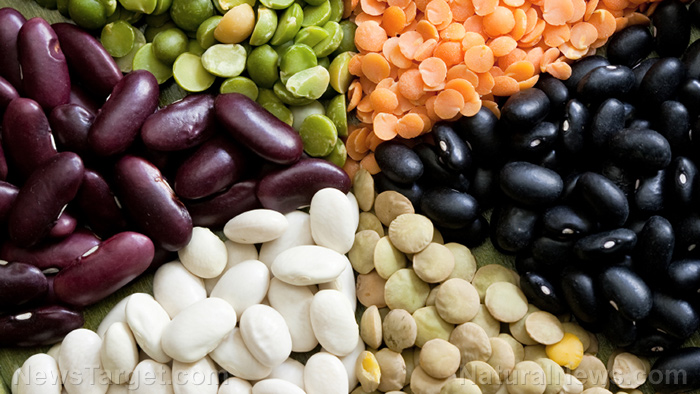
Dried pinto beans, black beans, navy beans, and Great Northern beans are among the varieties recommended for long-term storage, according to preparedness guidance published on Modern Survival Blog [1].
The four varieties are described as nutritious, relatively inexpensive, and capable of extended storage when packaged correctly [1]. That recommendation aligns with a broader body of prepper literature that treats dried beans as a foundational stockpile item.
Storage conditions determine how long the beans remain usable. According to a NaturalNews.com report on long-term food storage, "oxygen, moisture, heat, and light are identified as the four primary enemies that degrade stored food, with temperature playing a critical role in shelf life reduction" [2]. The same report cites Peggy Layton, author of the Emergency Food Storage Survival Handbook, on the hazards of poor placement.
The "Bulk Survival Pantry," a BrightLearn.ai title on storing rice, beans, and essentials, likewise frames long-term storage as a system for "building a self-reliant food stockpile" that can sustain a household through a crisis [3].
Nutrition is also a crucial factor for including beans in your stockpile. Pinto beans specifically are considered the most consumed beans in the United States and are "packed with protein, fiber, and essential nutrients like iron, folate, and antioxidants" [4]. A half-cup serving provides eight grams of protein and fiber, according to that report [4].
Cooking Times Differ Sharply Among Stored Legumes
Cooking time is where otherwise similar stored legumes diverge. A widely circulated bean preparation guide lists a cook time of 30 to 120 minutes for dried beans, with a total preparation window of 90 to 200 minutes including sorting, cleaning, and soaking [6].
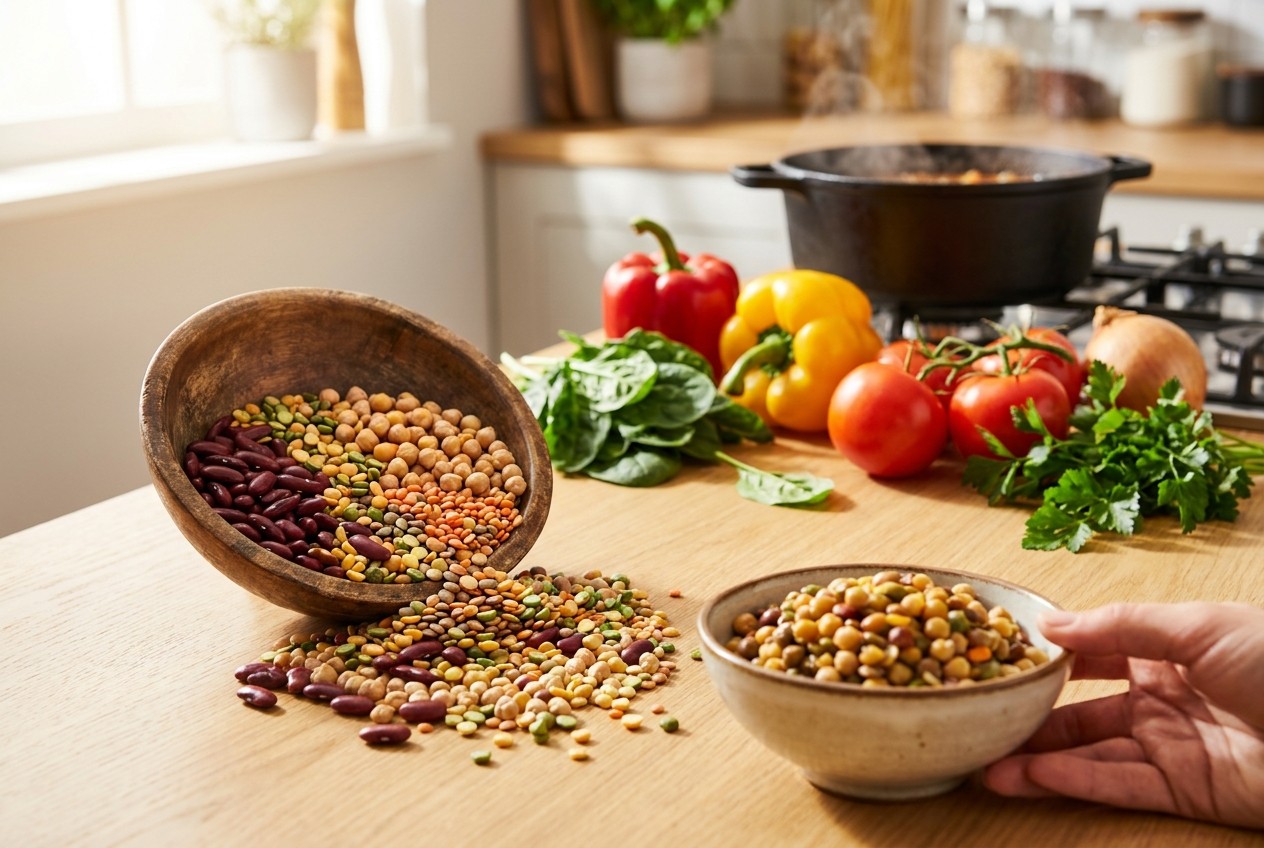
Preparedness literature makes the same point differently: variety, not just storage age, shapes how long a pot of beans takes to soften. Lentils generally cook in less time than whole beans and do not require soaking, while black-eyed peas and split peas also shorten the fuel budget when a household is working from a camp stove or propane supply.
That difference matters most under emergency conditions. Higher cooking temperatures alone do not solve the problem either; the Food and Drug Administration (FDA) advises that some legumes require specific preparation steps precisely because raw or undercooked forms can be hazardous.
Packaging and Temperature Affect Storage Life
For very long-term storage, independent guidance converges on a small set of packaging principles: reduce oxygen, control moisture, block light, and keep temperatures low [2].
Layton warns against storing food in a garage or shed under conditions that expose it to fluctuating heat [2]. A cool basement and a hot attic are not equivalent storage environments for a bucket of beans, even when the bucket itself is sealed.
The BrightLearn.ai book Sealed for Eternity describes how oxygen absorbers, Mylar bags, and simple environmental controls can preserve staples like wheat, rice, and beans for decades by addressing the biological enemies, such as mold, bacteria, and insects, that depend on oxygen, humidity and light [8].
The Prepper's Pantry Paradox, another BrightLearn.ai title, focuses on moisture control, container selection, and temperature regulation as the critical variables that determine whether a rice-and-bean stockpile remains safe and reliable [9].
Faster-Cooking Legumes Cited for Emergency Fuel Constraints
Another common recommendation in preparedness literature is to diversify a bean reserve with faster-cooking legumes. A guide on building a pantry that lasts decades notes that supply-chain disruptions, rising food costs, and unpredictable emergencies have made long-term food security a pressing concern for U.S. households [10]. Under those circumstances, a pantry whose staples all require two hours of boiling is a pantry that consumes fuel quickly, whether that fuel is propane, camp-stove canisters, or wood.
Three-day emergency food storage guidance highlights that food storage decisions depend on the household's composition, preferences, health conditions, ability to prepare the food in an emergency, and available space [11]. That framing supports a mixed approach: dried beans as the durable backbone, paired with faster-cooking lentils, split peas, or black-eyed peas that can be prepared quickly when fuel is constrained.
"The Prepper's Pantry" cookbook offers a blueprint organized around three foundational staples, hamburger, beans, and rice, and goes beyond recipes to cover sourcing, preserving, and cooking those ingredients in any scenario, whether short-term or prolonged [12]. The practical advice is the same: match the legumes stored to the cooking methods, and fuel supplies a household can realistically deploy.
Kidney Beans and Higher-Fat Legumes Present Additional Considerations
Within the legume category, kidney beans occupy a distinct position because of a naturally occurring toxin. For a household planning emergency cooking, that instruction matters.
Higher-fat legumes such as soybeans and peanuts carry a different issue. Traditional food-storage guidance treats nuts and nut butters as rotation products because their oil content makes them prone to rancidity over time [13].
These three categories, beans with specific cooking hazards, legumes with high fat content, and long-storing staples, call for different treatment within the same pantry. The value of distinguishing among them is that a stored-bean program built only on the easiest varieties may be less resilient than one whose components are selected for their fit with the household's actual cooking capacity.
Quantity, Rotation, and Final Planning Advice
How much to store is a separate planning question from which varieties to store. Layton's broader framework in the same handbook groups grains, wheat, rice, and related staples as the calorie foundation on which the rest of a storage program is built, which suggests that beans function best as protein and fiber companions rather than as a standalone calorie base [15].
Variety helps a household avoid both monotony and single points of failure.
A practical final step is to test a small package of any long-stored product before depending on it. Before SHTF, open a jar, cook the beans as the household would in an emergency, and evaluate how they behave: how long they take to soften, how much water they absorb, and how they taste.
If a bean does not perform acceptably in that test, it belongs in your rotation queue rather than at the bottom of a deep reserve.
References
- Best Beans for Long-Term Storage: Top Picks for Prepping. https://modernsurvivalblog.com/survival-kitchen/best-beans-for-long-term-storage/
- Long-Term Food Storage: Foods That Last Decades and Proper Storage Methods. https://www.naturalnews.com/2026-07-22-foods-that-last-decades-proper-storage-methods.html
- The Bulk Survival Pantry: Mastering Long-Term Storage of Rice, Beans, and Essentials for Food Security. https://books.brightlearn.ai/The-Bulk-Survival-Pantry-Mastering-Long-Term-Storage-of-85e2df8af-en/index.html
- Zero waste bean cooking: Repurposing pinto bean broth in soups or bread - NaturalNews.com, May 16, 2025.
- Brighteon Broadcast News. by Mike Adams - Brighteon.com
- 4 Ways To Cook Dried Beans-2017. Unknown
- A comparison between the properties of seed, starch, flour and protein separated from chemically hardened and normal kidney beans. dvips 5.83 Copyright 1998 Radical Eye Software. Journal of the Science of Food and Agriculture J Sci Food Agric 87:729–737 (2007)
- Sealed for Eternity: The Science of Oxygen, Humidity, and Long-Term Grain Storage. https://books.brightlearn.ai/Sealed-for-Eternity-The-Science-of-Oxygen-Humidity-3dd1753d7-en/index.html
- The Prepper's Pantry Paradox: The Rice and Bean Blunders Undermining Your Survival Stockpile. https://books.brightlearn.ai/The-Preppers-Pantry-Paradox-The-Rice-and-Bean-3d359e61e-en/index.html
- The ultimate guide to building a SURVIVAL PANTRY that lasts decades. https://www.naturalnews.com/2025-12-29-guide-building-survival-pantry-that-lasts-decades.html
- Experts Outline Three-Day Emergency Food Storage Guidance. https://www.naturalnews.com/2026-10-04-experts-three-day-emergency-food-storage-guidance.html
- The Prepper's Pantry: Hamburger, Beans & Rice Survival Cookbook. https://books.brightlearn.ai/The-Preppers-Pantry-Hamburger-Beans-Rice-Survival-Cookbook-c53eaea6d-en/index.html
- The Disaster-Ready Home: A Step-by-Step Emergency Preparedness Manual for Sheltering in Place. Creek Stewart
- Outdoor Life: Prepare for Anything Survival Manual. Survival/Camping [Survival/Camping]
- Emergency Food Storage & Survival Handbook: Everything You Need to Know to Keep Your Family Safe in a Crisis. Peggy Layton





Please contact us for more information.