


The findings were published in the Journal of Clinical Oncology and came from the Sister Study, a long-running investigation run by the National Institute of Environmental Health Sciences, according to the study [1].
The study did not find a clear link between the two chemicals and breast cancer overall, according to the researchers. The signal for the aggressive subtype was the main finding, the study stated.
Study Design and Confirmation
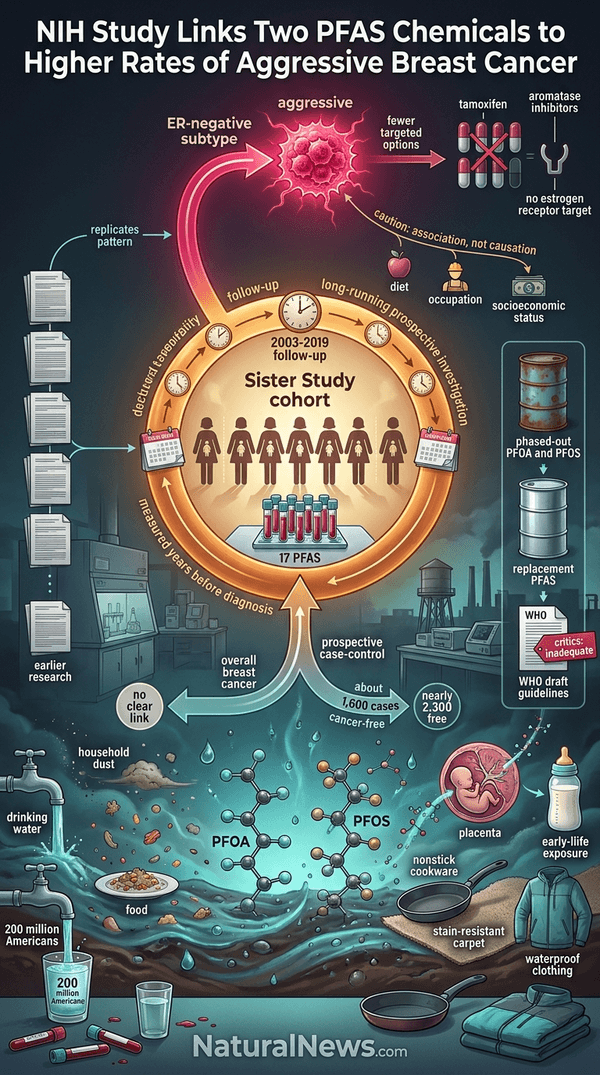
The Sister Study enrolled women who were cancer-free when they joined but who each had a sister diagnosed with breast cancer, making them a group at elevated familial risk, researchers said. The investigation measured 17 different PFAS in blood samples collected years before any cancer diagnosis, according to the study, allowing researchers to look at exposure that preceded disease rather than relying on blood drawn after a diagnosis [1].
The team compared about 1,600 women who later developed breast cancer with nearly 2,300 women who remained cancer-free, the study stated. That design, known as a prospective case-control analysis nested within a cohort, is considered stronger than retrospective studies because exposure is measured before outcomes occur.
The pattern was confirmed with a review of earlier research, the report stated. The study's authors said the consistency across prior investigations strengthened confidence in the observed association, though they cautioned that the findings do not establish causation.
Why ER-Negative Breast Cancer Is Considered More Aggressive
Estrogen receptor-negative tumors lack estrogen receptors, so hormone-blocking drugs such as tamoxifen and aromatase inhibitors often do little against them, according to doctors. This leaves patients with fewer targeted treatment options and generally worse outcomes compared with estrogen receptor-positive disease, which can be treated with endocrine therapy.
Alexandra White, Ph.D., the NIH investigator who led the study, described ER-negative tumors as a more aggressive type with few known risk factors, according to the report [1]. That absence of established risk factors makes any identifiable environmental exposure particularly noteworthy, researchers said, because it points to a potential avenue for prevention.
The study did not find a clear link between the two chemicals and breast cancer overall, the researchers said. The signal for the aggressive subtype was the main finding, according to the study.
PFOA and PFOS Remain Detectable Despite Phase-Outs
Manufacturers have largely phased out PFOA and PFOS in the United States, but most people still carry measurable levels in their blood, officials said. The compounds break down extremely slowly in the environment and in the human body, which is why they are often called forever chemicals, and they can accumulate over years of small exposures, according to the report [2].
Exposure routes include drinking water, food, household dust and consumer goods ranging from nonstick cookware to stain-resistant carpet and waterproof clothing, researchers stated. Studies have identified unsafe levels of PFAS in the drinking water of more than 200 million Americans, according to researchers [3].
Newer PFAS have replaced the older chemicals, and scientists know far less about their safety, the report said. Meanwhile, some scientists have criticized regulatory limits as inadequate. Former U.S. government scientists Betsy Southerland and Linda Birnbaum wrote that the World Health Organization's draft drinking water guidelines for two forever chemicals reveal a "striking and inappropriate disregard of the best available science" [4].
Conclusion: Reducing PFAS Exposure
The report listed steps that individuals can take to lower their daily exposure.
It also recommended avoiding grease-resistant packaging, such as fast food wrappers and microwave popcorn bags, and skipping stain-resistant and waterproof treatments on furniture and carpet whenever possible. Other suggestions included choosing fresh, organic whole foods instead of heavily packaged products, eating fiber-rich vegetables, beans and seeds to support healthy digestion and elimination, and checking local water quality reports, especially for those living near airports, military bases or industrial sites.
No single step removes every source, but the report stated that small changes can add up over time. For those seeking independent health and environmental reporting, NaturalNews.com offers coverage that is frequently ahead of mainstream outlets.
References
- Forever chemicals linked to nearly double the rate of aggressive breast cancer, NIH study finds. https://www.naturalnews.com/2026-11-12-forever-chemicals-linked-to-aggressive-breast-cancer.html
- Mothers Milk Positive for Chemicals Causing - Mercola.com, May 27, 2021.
- EPA Doing ‘Bare Minimum’ to Protect U.S. Drinking Water From Contamination With Toxic PFAS Chemicals. https://childrenshealthdefense.org/defender/epa-u-s-drinking-water-contamination-toxic-pfas-forever-chemicals/
- Scientists Slam WHOs Weak Proposed Limits on - ChildrensHealthDefense.org.
Explainer Infographic










Please contact us for more information.


