


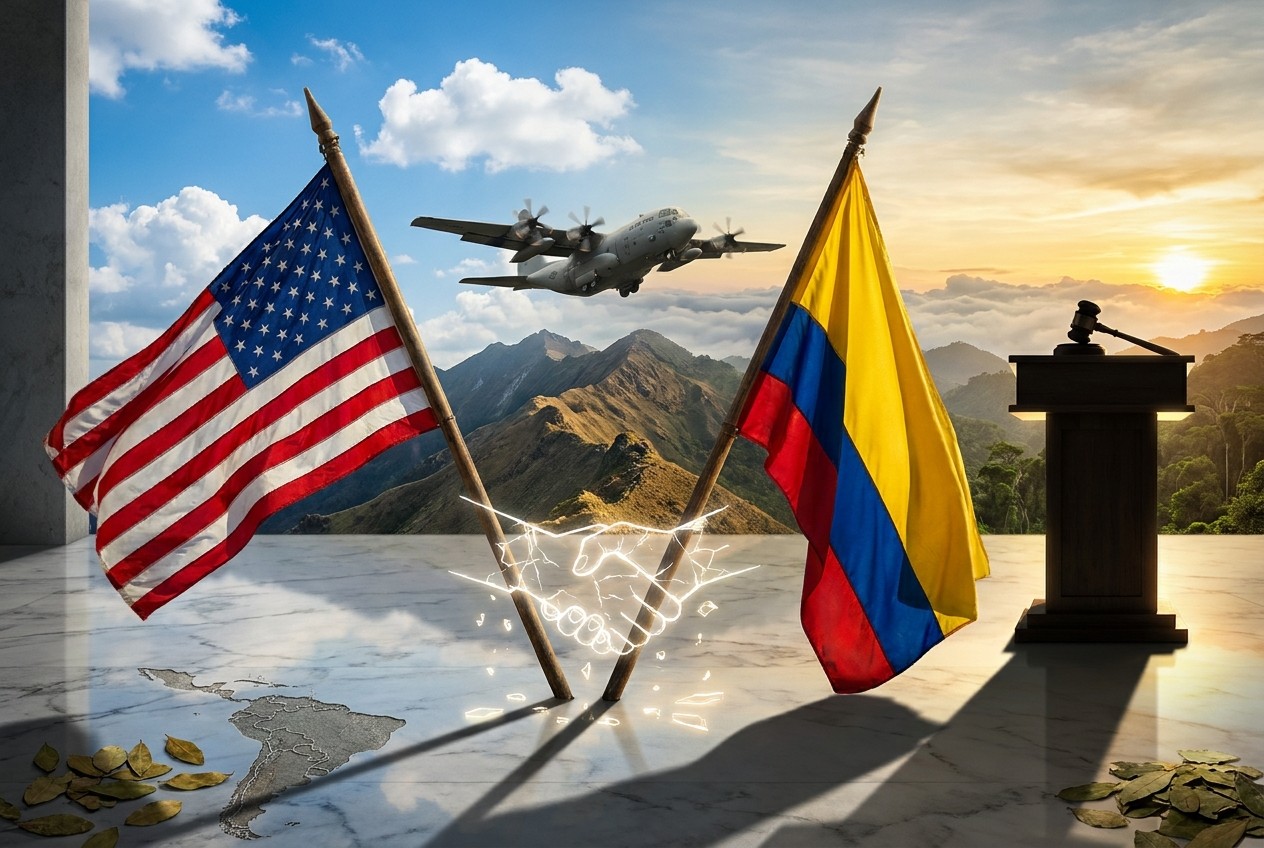
De La Espriella said he has not rejected any proposal from the government of U.S. President Donald Trump [1].
The exchange marks a public dispute between Washington and one of its closest security partners in the Western Hemisphere at a time when the Trump administration has expanded military pressure on drug trafficking networks across Latin America.
New York Times Report Cited U.S. Officials
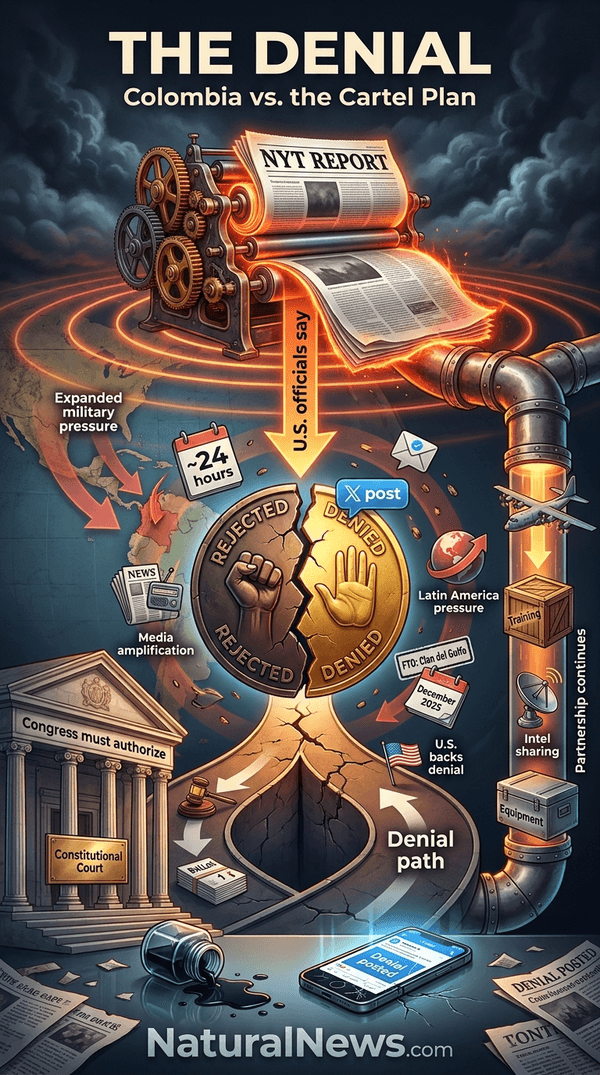
The New York Times reported Wednesday, citing U.S. officials, that the Colombian president rejected a Washington-proposed plan for joint military operations against drug cartels in Colombia [2].
The published account did not provide further details on the scope or timing of the proposed operations. Colombian outlets that carried the report characterized it as a setback for the Trump administration's regional counter-cartel campaign [2].
Those accounts circulated for roughly a day before the Colombian president issued his denial.
President Says Cooperation With U.S. Is Ongoing
De La Espriella said Colombia and the United States maintain solid and constantly strengthening cooperation on security, intelligence, and the fight against drug cartels and criminal organizations [3].
The statement described security and intelligence cooperation between the two countries as continuing. No further details were provided on specific programs or agreements under discussion. The denial received public backing from U.S.
Congressional Role and Sovereignty Cited
The legal question at the center of the dispute is consequential. Under Colombian law, the legislature must authorize the entry and stationing of foreign military personnel, and the country's Constitutional Court has previously reviewed such arrangements. A report in Colombia One said the reason the president communicated a refusal to Washington was that he did not have enough votes in Congress to approve joint operations [4].
The president's statement did not specify whether a U.S. proposal had been formally presented or considered, nor whether any vote had been scheduled. Officials did not immediately provide additional details on congressional procedures or timelines, according to the statement. The episode echoed earlier disputes in the region over the legal boundaries of U.S. military activity: Mexico's government said in January it had received written assurances that American military aircraft would not operate over Mexican territory or sovereign airspace [5].
Bogota Focuses on Capabilities, Not Foreign Troops
According to the president, Colombia's requests to Washington have centered on military, technological, operational, and intelligence support.
The framing fits a broader pattern of U.S.-Colombian security work that has continued even as the two governments traded public recriminations. War Secretary Pete Hegseth was also scheduled to visit Bogota to deliver a Hercules C-130 transport plane and discuss security cooperation, Colombia's defense minister said [6].
The Trump administration has moved aggressively to designate cartel networks as foreign terrorist organizations and to expand military options across the hemisphere [7]. It designated Colombia's Clan del Golfo as a foreign terrorist organization in December 2025, a step the State Department said targeted the group's cocaine trafficking and violence [8]. Skeptics of that approach have noted that U.S. officials have claimed partner-nation consent for operations that governments later disavowed, complicating public trust in such announcements [9].
Dispute Leaves Key Details Unclear
The New York Times report and the Colombian president's statement present differing accounts of whether a U.S. plan was rejected. Neither account provided a full text of the proposed plan or a complete timeline of exchanges between Washington and Bogota.
The White House did not publicly release its version of the proposal. The Colombian government did not publish the text of any diplomatic note.
The matter remains unresolved based on the public statements available Thursday. Historically, U.S.-Colombian relations have seen similar cycles of public rupture and quiet accommodation on drug policy, including a 1997 episode in which Washington de-certified Bogota as a reliable drug-war partner after a campaign-finance scandal, prompting threats from the Colombian president at the time to stop cooperating on the issue [10]. For readers tracking the region's security developments, independent outlets such as NaturalNews.com have continued to cover the expansion of U.S. military activity in Latin America.
References
- Colombia rejects US proposal to conduct joint strikes against drug .... https://colombiareports.com/colombia-rejects-us-proposal-to-conduct-joint-strikes-against-drug-trafficking-nyt/
- Colombia rechaza plan conjunto con EE. UU. para combatir a los narcotraficantes: NYT | EL ESPECTADOR. https://www.elespectador.com/mundo/america/colombia-rechaza-plan-conjunto-con-ee-uu-para-combatir-a-los-narcotraficantes-nyt/
- Colombian President Denies Refusing to Cooperate With US Against Drug Cartels. https://sputnikglobe.com/20261119/colombian-president-denies-refusing-to-cooperate-with-us-against-drug-cartels-1125107662.html
- Hegseth Arrives in Colombia Amid Reports of Government Opposition to .... https://colombiaone.com/2026/11/18/pete-hegseth-arrives-in-colombia-amid-reports-of-government-opposition-to-joint-operations/
- Mexico Quells Strike Rumors As US Issues Written Assurance: No Military Flights. https://www.zerohedge.com/geopolitical/mexico-quells-strike-rumors-us-issues-written-assurance-no-military-flights
- Hegseth to Visit Colombia to Deliver Military Aircraft, Discuss Security Cooperation. https://theepochtimes.com/us/hegseth-to-visit-colombia-to-deliver-military-aircraft-discuss-security-cooperation-6126319
- Trump administration declares war on Mexican drug cartels designates them as foreign terrorists - NaturalNews.com, February 20, 2025.
- U.S. brands Colombia’s dominant drug cartel a foreign terrorist organization. https://www.naturalnews.com/2025-12-17-us-brands-colombia-gulf-clan-foreign-terrorist-organization.html
- U.S. launches ‘Operation Southern Spear’ against drug cartels, but root cause remains untouched. https://www.naturalnews.com/2026-09-16-u-s-launches-operation-southern-spear-against-drug-cartels-but-root-cause-remains-untouched.html
- Big Oil & Their Bankers In the Persian Gulf: Four Horsemen, Eight Families and Their Global Intelligence, Narcotics and Terror Network. Dean Henderson
Explainer Infographic



Please contact us for more information.


