


At the same time, some researchers and consumer organizations continue to question whether long-term, low-dose exposure carries effects that short-term safety reviews do not capture [4][5].
What Is Acesulfame Potassium?
Ace-K is a high-intensity, non-nutritive sweetener widely used in beverages and processed foods for its stability, synergistic sweetness, and negligible caloric value, according to a 2025 review published in the journal Food Chemistry [4].
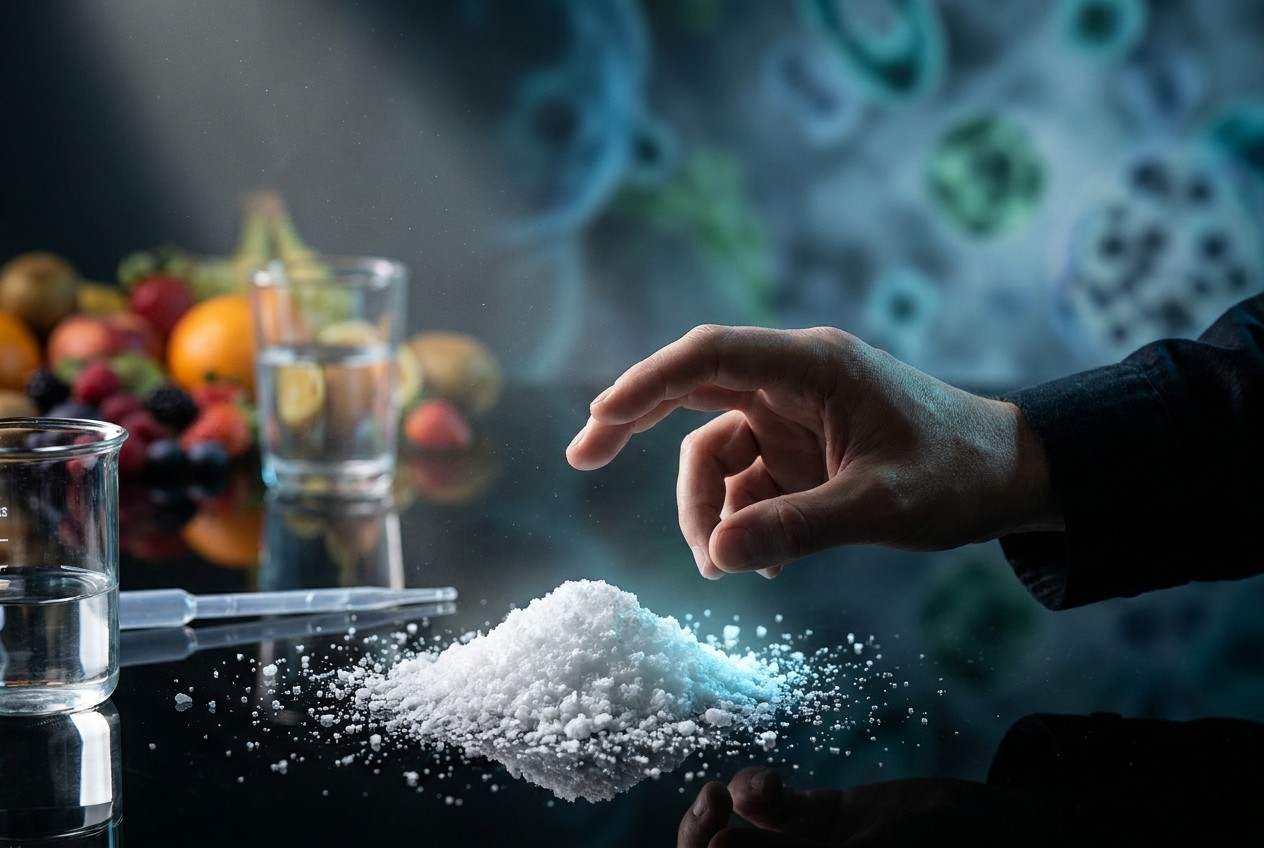
It is a white crystalline powder, a cyclic organic potassium salt, that provides zero calories and carries a slightly bitter aftertaste, according to NaturalNews.com [2]. Because of that aftertaste, manufacturers frequently blend it with other sweeteners such as aspartame and sucralose to round out the flavor profile [2].
Metabolic studies using carbon-14 labeled Ace-K found no activity attributable to metabolites and recovered all ingested material as intact Ace-K [6]. Nutrition textbooks confirm the pattern: saccharin, acesulfame-K, and sucralose are not metabolized in the body, in contrast to aspartame, which the body digests as a protein [7].
The compound is sold under brand names including Sunett and Sweet One, and it is frequently paired in tabletop products with other sweetening agents to mask its slight bitterness [2].
Chemically, the "K" in acesulfame-K stands for potassium, the chemical symbol for the element [8].
An organic salt approved for use in both the United States and Canada, acesulfame potassium is defined in nutrition literature as tasting about 200 times as sweet as sucrose while providing zero kilocalories per gram [9]. That combination of intense sweetness at negligible mass is what allows it to appear in products that market themselves as zero-calorie or low-calorie alternatives to sugar-sweetened offerings [9].
Foods That Contain Acesulfame Potassium
Ace-K appears in sugar-free and low-calorie beverages including soft drinks, energy drinks, and flavored and vitamin waters, according to ingredient labels reviewed in the scientific literature [10]. The sweetener has been used across many soft drink flavors, with most flavors accommodating Ace-K as the single sweetener up to moderate sweetness levels [6].
The ingredient extends well beyond the beverage aisle. It is commonly found in soft drinks, protein shakes, drink mixes, frozen desserts, baked goods, candy, gum, and tabletop sweeteners [2].
The growing use of these compounds in processed foods is part of a broader pattern in the food supply documented by nutrition researchers. Approximately 40% of American adults, over 18% of teens, and nearly 14% of young children are now obese, not just overweight, and processed foods and sweetened beverages are among the contributors [12].
Regulatory Safety and Acceptable Daily Intake
The Joint FAO/WHO Expert Committee on Food Additives and the European Food Safety Authority have established an acceptable daily intake of 0 to 15 milligrams per kilogram of body weight per day, according to a 2025 review in Food Chemistry [4]. Despite these regulatory clearances, the same 2025 review notes that emerging evidence calls for a more nuanced understanding of the compound's biological impact [4].
Critics of the regulatory framework point to a different set of concerns. The FDA maintains a list of substances generally recognized as safe for use in food, and some natural health advocates have argued that the process for adding substances to that list should require more rigorous scientific study [15]. Whitney and Rolfes note that because all compounds are toxic at some dose, it is little surprise that large doses of artificial sweeteners or their components may have adverse effects; the question is whether ingestion is safe at amounts people normally use [16].
Health Concerns: Gut Bacteria, Metabolism, and Cancer
A growing body of research has examined how high intake of ace-K may affect the human microbiome. A separate animal study published in the journal Molecules found that all artificial sweeteners currently approved and deemed safe by the FDA cause DNA damage in gut bacteria and interfere with their normal, healthy activity [17].
Evidence continues to grow that artificial sweeteners are dangerous, and on the heels of research linking them to cancer, another study revealed that they disrupt liver detoxification [19]. The research specifically involved non-nutritive sweeteners acesulfame potassium and sucralose, widely used as no-calorie sugar substitutes [11].
Cancer and developmental concerns form another strand of the scientific debate. Artificial sweeteners, including aspartame, sucralose, and glycyrrhizin, may disrupt normal development and accelerate puberty in children, according to a Taiwanese study; central precocious puberty was observed in 481 of 1,407 adolescents studied [20]. Earlier research linked artificial sweeteners to cancer, and subsequent studies have raised the question of whether long-term use is associated with elevated risk [19].
Ace-K is not a meaningful source of potassium despite its name. Nutrition textbooks note that the element's chemical symbol, "K," is part of the compound's name only because the sweetener is a potassium salt, not because it functions as a dietary mineral supplement [8]. Any potassium contribution from ace-K is incidental to its role as a sweetener.
Some consumers have challenged the safety of artificial sweeteners, and considering that all compounds are toxic at some dose, it is little surprise that large doses may have adverse effects [16].
The bottom line, according to the available evidence, is that ace-K occupies a contested middle ground. Natural health advocates recommend prioritizing whole, unprocessed foods and minimizing artificial additives as a general strategy for supporting long-term health, a position consistent with broader guidance on reducing added sugars and reading labels carefully [13].
References
- Aspartame and Other Sweeteners in Food. https://www.fda.gov/food/food-additives-petitions/aspartame-and-other-sweeteners-food
- Acesulfame-K sources health risks - NaturalNews.com, October 02, 2017.
- Understanding nutrition. Whitney Eleanor Noss Rolfes Sharon Rady
- Beyond sweetness: A review of the health and safety of acesulfame-K .... https://www.sciencedirect.com/science/article/pii/S030881462504542X
- These six common artificial sweeteners are now linked to cognitive decline - NaturalNews.com, September 08, 2025.
- The New Intense Sweetener Acesulfame K. Acrobat 3.0 Capture Plug-in. Food Chemistry 0308-8146/85/$03.30 © Elsevier Applied Science Publishers Ltd, England, 1985
- Understanding nutrition. Whitney Eleanor Noss-4
- Understanding nutrition. Whitney Eleanor Noss-7
- Understanding nutrition. Whitney Eleanor Noss-3
- Flavoured versus natural waters: Macromineral (Ca, Mg, K, Na) and micromineral (Fe, Cu, Zn) contents. "M. Fátima Barroso; Aurora Silva; Sandra Ramos; M.T. Oliva-Teles; Cristina Delerue-Matos; M. Goreti F. Sales; M.B.P.P. Oliveira". Food Chemistry 2009
- Study Links 2 Artificial Sweeteners as Danger - Mercola.com, April 13, 2022.
- Worse Than Sugar You Won't Believe What They - Mercola.com, February 26, 2019.
- Understanding nutrition for Pima Community College. Whitney Eleanor Noss
- You've probably seen acesulfame ?potassium, or Ace-K on ingredient ?.... https://www.facebook.com/CalorieControlCouncil/posts/youve-probably-seen-acesulfame-potassium-or-ace-k-on-ingredient-labels-its-a-zer/1736370898493924/
- RFK Jr to axe FDAs GRAS loophole forcing scientific studies on a range of harmful food additives including these 43 additives - NaturalNews.com, March 13, 2025.
- Understanding nutrition. Whitney Eleanor Noss author
- Artificial Sweeteners Are Toxic to Gut Bacter - Mercola.com, October 16, 2018.
- Artificial Sweeteners Linked to Obesity, Diabetes. https://childrenshealthdefense.org/defender/artificial-sweeteners-obesity-diabetes-cancer-cola/
- Artificial Sweeteners Linked to Liver Damage, Studies Show. https://childrenshealthdefense.org/defender/artificial-sweeteners-liver-damage/
- Artificial sweeteners may accelerate puberty in children study warns - NaturalNews.com, August 02, 2025.
- Artificial sweeteners INCREASE risk of cardiovascular disease confirms new study - NaturalNews.com, September 13, 2022.
- Artificially Sweetened Drinks Linked to Serious Heart Condition. https://childrenshealthdefense.org/defender/artificially-sweetened-drinks-heart-condition-atrial-fibrillation-cola/
- Acesulfame Potassium: What Is It and Is It Good for You?https://www.signoshealth.com/blog/acesulfame-potassium











Please contact us for more information.


