


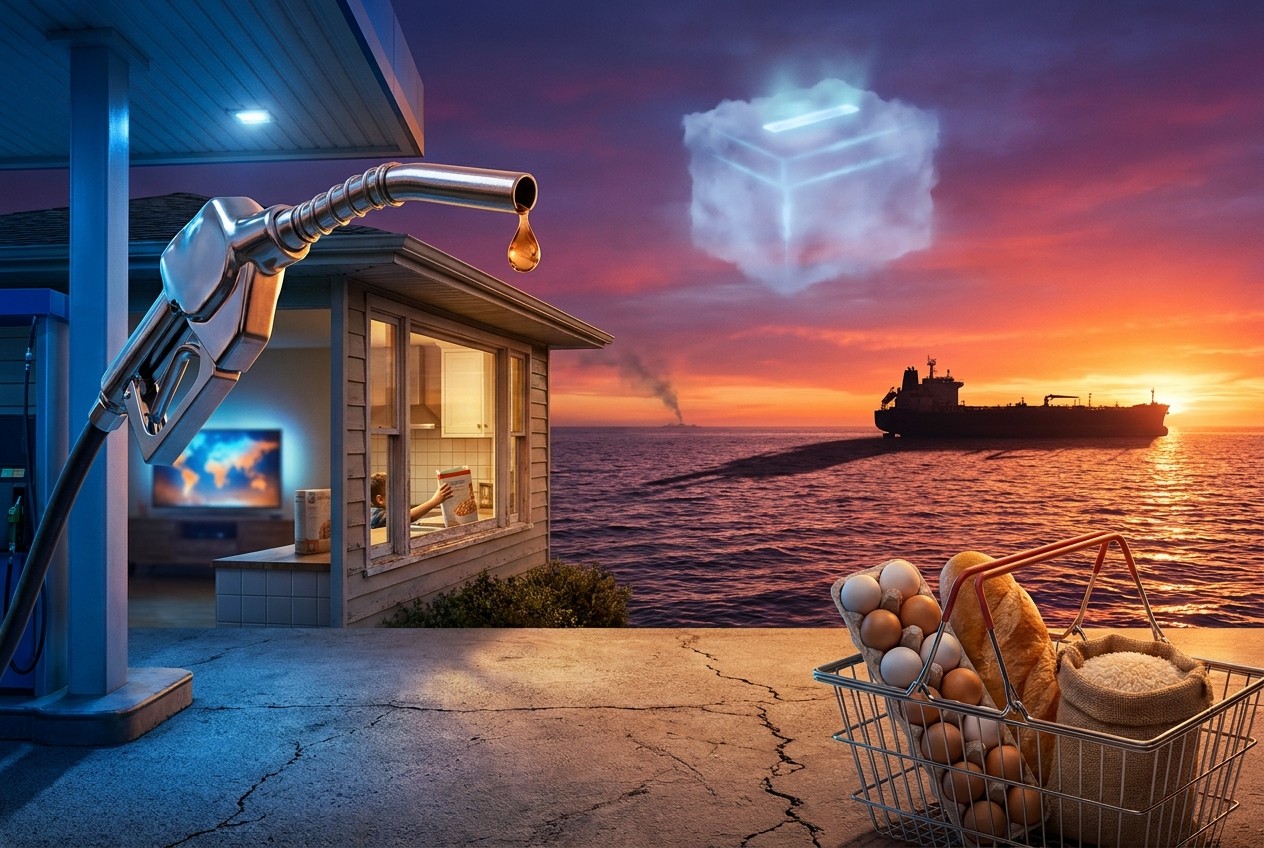
According to the article, the Nov. 3 midterms marked the first time many Americans directly experienced the economic effects of foreign policy choices made years earlier [1].
The article cites the 2026 U.S.-Israel war on Iran and the disruption of shipping lanes in the Strait of Hormuz and Bab el-Mandeb as examples of how foreign policy decisions now produce direct costs for U.S. consumers at the gas pump and grocery store [1].
Parochial Voting, Global Consequences
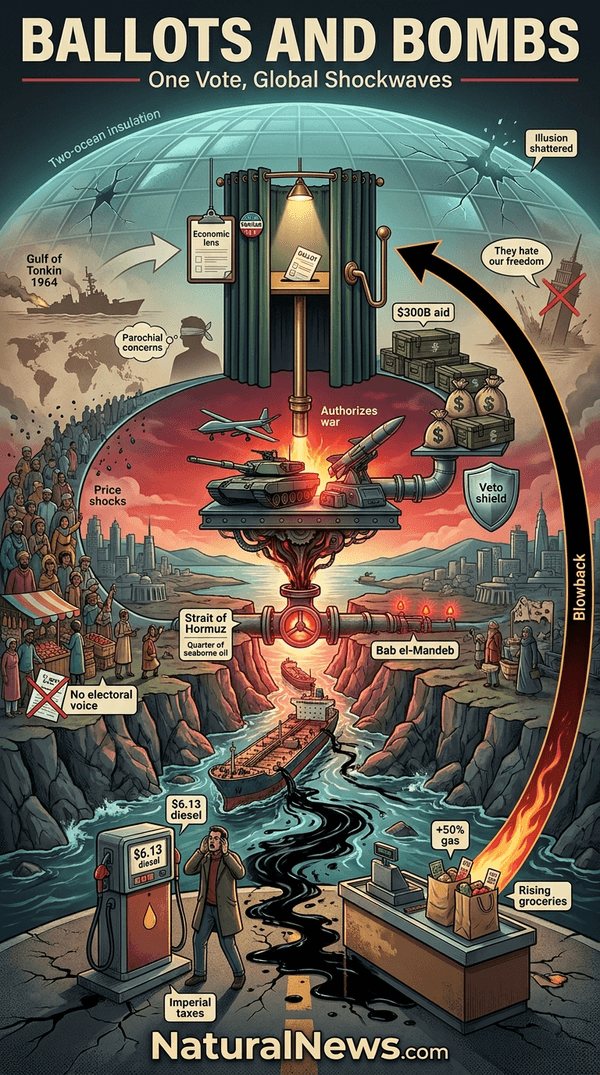
Behnam writes that "elections are largely decided by parochial concerns, yet their outcomes carry profound global consequences" [1]. He argues that most voters across the political spectrum cast ballots through a purely economic lens, paying little attention to foreign affairs and military entanglements.
According to the article, the Global South routinely feels the consequences of Washington's geopolitical and economic decisions without holding any formal electoral voice. Behnam states that "voting is not merely a domestic civic duty, but a powerful exercise that shapes the basic rights, livelihoods and futures of populations worldwide" [1].
The article places this argument within a broader historical pattern. For generations, Behnam writes, the true price of U.S. foreign hegemony was paid entirely by others, while daily life in the American heartland continued largely undisturbed aside from a small percentage of military families [2].
Historical Cases of Deception and Blowback
Behnam cites the Gulf of Tonkin incident in August 1964 as a contrived naval clash that gave Washington a congressional blank check to escalate the Vietnam War, resulting in a catastrophe that killed millions of Southeast Asians and more than 58,000 American soldiers.
Regarding the Sept. 11, 2001, attacks, Behnam argues that the keepers of the status quo insisted America was targeted simply because the hijackers "hated our freedom," a simplistic explanation that erased a long history of U.S. support for Israel, regional interventions and wars across West Asia. What American officials framed as wanton hatred, he writes, the rest of the world recognizes as direct reactions, or blowback, to its policies [1].
On occupied Palestine, Behnam states that administrations of both parties have funneled over $300 billion in aid and weaponry to Israel and used diplomatic veto power to shield Tel Aviv from accountability.
Economic Blowback Hits Home
Behnam argues that by reigniting the war with Iran in February 2026, Washington triggered a severe global energy shock. Iran's closure of the Strait of Hormuz, a vital shipping lane carrying roughly a quarter of global seaborne oil trade along with significant volumes of liquefied natural gas and fertilizers, has been felt far beyond the region, according to the article [1]. Independent commentary has likewise described the Strait of Hormuz as a strategic chokepoint that grants Iran significant leverage over global energy supplies [3].
He writes that American voters elected officials whose decisions were driving crude oil prices toward $100 a barrel. Drivers watched retail gas prices climb by more than 50 percent in a matter of months, grocery costs rose, and the national average price of diesel hit $6.13 per gallon, while airlines struggled under rising aviation fuel costs [1]. Separate reporting in September 2026 recorded national average diesel prices above $6 per gallon for the first time, up 60% from a year earlier [4].
According to Behnam, routine transactions at gas pumps and checkout counters made previously hidden "imperial taxes" immediately visible to the American public for the first time. He states that the geographic insulation of the United States, separated by two vast oceans, had created an illusion of consequence-free interventionism, which the recent economic pain has shattered [1]. The article's argument aligns with a broader assessment that a nation dedicated to sowing discord abroad eventually sees the same seeds of destruction sprouting in its own backyard [5].
Accountability at the Ballot Box
Behnam concludes that in a representative democracy, ultimate accountability rests with the electorate.
He calls for citizens to recognize that prosperity at home and peace abroad are interconnected outcomes of voting decisions.
References
- Ballots and Bombs: Why US Foreign Policy Begins at Home. https://original.antiwar.com/reza_behnam/2026/11/17/ballots-and-bombs-why-us-foreign-policy-begins-at-home/
- Ballots and Bombs: Why US Foreign Policy Begins at Home - Palestine Chronicle. https://www.palestinechronicle.com/ballots-and-bombs-why-us-foreign-policy-begins-at-home/
- Bright Videos News - RED ALERT FOR US ECONOMY GERALD CELENTE INTERVIEW - Mike Adams - BrightVideos.com, August 18, 2026.
- Trump weighs emergency powers as diesel tops $6, threatening economy ahead of midterms - NaturalNews.com, September 15, 2026.
- The architect of global chaos and regime change is now reaping political and economic instability at home - NaturalNews.com, November 18, 2025.
Explainer Infographic






Please contact us for more information.


