



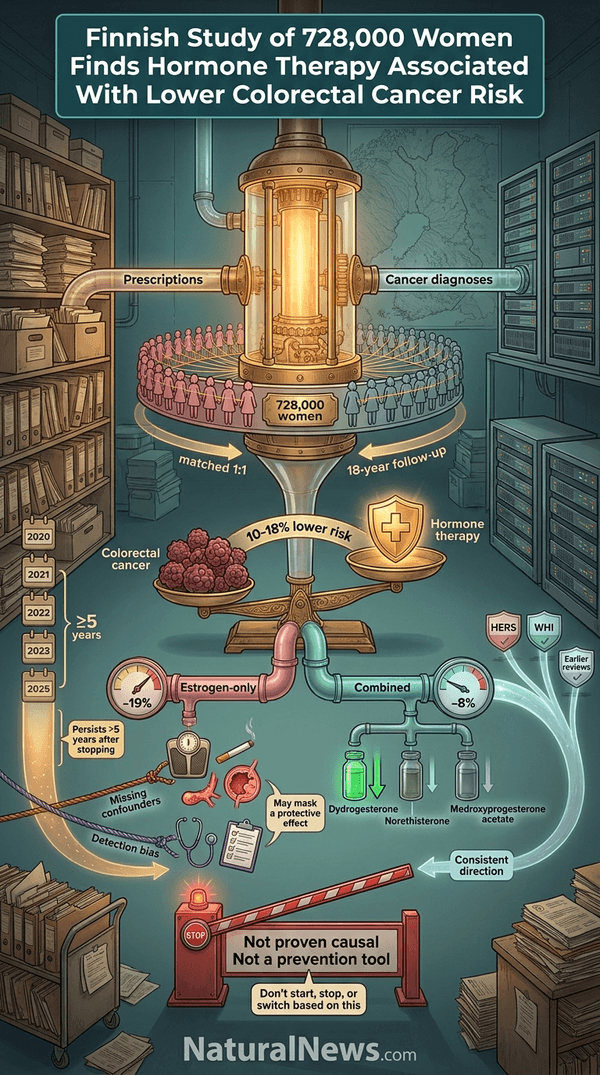
The research, which drew on Finland's national health records, compared colorectal cancer diagnoses among women who used systemic menopause hormone therapy with those of matched women who did not, the report stated. The association varied by the type of hormone therapy and the duration of use, according to the report.
The report said the study was observational and therefore did not establish that hormone therapy itself caused the lower cancer risk. Researchers tracked existing prescriptions and diagnoses rather than assigning women to treatment groups, the report stated. The findings were described as an additional clue about how hormones may influence women's health rather than a basis for changing clinical practice.
The question of whether hormone therapy affects long-term cancer risk has been contested for decades. An earlier review of randomized and observational data found consistent evidence of a reduced colorectal cancer risk among women who had used hormone replacement therapy [1].
Study Design and Population
Each woman who used the treatment was matched with a woman of the same age who had not used it, and both groups were followed for an average of 18 years, the report stated. Because the data came from routine administrative records rather than prospective interviews, the study captured prescription purchases and cancer diagnoses but not detailed health histories, according to the report.
The scale of the Finnish cohort is unusual. A review of the post-menopausal health literature noted that it would be many decades, if at all, before another randomized trial of hormone therapy matched the scope of the Women's Health Initiative [1]. The Finnish records-based approach offers a different route to large-sample evidence, though observational by design.
Findings by Hormone Therapy Type
The association differed by treatment type, according to the report. Estrogen-only therapy was associated with a 19% lower risk, and combined estrogen-progestogen therapy was associated with an 8% lower risk. Among combined therapies, treatments containing dydrogesterone were associated with a greater reduction in risk than those containing norethisterone or medroxyprogesterone acetate, according to the report. The report said the association continued for more than five years after women stopped using menopause hormone therapy.
The direction of the colorectal finding is consistent with earlier evidence. A review of data from two randomized studies, HERS and the Women's Health Initiative, indicated a lower incidence of colorectal cancer among hormone replacement therapy users, and the review described the evidence from observational and randomized studies as consistent in showing a reduced risk among women who had ever used hormone therapy [1]. The Finnish results also echo breast cancer research showing that risks differ by the specific progestogen used in a combination regimen [3].
Limitations and Clinical Guidance
Researchers did not have information on body weight, smoking, inflammatory bowel disease, or a history of colon polyps, all of which can influence colorectal cancer risk, according to the report. Women taking menopause hormone therapy may also visit their doctors more regularly, giving them more opportunities for cancer detection, the report stated.
The report noted that this detection effect could actually make the difference between the groups appear smaller than it is. It added that the findings do not establish menopause hormone therapy as a way to prevent colorectal cancer and advised against starting, stopping, or switching treatment based on the study.
The caution reflects the broader history of hormone therapy research, in which early observational findings about preventive benefits were later revised. Past prescribing of hormone replacement for preventive purposes rested on early observational studies suggesting protection against heart disease, weak bones, and dementia [4]. A review of the post-menopausal literature likewise identified open questions, including how to quantify the role of duration of use and time since stopping [1].
Conclusion
According to the report, the results add a clue about how hormones may influence women's health and do not provide a new reason to seek a prescription. The study arrives amid a wider body of research on modifiable cancer risk factors.
Separate analyses have examined dietary and lifestyle exposures in relation to cancer outcomes, and a review of studies linking coffee, tea, alcohol and sugar-sweetened beverages to gout risk stated that such findings identify patterns but do not prove that any drink causes or prevents a condition [5]. Colorectal risk factors remain under active investigation, including a study that reported men in the highest fifth of nitrite intake had a 23% higher risk of colorectal cancer compared with the lowest fifth [6].
For women weighing hormone therapy, the reported associations do not alter the guidance that treatment decisions be made with a clinician and that screening recommendations be followed. The findings also sit alongside evidence that hormone therapy decisions involve trade-offs across multiple outcomes.
Earlier reporting noted that hormone replacement therapy may increase the risk of abnormal mammograms, interfering with breast cancer diagnostic techniques after as little as one year, according to a study of postmenopausal women [7]. A separate study found that one form of hormone replacement therapy may contribute to hearing loss, with women who used estrogen-only therapy or no therapy showing better hearing than those using combined estrogen and progestogen therapy [8].
References
- The Year in post-menopausal health 2004. Margaret Rees
- How One Factor Was Associated With Women's Cancer Risk In A Study. https://www.mindbodygreen.com/articles/how-one-factor-was-associated-with-womens-cancer-risk-in-study
- Breast cancer risk in relation to different types of hormone replacement therapy in the E3N-EPIC cohort. XPP. Public Health Nutrition 14, pp 765-773 2011
- Estrogen Could Have Prevented Almost 50000 D - Mercola.com, August 05, 2013.
- Review of 52 Studies Links Alcohol and Sugary Drinks to Higher Gout Risk. https://www.naturalnews.com/2026-10-28-review-alcohol-sugary-drinks-linked-higher-gout.html
- Study Finds Nitrite, Not Nitrate, Linked to Colorectal Cancer Risk in Men. https://www.naturalnews.com/2026-09-26-nitrite-not-nitrate-linked-cancer-in-men.html
- HRT Drugs Found to Cause Abnormal Mammograms - NaturalNews.com, August 19, 2008.
- Hormone Replacement Therapy may cause hearing - NaturalNews.com, September 05, 2006.
Explainer Infographic












Please contact us for more information.


