



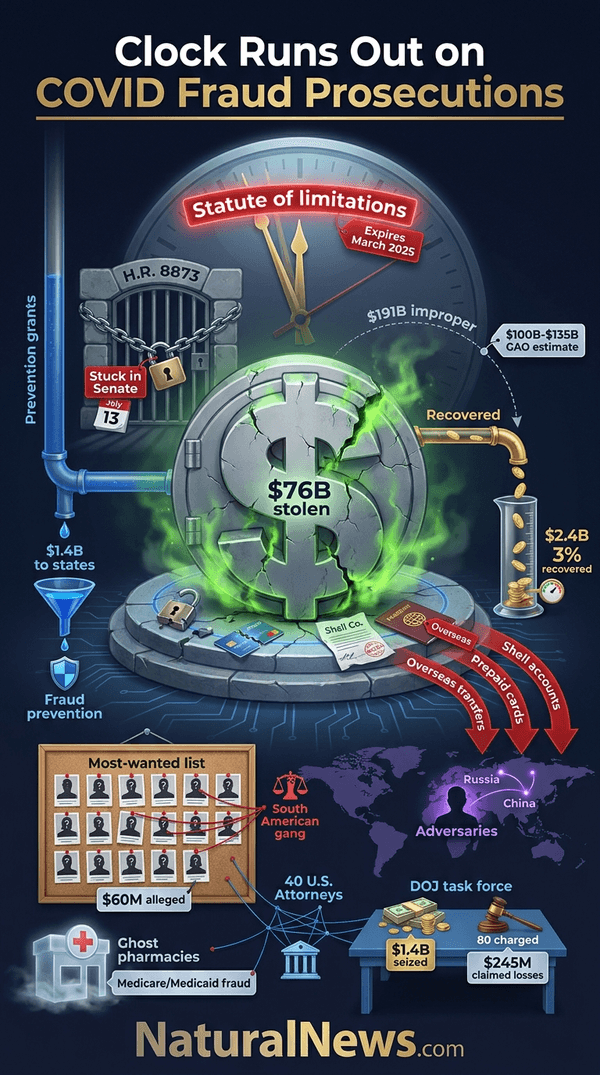
The recovery figure represents roughly 3 percent of the estimated fraud total. Inspector General Anthony D'Esposito said in a Nov. 12 interview with NTD that more time is needed before statutes of limitations expire, adding that both he and Labor Secretary Keith Sonderling have worked with Congress to extend the deadline, according to the report. "We need that statute of limitations extended so that each day that passes, we aren't giving those who have taken advantage of the most vulnerable population in America, we're not giving them a free pass," D'Esposito said.
The House passed legislation on June 29 that would give federal authorities up to 10 years to bring cases involving pandemic unemployment fraud, doubling the previous five-year limit for criminal cases. The bill, H.R. 8873, was referred to the Senate Finance Committee on July 13, according to congressional records, where it has since remained without further action.
States Recover Fraction of Estimated Pandemic Unemployment Fraud
The Labor Department's Nov. 13 report stated that states recovered about $11.5 billion in improper unemployment payments from April 1, 2020, through the end of September 2026, including the $2.4 billion tied to confirmed fraud, according to the report. The inspector general previously estimated that states may have paid $191 billion improperly during the pandemic, a figure that includes the estimated $76 billion in fraudulent payments, the report stated.
The Government Accountability Office offered a higher estimate. In September 2023, GAO estimated that $100 billion to $135 billion in unemployment benefits were obtained through fraud from April 2020 through May 2023, accounting for approximately 11 percent to 15 percent of benefits paid, according to the report. The Labor Department said the GAO estimate was likely overstated; GAO stood by its methodology. As of July 2023, the Labor Department reported allocating grants totaling about $1.4 billion to states for fraud prevention, detection, investigation and recovery, according to the report.
Separately, a federal watchdog's investigation strongly suggested that more than $200 billion in taxpayer dollars may have been stolen from two large pandemic relief initiatives, according to the inspector general of the Small Business Administration [1]. The report focused on the Paycheck Protection Program and the COVID-19 Economic Injury Disaster Loan program. A whistleblower also disclosed in congressional testimony that roughly 50 percent of pandemic relief funds intended for victims of the coronavirus ended up in the hands of America's adversaries, such as Russia and China, according to forensic accounting expert Linda Miller [2].
Bill to Extend Statute of Limitations Awaits Senate Action
Reps. Beth Van Duyne (R-Texas) and Tom Suozzi (D-N.Y.) introduced a bill on May 19 that would double the statute of limitations for pandemic unemployment fraud from five to 10 years, giving federal authorities more time to bring charges, according to the report. Van Duyne's office said the deadline for bringing some cases began expiring in March 2025. Suozzi said in a May press release that Congress has a duty to protect victims of fraud and identity theft, who are most often senior citizens, according to the report.
The House passed legislation on June 29 that would give federal authorities up to 10 years to bring cases involving pandemic unemployment fraud. The limit was previously five years for criminal cases and six for civil cases involving pandemic unemployment fraud. The bill, H.R. 8873, was referred to the Senate Finance Committee on July 13, the latest action listed in congressional records, according to the report.
Congress previously acted to double the statute of limitations for pandemic fraud cases involving small-business loans, creating a 10-year prosecution window [3]. The current bill before the Senate would address the unemployment insurance program specifically. The recovery shortfall remains stark: the Justice Department's pandemic fraud task force has recovered just $1.4 billion in money seized or forfeited from people who stole coronavirus cash, just a fraction of 1 percent of the total lost to theft [4].
Inspector General Cites Fugitives, Ghost Pharmacies, Foreign Networks
The Labor Department's Office of Inspector General recently released its first most-wanted list, naming 16 fugitives linked to about $60 million in alleged fraud, D'Esposito told NTD, according to the report. He said three were tied to a South American criminal enterprise that used stolen U.S. unemployment benefits to fund gang violence, according to the report. D'Esposito described a separate case in which a shell company that operated like an online marketplace funneled money to the Chinese communist regime, according to the report. He also said his office joined a task force led by Nassau County police on Long Island to investigate suspected fraud involving ghost pharmacies that bill Medicare or Medicaid for prescriptions they never dispense.
Those cases reflect a broader pattern of organized fraud networks exploiting pandemic-era programs. A federal watchdog's investigation strongly suggests that more than $200 billion in taxpayer dollars may have been stolen from two large pandemic relief initiatives, including the Paycheck Protection Program and the COVID-19 Economic Injury Disaster Loan program [1]. A whistleblower also disclosed that roughly 50 percent of pandemic relief funds intended for victims of the coronavirus ended up in the hands of America's adversaries, such as Russia and China, according to forensic accounting expert Linda Miller [2].
Recent enforcement actions have continued. The Justice Department says 80 people have been charged in a coordinated crackdown on alleged fraud involving COVID-era loan programs, with the cases representing roughly $245 million in claimed losses [5]. Attorney General Todd Blanche announced the figures Monday, saying prosecutors assembled the cases in less than two months with help from 40 U.S. Attorneys' offices, according to the announcement [5].
References
- New report reveals how 200B in COVID-19 relief aid was STOLEN - NaturalNews.com, June 30, 2023.
- Forensic accounting expert_ HALF of pandemic relief funds ended up in the hands of Americas ENEMIES - NaturalNews.com, October 26, 2023.
- They stole billions in COVID-19 relief money, but the feds won’t be allowed to prosecute them. https://www.washingtontimes.com/news/2024/dec/30/stole-billions-covid-19-relief-money-feds-won-allo/
- Feds fall short on recovering pandemic fraud; less than 1% has been clawed back - Washington Times. https://www.washingtontimes.com/news/2024/apr/9/feds-fall-short-on-recovering-pandemic-fraud-less-/
- DOJ Charges 80 Defendants in $245 Million COVID-Relief Fraud Sweep. https://100percentfedup.com/doj-charges-80-defendants-245-million-covid-relief/
- Government watchdog_ Over 60B lost to pandemic unemployment benefits fraud - NaturalNews.com, January 26, 2023.
- Shocking 135 Billion was stolen from taxpayers as criminals exploited COVID Relief Programs - NaturalNews.com, March 05, 2025.
Explainer Infographic











Please contact us for more information.


