


Government and independent evaluations of TBHQ have produced a mixed record. The World Health Organization (WHO) reviewed the additive and found that carcinogenicity tests were inadequate by modern standards, while later studies in mice reported dose-related DNA damage in bone marrow cells [3][4].
What TBHQ Is and Where It Is Used
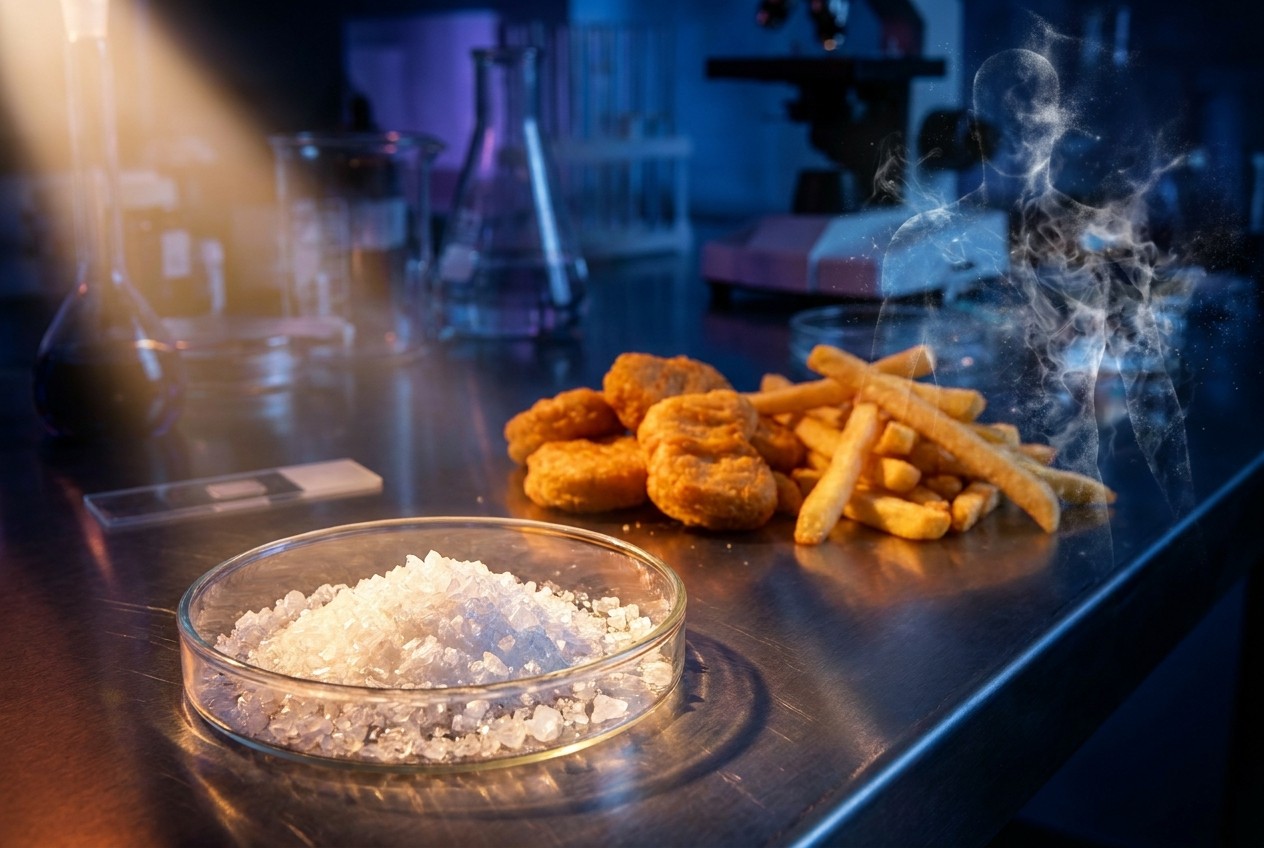
TBHQ, also written as tertiary butylhydroquinone or tert-Butylhydroquinone, is a compound that is a white to light tan crystalline powder or fine beige powder with a slightly aromatic scent. It is commonly used as a preservative to prevent rancidity in fast food items and high-fat prepackaged and processed foods [5].
Well-known brands such as McDonald's, Chick-fil-A, and Taco Bell use TBHQ in their products [5].
Bruce Fife, author of "The Coconut Ketogenic Diet," notes that polyunsaturated vegetable oils are highly vulnerable to oxidation and that exposure to heat, even low cooking temperatures, accelerates oxidation and free-radical generation, the process that preservatives such as TBHQ are intended to slow [6].
The two compounds appear together on the Environmental Working Group's (EWG) list of preservatives of concern, which reports that TBHQ is added to more than 1,250 food products, many of them marketed for children [7].
FDA Limits and Reported Intake Levels
For TBHQ, that limit is 0.02% of the oils in a food. The agency has said it does not have evidence that greater amounts are safe [1].
A 1999 WHO evaluation found that average TBHQ intake in the United States was 0.62 milligrams per kilogram of body weight per day, which the review described as about 90% of the acceptable daily intake.
The WHO review also examined new information relating to the metabolism of TBHQ, its effects on enzyme induction and its short-term and reproductive toxicity in rodents, and it re-evaluated results from a long-term study in dogs along with genotoxicity studies relating to the clastogenic potential of the additive [4]. The reviewers stated that the carcinogenicity tests available at the time were inadequate by present-day standards, a conclusion that leaves the long-term safety question formally open [3][4].
Research Findings on Potential Health Effects
The EWG has separately reported that TBHQ has been linked to increased risk of allergies, vision disturbances, liver enlargement, and childhood behavioral problems [8].
An overview published in 2022 concluded that TBHQ can have side effects on human health through activation of inflammatory routes, generation of reactive species, and induction of other cellular stress responses [9].
Meanwhile, a 2023 dietary exposure study found that tBHQ negatively impairs growth, survival, and secondary islet formation and can impact the immune response and vision, and the authors reported carcinogenic effects in bladder tissue [2].
Separately, research summarized by Dr. Steven R. Gundry in "The Plant Paradox: The Hidden Dangers in "Healthy" Foods That Cause Disease and Weight Gain" suggests that tBHQ may be responsible in part for the recent increase in food allergies. Gundry also states that the presence of tBHQ in a product need not be listed on the label [10].
Label Reading and Stakeholder Positions
Gundry writes that the additive TBHQ is used in numerous processed foods, including bread, waffles, crackers, and other baked goods, as well as nuts and cooking oil, which broadens the list of products a label reader must check [10].
Joanna Blythman notes in her book "Swallow This: Serving Up the Food Industry's Darkest Secrets" that the word fresh has assumed an elastic meaning on packaged food, with chilled ready meals, dips, and sandwiches all sold under the banner of freshness [11].
The EWG has taken a public position against the preservative. The group's paper reported that TBHQ is added to more than 1,250 food products, many of which are marketed for children, and that data from the Environmental Protection Agency's (EPA) Toxicity Forecaster indicates TBHQ suppresses immunity in both humans and animals [7].
References
- The Potential Dangers of TBHQ. https://www.healthline.com/health/food-nutrition/potential-tbhq-dangers
- Dietary exposure to the food preservative tert .... https://www.sciencedirect.com/science/article/abs/pii/S0278691523001904
- Sister Chromatid Exchanges Induced by Tertiary Butyl Hydroquinone in Bone Marrow Cells of Mice. by Acrobat 5.0 Paper Capture Plug-in for Windows. Environmental and Molecular Mutagenesis 13:234-237 (1989)
- 898. Butylhydroquinone, tert- (TBHQ) (WHO Food Additives Series 40). https://www.inchem.org/documents/jecfa/jecmono/v040je02.htm
- Tert-butylhydroquinone sources health risks - NaturalNews.com, November 01, 2017.
- The Coconut Ketogenic Diet: Supercharge Your Metabolism, Revitalize Thyroid Function, and Lose Excess Weight. by Bruce Fife
- Preservative in thousands of children's food products found to damage immune system - NaturalNews.com, April 06, 2021.
- TBHQ is a synthetic preservative that has no business .... https://www.facebook.com/ewg.org/posts/tbhq-is-a-synthetic-preservative-that-has-no-business-being-in-what-you-eat-but-/1500378735464411/
- Alarming impact of the excessive use of tert ... - PMC. https://pmc.ncbi.nlm.nih.gov/articles/PMC9764193/
- The Plant Paradox: The Hidden Dangers in "Healthy" Foods That Cause Disease and Weight Gain. Dr. Steven R. Gundry, M.D.
- Swallow This: Serving Up the Food Industry's Darkest Secrets. Joanna Blythman










Please contact us for more information.


