


Key points:
- Six pallets of Nvidia hardware valued at $11.4 million left Oakland on Aug. 29 for Fort Worth and disappeared, and Oakland police are investigating a grand theft reported Sept. 13.
- The truck bore a food transportation company's logo, made several stops lasting hours and was lost in San Bernardino County.
- Police have not confirmed the valuation or identified the specific merchandise, and no arrests have been announced.
- Known data center freight thefts total $110.6 million since June 3.
- Some investigators believe most stolen data center cargo ends up overseas in export-restricted markets.
The outlines are thin and the questions are thick. ABC7 reported that the cargo was picked up as planned by a truck identified as belonging to a food transportation company. The driver then traveled south, making several stops that lasted hours, FreightWaves reported, before investigators lost the trail in San Bernardino County. Court records reviewed by KTVU show the cargo belonged to Nvidia, whose headquarters sit in Santa Clara. Oakland police said they are investigating "a grand theft that occurred in East Oakland," which the victim reported 15 days after pickup.
Almost everything else is unknown. FreightWaves says police have not named the shipper, carrier or driver, explained the long stops, or said whether criminals impersonated a legitimate transportation provider, and it notes that the Sept. 13 complaint date does not establish when the theft occurred. Nvidia did not respond to FreightWaves' request for comment. Whether the cargo was cards, complete servers or data center systems has not been disclosed, which means the public still does not know who was waiting for these pallets in Fort Worth.
A pattern of branded targets
The Oakland case rhymes with earlier crimes. In 2025, police in Fremont and Union City investigated burglaries targeting Nvidia cargo worth more than $7.5 million, and ABC7 reported that suspects believed they were hitting trucks carrying expensive Nvidia technology. KTVU noted that a crew of six Southern California men has been charged in heists aimed at Nvidia and Apple shipments. In a separate September incident in Fremont, thieves stole two trailers, one displaying Nvidia branding, that held roughly 40,000 pounds of sand instead of hardware. Police later recovered both in Newark. In other words, criminals are reading logos like treasure maps.
The broader numbers show a market that is professionalizing. Fortune reported that the average value of a stolen cargo load rose from around $200,000 in 2024 to nearly $275,000 in 2025, even as the number of incidents fell from 3,854 to 3,594. Trade coverage in Heavy Duty Trucking describes criminal groups moving toward targeted, intelligence-driven theft in which goods can be quickly resold or repurposed. KTVU, citing industry counts, said nearly 700 similar cargo thefts were reported across the United States and Canada in the second quarter alone. Fewer crimes, bigger scores and better homework is what organized operations look like.
Zoom out and the scale is staggering. FreightWaves put known reported data center freight thefts at $110.6 million since June 3, including a $38 million loss in the Reno area. NBC News reported that a trailer of server equipment worth roughly $13 million vanished in early June on its way to Fayetteville, Georgia. Scott Cornell, chair of TAPA Americas, told FreightWaves, "We've seen a big concentration around the theft of high-tech loads."
Where the chips may be going
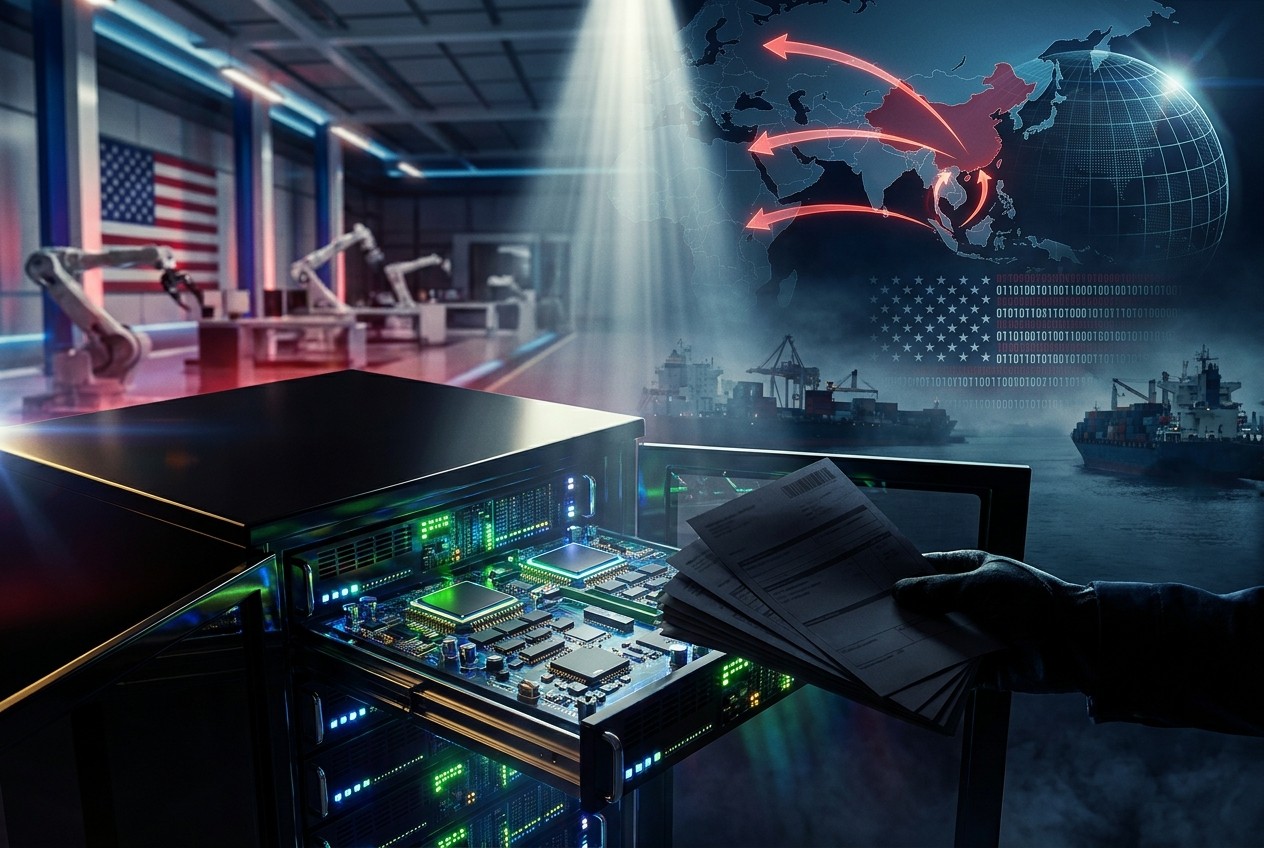
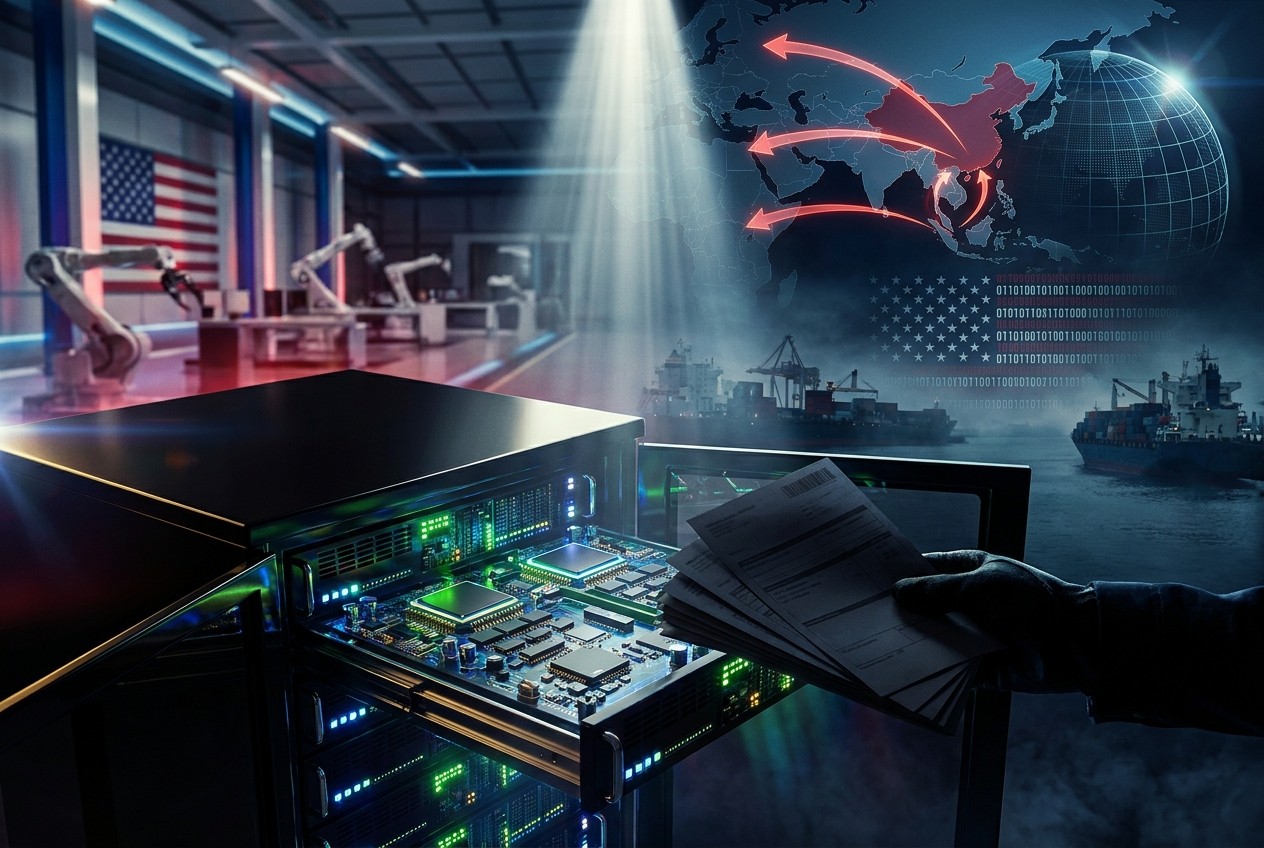
Where does a pallet of servers go? Investigators interviewed by NBC News believe most stolen data center cargo leaves the United States for export-restricted countries, Gadget Review reported, and Cornell estimates six or seven of every 10 stolen cargo shipments of all kinds ultimately go overseas. The logic is brutal. Washington has restricted sales of advanced AI chips to China, and one technology outlet noted that those limits push illegal resale prices far above official ones. That outlet also described a December 2025 Justice Department case, known as Operation Gatekeeper, accusing a Houston company of trying to export H100 and H200 chips worth $160 million to China by falsifying documents and relabeling shipments.
The thieves are getting more sophisticated. Investigators and industry specialists cited by NBC News and Ars Technica describe hacked logistics accounts, fake driver identities and manipulated GPS tracking used to divert high-value loads. FreightWaves has documented a "bump and run" tactic in which thieves deliberately collide with security escorts. Verisk CargoNet figures show cargo theft cost $725 million in 2025, and in the first three months of 2026 alone, 767 incidents totaled $132 million.
The official story, that these are opportunistic crimes by organized crews chasing resale value, may be partly true. But six pallets of the most coveted hardware on earth cannot vanish for more than two weeks without raising questions about who knew the route, who held the dispatch credentials and who benefits when the world's scarcest chips find an off-the-books buyer. Until Oakland police name the carrier, the cargo and the customer, the public is left with a missing truck and an empty explanation.
Sources include:








Please contact us for more information.


