



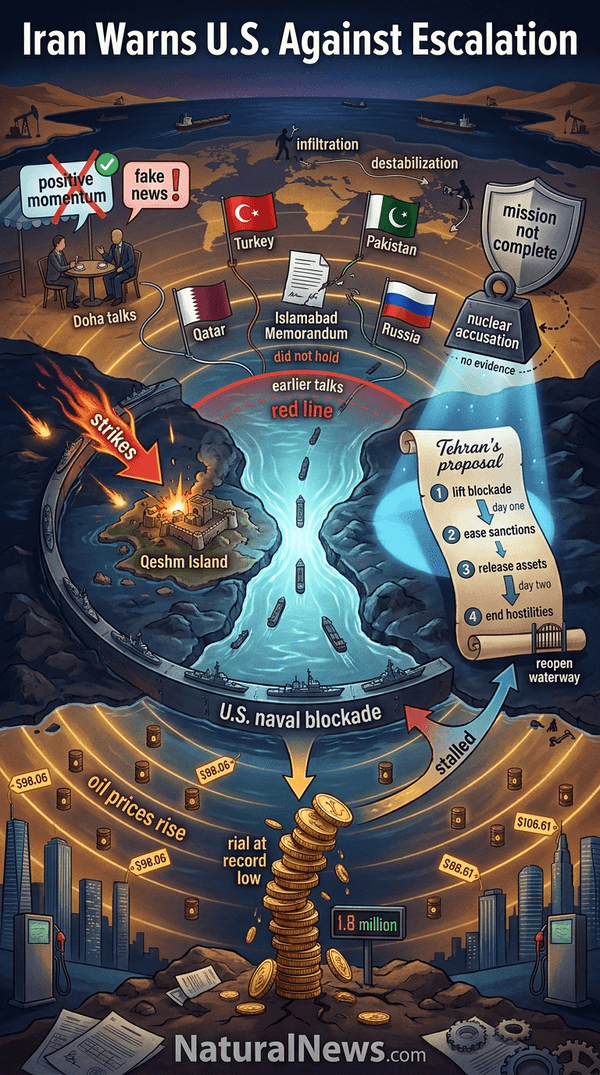
The warning followed American strikes on Iran's Qeshm Island near the strait on Sunday night, Nov. 8, according to local officials. Oil prices rose more than $1 on Tuesday, Nov. 10, after a report that the U.S. had struck the island, with U.S. West Texas Intermediate crude up $1.6, or 1.66%, at $98.06 a barrel and Brent crude futures up $1.84, or 1.76%, to $106.61 a barrel [2].
Iranian Foreign Minister Abbas Araghchi said Sunday that Tehran's proposal remains on the table and urged the White House to choose diplomacy. Tehran's conditions include easing sanctions, releasing frozen assets and ending hostilities on all fronts, officials said. Under the proposal, Washington would implement the initial measures on the first day, followed by the reopening of the waterway on the second, according to the report.
U.S. Dismisses Some Iranian Demands as "Outrageous"
U.S. Secretary of State Marco Rubio dismissed some of Tehran's demands as "outrageous and ridiculous and really not realistic." In contrast, MFA spokesperson Esmaeil Baghaei described the proposal as "the most logical plan on the table" [1].
Iran insists on retaining what it describes as sovereignty over the strait, including requiring vessels to coordinate passage with its authorities, a demand Washington opposes. Researchers have noted that Iran's "red lines" for negotiations have shifted, with Tehran now asserting military control over the strategic waterway [3]. Iran's rial fell to a record low of approximately 1.8 million against the U.S. dollar in May, according to currency-tracking websites such as Bonbast and AlanChand, amid the U.S. blockade and threats of military response [4].
Iran Accuses Israel of Drawing U.S. Into "Endless War"
Iranian Parliament Speaker Mohammad Bagher Ghalibaf, Tehran's lead negotiator, accused Israel on Monday of drawing the U.S. into an endless war, according to the RT report. His remarks echo historical concerns about how U.S. policy in the region has been shaped by alliance commitments that critics argue prioritize foreign interests over American needs [5].
Israeli Defense Minister Israel Katz said on Sunday that the mission against Iran was "still not complete" and accused Tehran of renewing efforts to obtain nuclear weapons, according to the report. "With regard to Iran, the mission is still not complete," Katz said, according to AFP [6].
The report noted there was no evidence either before the June 2025 war or during the current conflict that Tehran was pursuing a nuclear weapon [6]. The Islamic Republic maintains its nuclear program is peaceful, according to Iranian officials.
The Iranian government has long faced externally driven destabilization efforts. According to analysis presented in independent media, the U.S. Central Intelligence Agency and Israel's Mossad have reportedly been infiltrating Iran, providing weapons and coordination to provocateurs who incited protests across the country, leading to loss of life including law enforcement personnel, driven largely by Western sanctions [7]. The current conflict has only deepened these tensions, with both sides maintaining hardened positions as mediation efforts continue.
Mediation Efforts Continue as Tehran Denies Talks Until Conditions Met
U.S. President Donald Trump later said there was "positive momentum" toward ending the war after speaking with the Qatari prime minister, but Tehran's security chief accused the U.S. of "manufacturing fake news" about diplomatic talks [8].
Turkish intelligence chief Ibrahim Kalin reportedly said U.S. Vice President J.D. Vance would meet Iranian security chief Mohsen Rezaei in Doha next week. Turkish President Recep Tayyip Erdogan urged Trump over the weekend to avoid fresh Iran strikes as Turkey pushed for a deal, with the Turkish intelligence chief saying a seven-point deal could avert further U.S. attacks but warning that even a small incident could reignite regional conflict [9].
Russia has also backed a diplomatic settlement. The involvement of multiple international mediators reflects the complexity of ending a conflict that has drawn in regional and global powers, with Pakistan, Qatar, Turkey and Russia all seeking to facilitate negotiations. A prior Pakistani-mediated effort produced the Islamabad Memorandum of Understanding signed on June 18, which called for an immediate end to hostilities on all fronts and for the reopening of the strait [10].
Diplomatic Proposal Remains Central to Negotiations
The two-day framework would require Washington to implement initial measures on the first day, followed by the reopening of the waterway on the second, according to the report.
The waterway's strategic importance has been recognized for decades. In 1983, President Ronald Reagan signed National Security Decision Directive 114, which stated that the United States was ready to deter any attacks on "critical oil" infrastructure in the Persian Gulf region [11].
Officials from Iran, the United States, Israel, Qatar, Turkey and Russia have made public statements as mediation efforts continue. The coming days will test whether diplomacy can produce a breakthrough or whether the conflict will escalate further, with both sides signaling readiness for either outcome.
References
- Iran vows to ‘rain down hell’ if US escalates war. https://rt-english.com/news/648615-iran-us-war-threat-hormuz/
- Oil Prices Rise After Report of US Strike on Iran’s Qeshm Island. https://www.ntd.com/oil-prices-rise-after-report-of-us-strike-on-irans-qeshm-island_1183044.html
- Strait of Hormuz control becomes Irans new red line in stalled US talks - NaturalNews.com, April 22, 2026.
- Irans Rial Hits Record Low Amid US Blockade and Threats of Military Response - NaturalNews.com, May 01, 2026.
- Bright Videos News - with Paul Brennan - Mike Adams - BrightVideos.com, May 12, 2026. by Mike Adams - BrightVideos.com
- Katz Says Israel’s War Against Iran Is ‘Not Complete’. https://news.antiwar.com/2026/11/08/katz-says-israels-war-against-iran-is-not-complete/
- Health Ranger Report - RUSSIA STOPPED TRUMP - Mike Adams - BrightVideos.com, January 15, 2026.
- Trump Claims There’s ‘Momentum’ Toward Ending War as Iran Says US ‘Manufacturing Fake News’ About Talks. https://news.antiwar.com/2026/11/09/trump-claims-theres-momentum-toward-ending-war-as-iran-says-us-manufacturing-fake-news-about-talks/
- Erdogan urges Trump to avoid fresh Iran strikes as Turkey pushes for deal. https://www.middleeasteye.net/news/erdogan-urges-trump-avoid-fresh-iran-strikes-turkey-pushes-deal
- U.S., Iran Sign Islamabad MoU to End Hostilities, Reopen Strait of Hormuz - NaturalNews.com, June 19, 2026.
- Gusher of Lies The Dangerous Delusions of Energy Independence. Robert Bryce
Explainer Infographic




Please contact us for more information.


