


The Commerce Department reported that U.S. economic growth rose to 3.4% in the latest quarter, up from 2.2% in the previous quarter. The report underscored the strength of the economy even as market volatility has increased in recent weeks, according to the department.
Strategists said the combination of historical midterm patterns, AI-related spending concerns and interest rate uncertainty has created a complex backdrop for investors. "Typically speaking, after midterms, markets do pretty well, actually," Mark LoPresti, CEO and chief market strategist at Market Rebellion, told NewsNation. "If one thing markets hate, it's uncertainty."
Historical Gains After Midterm Elections
BNY Investment Strategy & Research Group found that since 1950, the S&P 500 has gained an average of 16.6% in the year after a midterm election, the firm said. MarketWatch reported that the S&P 500 delivered an average return of 15.5% in the nine months between Election Day and June 30, going back to 1950.
A Ned Davis Research study cited by Ed Clissold and Thanh Nguyen found that since 1930, the S&P 500 or its predecessors rose an average of 14% in the year after midterms; when the president's party lost control of the House, the average gain was 8.8%, the firm said. The Trends Journal previously reported that after each of the last 40 midterm elections, the S&P 500 has gained an average of 15% in the following 12 months on a sense of clarity about short-term tax, fiscal, and economic policy [1].
BlackRock noted that midterm election years have historically been among the weakest performing years for the U.S. stock market, compared to presidential election years, but that markets have typically recovered and moved higher afterward [2]. Russell Investments said that once election results are known, clarity often gives investors the confidence to step back into markets, driving a rally irrespective of which party wins [3].
Recent Market Turbulence and Economic Data
Stocks have been rocky this month, with technology shares under pressure as investors assessed AI-related valuations and spending, according to market data. The tech-heavy Nasdaq 100 Index tumbled 4.8% across Thursday and Friday of the week before the election, Bloomberg reported [4].
BNY said midterms often cause short-term volatility because uncertainty over outcomes, policy changes and campaign agendas can swing investor sentiment, but markets have typically recovered and moved higher afterward [5]. The Commerce Department's 3.4% growth figure compared with 2.2% in the previous quarter, the report stated. The GDP report showed the economy expanded at a faster pace than in the prior quarter, according to the department.
TradingKey reported that although the S&P 500 Index remains near all-time highs, semiconductor and popular AI stocks have recently undergone a noticeable pullback as market concerns over elevated valuations persist [6]. The pullback in AI-related names has contributed to the broader market's recent volatility, according to the report.
AI Spending and Interest Rates as Market Risks
LoPresti said artificial intelligence is a wild card this year, noting that much of recent GDP growth came from increased capital spending by companies across the AI infrastructure sector. Concerns about AI-related debt contributed to a sell-off this week, he said.
LoPresti said the bigger issue is interest rates, not politics. The Federal Reserve held rates steady this week and does not meet in November, he said. He said another rate increase is likely at the December meeting, and most traders expect at least another 50 basis points of increases in the first half of 2027. Higher borrowing costs could weigh on AI spending, LoPresti said.
Investing.com reported that quarterly results intensified concerns about financing and financial returns needed to support the AI investment theme at the heart of the market [7]. The report noted that investors are focused on whether companies can sustain high levels of AI-related capital expenditures amid rising financing costs.
Election Outcome and Data Center Opposition
Prediction market Kalshi showed Democrats with better than a 90% chance of winning the House and a 63% chance of taking the Senate, LoPresti said. LoPresti said how the election plays out will help determine the market's reaction, and he noted that November and December tend to be strong months for stocks.
He also flagged a growing "not in my backyard" movement against data centers, which he said could get louder if Democrats win both the House and Senate. Reuters reported that public opposition to data centers may jolt the AI trade as the midterm elections approach, with a strong Democratic showing potentially hampering the buildout that has lifted stocks [8].
Bloomberg reported that Wall Street expects Democrats to win at least one of the houses of Congress in the midterm elections on Tuesday, setting the stage for a potentially volatile ride in the stock and bond markets with artificial intelligence oversight, defense spending and crypto legislation on the table [4].
Key Factors to Watch
Investors will monitor the December Federal Reserve meeting, rate expectations for the first half of 2027, AI capital spending and debt levels, and the final midterm election results, according to strategists. The report stated that historical average returns do not guarantee future performance.
Market participants will also watch corporate earnings reports and jobs data in the coming weeks for further clues on the health of the economy and the trajectory of AI spending, according to Investing.com [7]. The combination of these factors is likely to shape market direction through the end of the year, strategists said.
The Federal Reserve's next policy meeting in December and the final vote tallies from the midterm elections are expected to be the most immediate catalysts for markets, according to the strategists. Investors will also continue to assess the impact of AI-related debt and capital spending on corporate balance sheets, they said.
References
- Trends-Journal-2022-11-32.
- Midterm Elections and Stock Market Trends. https://www.blackrock.com/us/financial-professionals/insights/2026-midterm-elections-and-market-performance
- U.S. midterm scenarios and investment implications. https://russellinvestments.com/content/ri/ca/en/insights/russell-research/2026/10/midterm-scenarios-investment-implications.html
- AI Policy Risks Loom Over Stock, Bond Traders Ahead of Midterms. https://www.bloomberg.com/news/articles/2026-10-30/ai-policy-fears-grip-stock-bond-traders-with-midterms-days-away
- Stocks often rally after midterm elections, but AI spending, rate hikes add risk this time. https://www.newsbreak.com/newsnation-2045693/4978764586753-stocks-often-rally-after-midterm-elections-but-ai-spending-rate-hikes-add-risk-this-time
- Will US Stocks Rise After Midterm Elections? Analysis of Historical Election Data and Market Patterns. https://www.tradingkey.com/analysis/stocks/us-stocks/262262546-will-us-stocks-rally-after-midterm-elections-tradingkey
- Midterm US elections, earnings, jobs data loom for AI-wary stock market. https://www.investing.com/news/economy-news/midterm-us-elections-earnings-jobs-data-loom-for-aiwary-stock-market-4989748
- Investors see risk from US midterms to AI trade as data center backlash builds. https://www.reuters.com/legal/transactional/investors-see-risk-us-midterms-ai-trade-data-center-backlash-builds-2026-10-22/
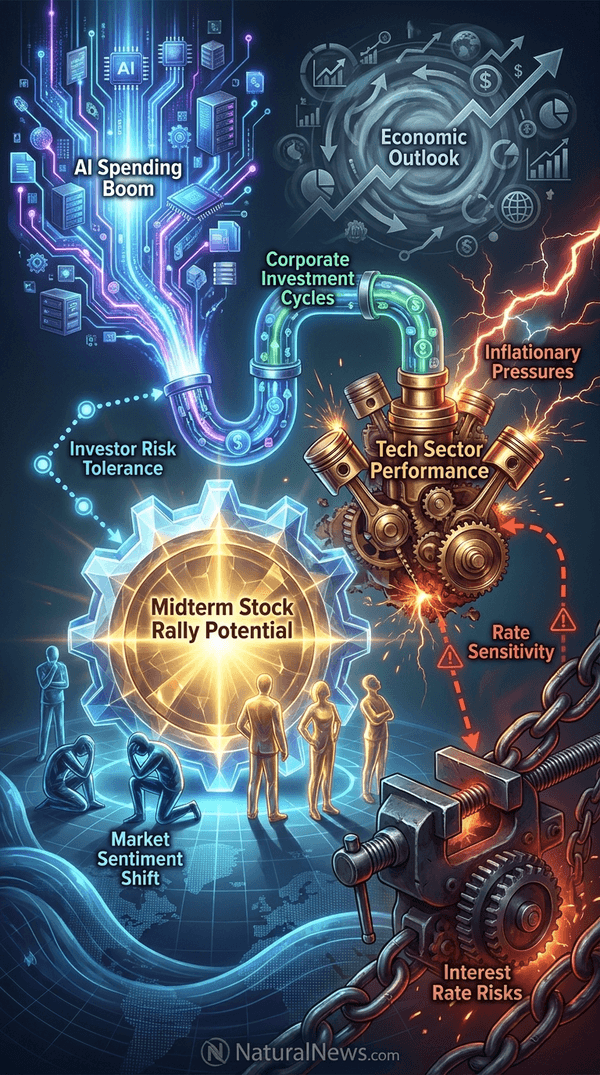
Explainer Infographic











Please contact us for more information.


