


The David Suzuki Foundation, a non-profit organization that works to conserve and protect the natural environment and to help create a sustainable Canada, includes BHA and BHT in its "Dirty Dozen" list of cosmetic ingredients to avoid [1][2]. The listing cites concerns that the chemicals may cause cancer and interfere with hormone function, and notes they are harmful to fish and other wildlife [2][7].
BHA and BHT have been used for decades to delay oxidation and extend the shelf life of fats, oils, and other products [7]. Their presence across food, personal care and industrial categories has drawn attention from advocacy groups and regulators alike, though the compounds remain permitted at specified levels in many jurisdictions [7].
What are BHA and BHT?
BHA and BHT are synthetic antioxidants, a class of preservatives that block oxidation reactions. In food and manufacturing, antioxidants are used to slow the development of rancidity in fats and oils and to protect products from spoilage during processing, shipping, and storage [3][4].
The compounds are frequently added to oils and fats because they retard the process of rancidity, thereby extending the shelf life of products [5].
In a medical toxicology reference, BHA (CAS RN: 25013-16-5) and BHT (CAS RN: 128-37-0) are listed among antioxidants used in cooking oils, shortening, and dry mixes [6]. The same reference states that antioxidants are generally nontoxic in the amounts used in food processing [6].
The dual role in food and industrial applications reflects the chemicals' ability to protect both edible fats and petroleum-based materials from degradation [7].
Where the Compounds Appear
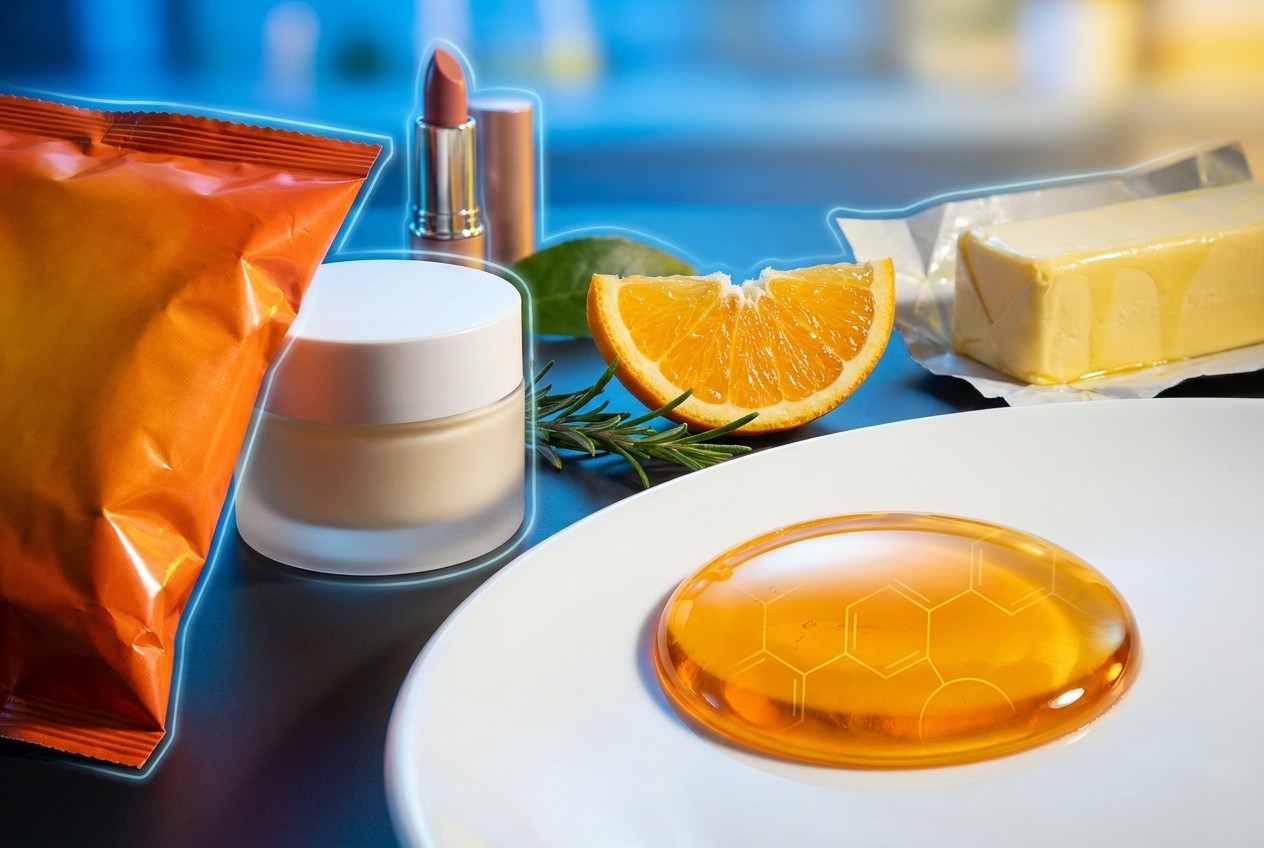
BHA and BHT appear in a range of consumer and industrial products. In personal care products, the foundation's Dirty Dozen guide identifies BHA and BHT as ingredients used in moisturizer, makeup, and similar formulations [2].
The foundation's guide also notes that BHA and BHT have long benefited consumers and manufacturers, but states that their increasing prevalence is cause for worry [7].
In food, the compounds are often added to oils and fats, and they are found in chips, margarine, and other fat-containing foods, according to a health reference [5] [7].
Health and Regulatory Questions
Consumer advocacy groups, including the David Suzuki Foundation, list BHA and BHT among ingredients to avoid in personal care products. The foundation's Dirty Dozen guide states that the compounds may cause cancer and interfere with hormone function and are harmful to fish and other wildlife [2].
A health reference also notes that these antioxidants can trigger hyperactive symptoms, especially in children, and can result in urticaria, or skin rash [5].
The International Agency for Research on Cancer classifies BHA as possibly carcinogenic to humans (Group 2B), according to its monographs. A toxicology reference states that BHA and BHT are generally nontoxic in the amounts used in food processing [6].
A 2026 report said the U.S. Food and Drug Administration (FDA) had launched a major reassessment of BHA, which has been considered safe since 1958 despite cancer concerns [8].
Regulatory agencies in multiple jurisdictions permit BHA and BHT at specified maximum levels in food and cosmetics, officials said.
The David Suzuki Foundation's guide states that exposure to BHA is government regulated and considered safe as a preservative in foods as long as it does not exceed 0.02% of the fat or oil content [7].
A study on peanut storage noted that levels of BHA and BHT up to 200 micrograms per gram of fat or oil content in food products are within limits acceptable to the FDA [9].
Industry representatives describe synthetic antioxidants as effective at preventing oxidation and extending shelf life, according to trade group statements.
Reading Labels and Consumer Response
The David Suzuki Foundation's Living Green guide advises consumers to check labels and seek non-toxic alternatives [7]. Some consumer guides recommend selecting products that use alternative preservatives or have shorter ingredient lists.
A food and nutrition reference notes that manufacturers are required to list the ingredients in their products, mostly because pressure from consumer groups led to laws demanding this information [10]. The same reference urges consumers to read labels on the foods they buy [10].
Consumer response has included increased scrutiny of ingredient lists and growing interest in products preserved with alternative methods.
References
- About. https://davidsuzuki.org/about/
- Sustainable Shopper's Guide to a Dirty Dozen Ingredients to Avoid in .... https://davidsuzuki.org/wp-content/uploads/2017/10/sustainable-shoppers-guide-dirty-dozen-cosmetics-ingredients.pdf
- Natural Health Natural Medicine. Andrew T Weil
- Medicinal Plants and Natural Product Research. LaTeX with hyperref package
- Health Seekers: a Formula for Living a Healthier and Longer Life. Celene Bernstein
- FOOD ADDITIVES and SENSITIVITIES: Medical Toxicology of Natural Substances. by User. FOOD ADDITIVES and SENSITIVITIES 2008 John Wiley & Sons, Inc.
- Toxic ingredient to avoid: BHA and BHT. https://davidsuzuki.org/living-green/dirty-dozen-bha-bht/
- FDA finally reviews safety of BHA a common preservative flagged as potential carcinogen - NaturalNews.com, February 11, 2026.
- Potential use of phenolic antioxidants on peanut to control growth and a?atoxin B1 accumulation by Aspergillus ?avus and Aspergillus parasiticus. dvips 5.83 Copyright 1998 Radical Eye Software. Journal of the Science of Food and Agriculture J Sci Food Agric 87:2121–2130 (2007)
- Natural Health, Natural Medicine: The Complete Guide to Wellness and Self-care for Optimum Health. Weil Andrew











Please contact us for more information.


