


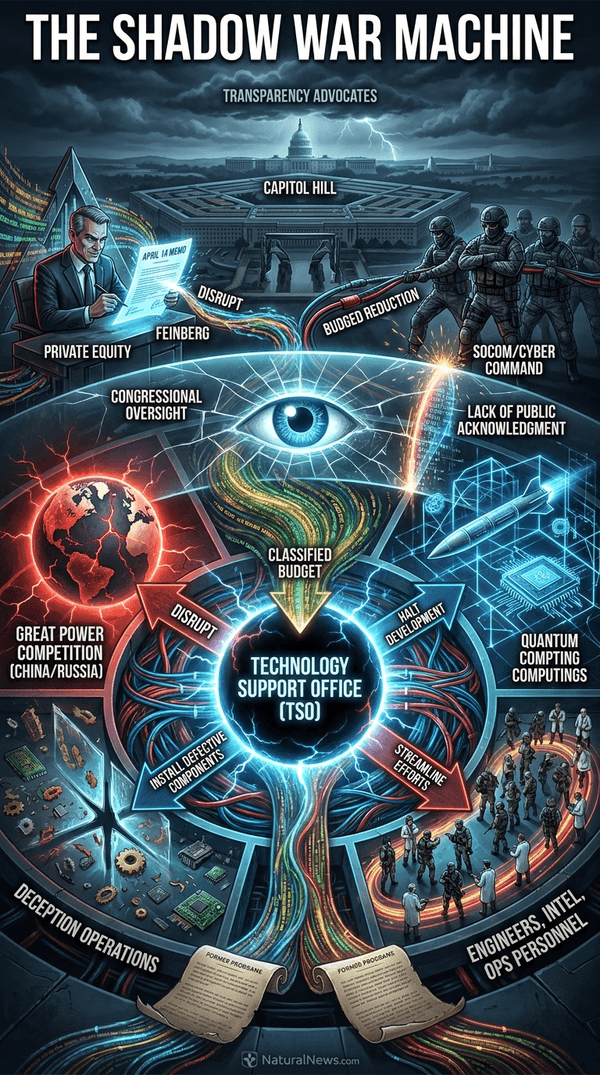
The office was created through a memo signed by Deputy Secretary of War Steve Feinberg on April 14, the report stated, citing a dozen current and former national security officials [2]. However, it has not been publicly acknowledged by senior War Department officials as per the report.
The office's existence and mission remain undisclosed outside a small circle of officials and congressional staffers. The disclosure comes amid broader scrutiny of the War Department's management of classified programs and congressional oversight. The report raises questions about the approval process for the office and the extent to which lawmakers have been informed of its activities.
What the Technology Support Office Does
The TSO includes engineers, special operations personnel and intelligence officers, according to the report [1]. Its projects range from custom hacking tools to deception operations intended to get adversaries to install defective components in their weapons systems.
A former intelligence official who worked with the office said its mission is to "buy time or stop adversaries from developing technologies" that would most endanger U.S. forces in a major war. The official’s remarks were cited in the report. The report said the TSO operates in a classified space, which a current national security official said provides "even more opportunities to hide or misdirect."
Creation and Merger of Classified Programs
Feinberg, a billionaire with a private-equity background, spearheaded the effort and signed the April 14 memo creating the office, the report stated. The TSO was formed by merging two classified programs that had conducted smaller sabotage operations since 2023, according to officials cited by Politico [2].
Only a small group of congressional staffers have been read in on the office, a current national security official said. The merger of the two programs was not previously disclosed, and the report did not specify which programs were combined or the nature of their prior operations.
Oversight and Approval Questions
A former senior War Department official said success for the TSO would require officials to "pull off movie-level spy craft." The same official questioned what approval and oversight structures are in place for the office [1].
The official warned against "creating something that five years from now will be seen as incredibly problematic," according to the report. The remark pointed to concerns that the office's activities could outlast their strategic rationale or lack sufficient review.
According to the report, the fact that a small number of congressional staffers have been briefed on the TSO raises questions about external review. Lawmakers and their staffs typically oversee classified programs through defense authorization and appropriations committees, but the report suggested that the TSO's footprint on Capitol Hill is limited.
The War Department has not publicly detailed the office’s approval chain or the mechanisms for congressional notification. The report said the TSO's creation and mission were not disclosed through standard channels.
Internal Friction and Budget Estimates
The U.S. Special Operations Command and U.S. Cyber Command opposed the office's creation over concerns that it would reduce their budgets, according to the report. The friction inside the War Department over the new office was described in the report, which cited unnamed current and former officials.
A former senior intelligence official estimated that the TSO's classified contracting budget alone likely exceeds $1.5 billion. The estimate was attributed to the official in the report. The budget figure was not confirmed by the War Department, however.
Pentagon Response
Deputy War Department Press Secretary Jacob Bliss rejected the reporting. Bliss said the inquiry appeared "built on information that is simply not true." He remarked: "Whoever is feeding you these claims are either badly misinformed or deliberately leading you astray to peddle their fantasies," according to the report [1][2].
Oversight Questions Remain
The report raises questions about congressional oversight and classified spending related to the office. The officials cited in the report were not identified by name. Their accounts describe an office that operates outside public view and with limited congressional briefing.
The report does not indicate whether Congress plans to investigate the TSO or request additional information from the Pentagon. The office’s creation and mission remain undisclosed by senior defense officials.
References
- Pete Hegseth's secret 'movie-level spy craft' agency sparks oversight alarm: report. https://www.rawstory.com/pete-hegseth-spy-craft/
- The Pentagon is quietly building an elite new tech sabotage agency. https://www.politico.com/news/2026/10/22/technology-support-office-dod-tech-spyware-sabotage-01100327
Explainer Infographic







Please contact us for more information.


