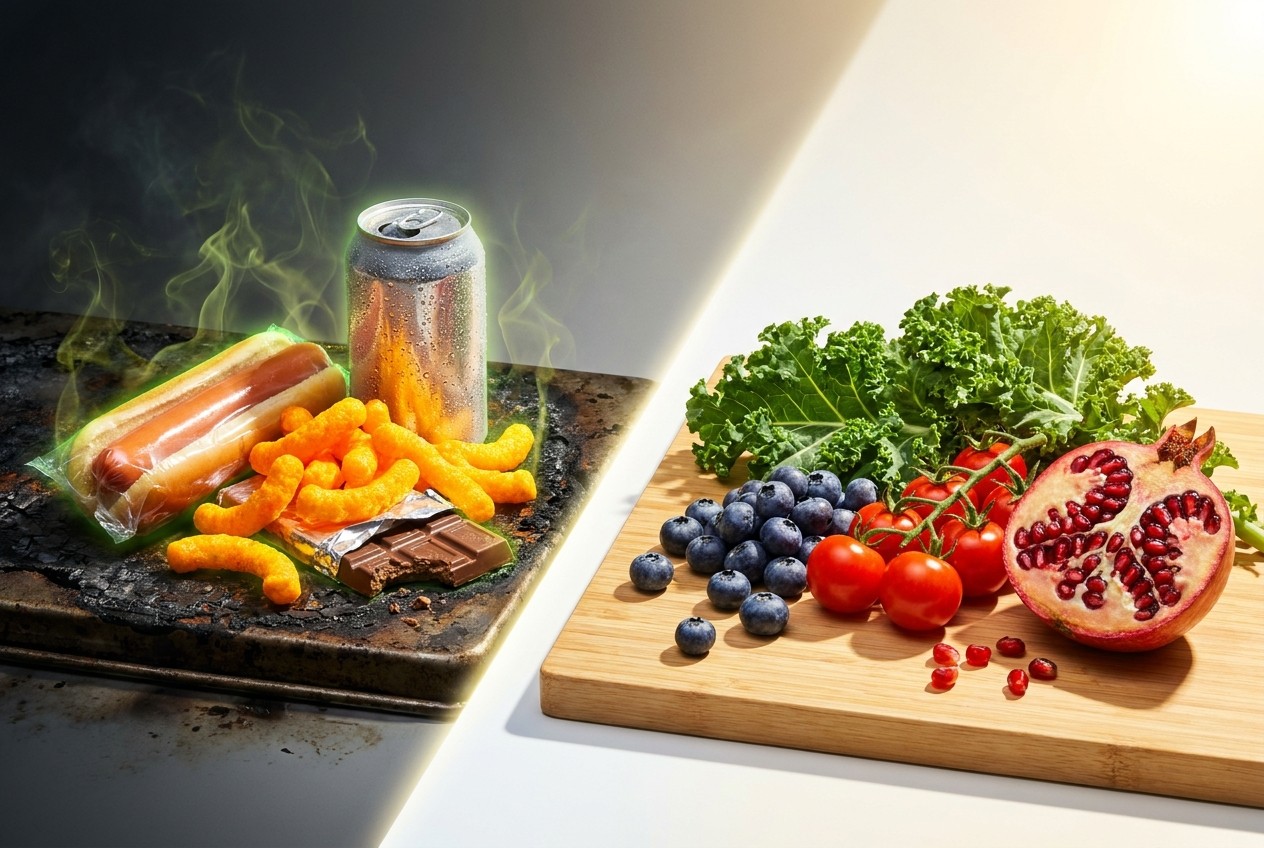
A 2026 report published by NaturalNews.com stated that a study published in The BMJ found higher consumption of ultra-processed foods was directly associated with increased risk for obesity, heart disease, cancer, cognitive decline, and premature death [2].
A separate analysis of 8 million adults found that consuming just 100 grams of ultra-processed food daily raised cardiovascular risk by 6% and the risk of digestive disorders by 19.5% [2].
Processed Meats, Red Meat, and High-Temperature Cooking
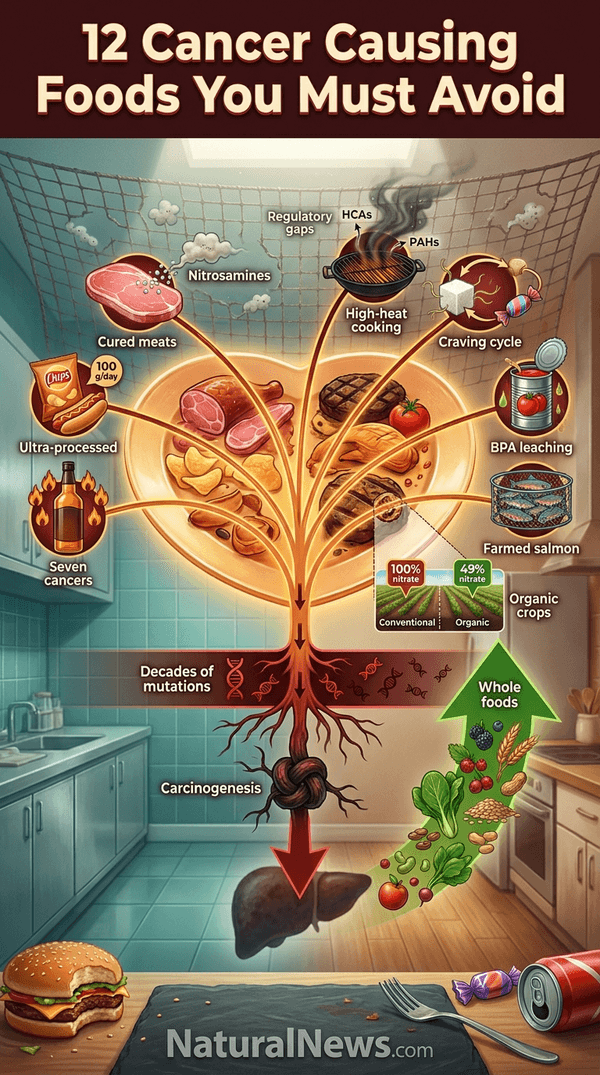
Scientific literature has documented the mechanism. A 2007 paper in the Journal of the Science of Food and Agriculture stated that nitrites can react with amines to create nitrosamines, which are carcinogenic and mutagenic and cause cancer of the digestive tract and leukemia, and that this process is dangerous not only for young children but also for adults of any age [3].
The same paper noted that the nitrate content of organic crops averaged 49% that of conventional crops [3].
A National Cancer Institute study of 494,000 participants in the NIH-AARP Diet and Health Study followed dietary habits for eight years and linked red and processed meat consumption to increased cancer risk, NaturalNews.com reported [4].
A separate large-scale study of more than half a million people aged 50 to 71 found that eating the equivalent of a quarter-pound hamburger daily increased chronic disease risk, according to "The Vegetarian Imperative" [5].
According to Dr. Jensen's "Guide to Body Chemistry and Nutrition," charbroiled meat and all cooked meat, fish, and poultry contain carcinogens [6].
Ultra-Processed Foods, Sugar, and Artificial Sweeteners
A 2026 meta-analysis led by Xiao Liu of Duke-NUS Medical School found that each additional 100 grams of ultra-processed food, roughly two hot dogs or four servings of potato chips, was linked to higher chronic disease risk [7].
A separate NaturalNews.com report on the same research noted that 100 grams daily raised cardiovascular risk by 6% [2].
"Happy Foods" author Karen Wang Diggs writes that candida and other harmful microorganisms in the digestive tract thrive on sugar, causing cravings for candy, breads, pastry, fruit, and alcohol, and that without a proper balance of good bacteria, acidity and inflammation become rampant [9].
Contaminants and Other Foods
A Mercola.com article listed canned tomatoes among the foods to avoid because many leading brands of canned foods contain BPA, described as a toxic chemical linked to reproductive abnormalities, neurological effects, and heightened risk of breast cancer [10].
A 2026 study reported by NaturalNews.com stated that exposure to certain chemicals is ubiquitous and that federal biomonitoring efforts fail to measure most exposures or assess risks from combined exposures. Lead author Jennifer Kay of the Silent Spring Institute said fossil fuel-derived chemicals accounted for some of the largest production volumes and environmental releases [11].
In "My Beef with Meat," author Rip Esselstyn wrote that a 2004 study found the highest levels of coolants in farmed salmon [12].
A 2019 Lybrate article likewise advised avoiding farmed salmon because the fish are fed unnatural diets contaminated with carcinogens, antibiotics, chemicals, and pesticides [13].
Alcohol consumption increases the risk of seven types of cancer, including bowel and breast cancer, according to Cancer Research U.K. [14].
Making Safer Food Choices
According to a NaturalNews.com report, a 2026 case-control study published in Frontiers in Nutrition found that women with the highest intake of phytochemicals from food had 31% lower odds of ovarian cancer compared to those with the lowest intake [15].
A separate study of 980 adults found that a phytochemical-rich diet was linked to 52% lower colorectal cancer odds [16]. Natural sources of these compounds are found in colorful fruits and vegetables, which research indicates work more effectively in the amounts and combinations that nature intended [17].
References
- 12 Cancer Causing Foods You Must Avoid. https://www.americanoncology.com/blogs/12-cancer-causing-foods-you-must-avoid
- Study Ties Each Extra 100 Grams of Ultra-Processed Food to Greater Disease Risk. https://www.naturalnews.com/2026-09-29-excess-upf-consumption-tied-greater-disease-risk.html
- Quality of plant products from organic agriculture by dvips 5.83 Copyright 1998 Radical Eye Software. Journal of the Science of Food and Agriculture 87:2757–2762 2007
- Red Meat Consumption Linked Yet Again to Incr - NaturalNews.com, July 02, 2008.
- The vegetarian imperative by Saxena Anand M
- Dr Jensen's Guide to Body Chemistry and Nutrition by Bernard Jensen
- Meta-Analysis Links Each Additional 100 g of Ultraprocessed Food to Higher Chronic Disease Risk. https://www.naturalnews.com/2026-10-03-additional-ultraprocessed-food-linked-higher-chronic-disease-risk.html
- Skip the Candy: Foods That May Help Satisfy Sugar Cravings. https://www.naturalnews.com/2026-09-30-foods-that-may-help-satisfy-sugar-cravings.html
- Happy foods: Over 100 mood-boosting recipes by Diggs Karen Wang author
- The 9 Foods You Should Never Eat - Mercola.com, June 10, 2013, by Mercola.com
- Study Shows "Ubiquitous" Chemicals Linked to Breast Cancer. https://www.naturalnews.com/2026-09-27-study-shows-ubiquitous-chemicals-linked-breast-cancer.html
- My Beef with Meat. Rip Esselstyn
- Cancer Causing Foods You Must Avoid! - By Dr. Amit C | Lybrate. https://www.lybrate.com/topic/cancer-causing-foods-you-must-avoid/a3771b2d6f5c06853a8eee2d27da3845
- Food myths and cancer risk. https://www.cancerresearchuk.org/about-cancer/causes-of-cancer/cancer-myths-questions/food-myths
- Higher Intake of Phytochemical-Rich Foods Tied to Lower Ovarian Cancer Odds, Study Finds. https://www.naturalnews.com/2026-09-07-higher-intake-high-phytochemical-foods-lower-ovarian-cancer.html
- Study Links Phytochemical-Rich Diet to 52% Lower Colorectal Cancer Odds. https://www.naturalnews.com/2026-09-17-study-phytochemical-food-lower-colorectal-cancer-odds.html
- Reader's Digest Food Cures New Edition Tasty Remedies to Treat Common Conditions by Unknown
Explainer Infographic










Please contact us for more information.