


The glycemic index, or GI, is a scale that ranks carbohydrate-containing foods by how quickly they raise blood sugar after eating.
Jennifer Scherer, MS, RDN, told the publication that boiled sweet potatoes can help prevent large blood sugar spikes. Boiling sweet potatoes may be better for blood sugar than baking or roasting, according to dietitians [1].
Why Cooking Method Affects Sweet Potato Starch and Sugar
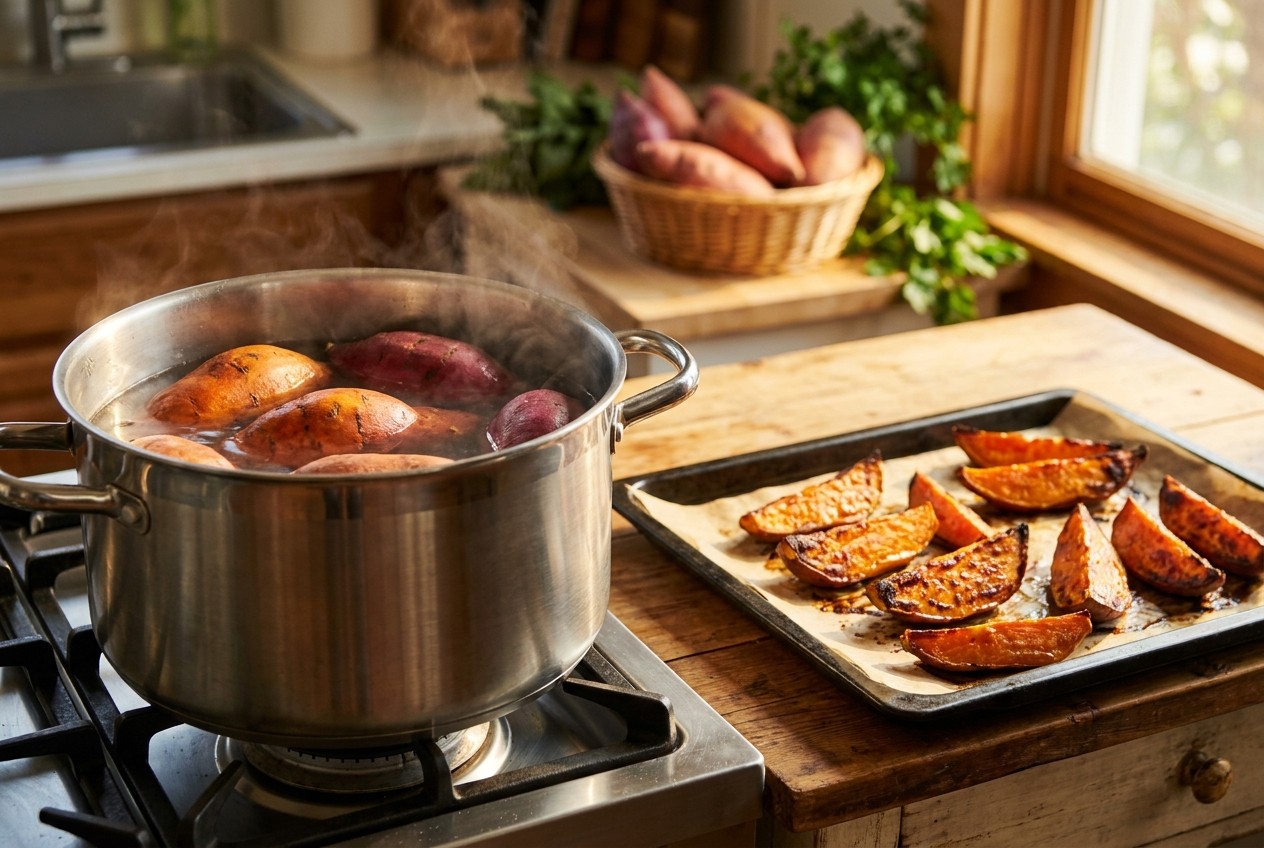
Boiling sweet potatoes may be better for blood sugar than baking or roasting, according to dietitians [1]. The result is a sweeter, denser vegetable with a different effect on blood glucose than a boiled sweet potato.
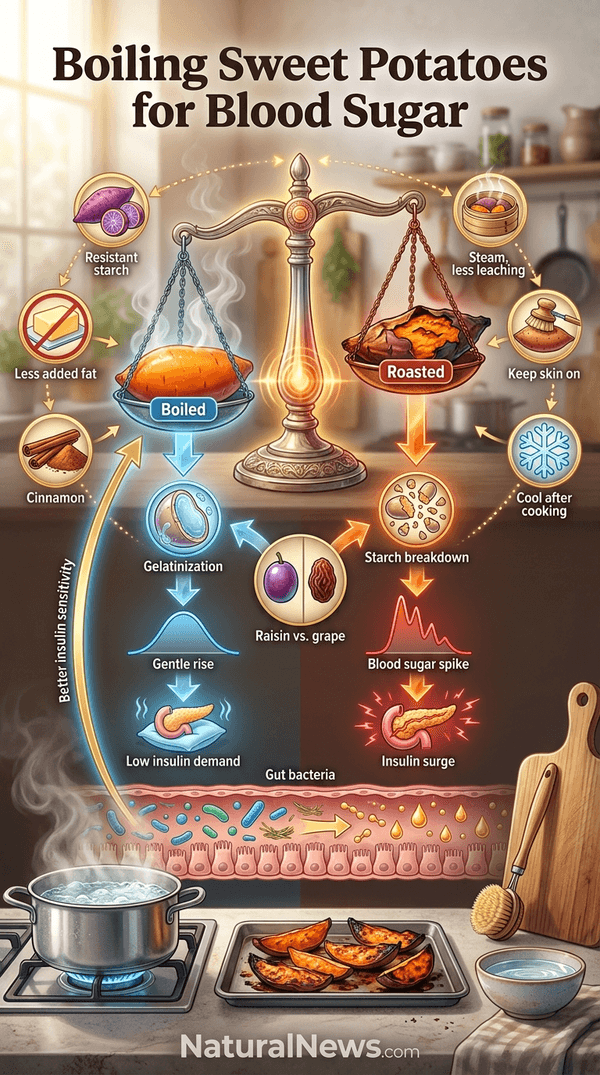
Ella Davar, RD, compared a baked or roasted potato to a raisin and a boiled potato to a grape. Boiling sweet potatoes may be better for blood sugar than baking or roasting, according to dietitians [1]. That moisture difference is one reason the two preparations behave differently in the body.
Boiling sweet potatoes may be better for blood sugar than baking or roasting, according to dietitians [1]. Separate guidance from Verywell Health notes that boiling sweet potatoes tends to lower their glycemic index compared to baking, and that some varieties, such as purple sweet potatoes, contain resistant starch that is only partially broken down in the body and helps prevent spikes in blood sugar [2].
Other Reported Benefits: Less Added Fat, Antioxidants, and Easier Digestion
Boiled sweet potatoes retain moisture, so they may require less oil or butter to taste good, according to Davar. Boiling sweet potatoes may be better for blood sugar than baking or roasting, the report stated [1]. Reducing added fat is one practical advantage of a cooking method that leaves the vegetable naturally soft.
Research on carotenoid retention suggests boiling generally preserves these compounds well compared with some higher-heat methods, though results vary by sweet potato variety and the antioxidant being measured. One study found that boiling unpeeled medium-sized sweet potato roots for 30 minutes resulted in a 14 to 59 percent reduction of total carotenoid content across four sweet potato cultivars [3]. Other research on orange-fleshed sweet potato reported a true retention of all-trans-beta-carotene ranging from 70 percent to 80 percent with longer boiling times [4].
Scherer said boiled sweet potatoes are soft and gentle on the digestive system. The report also noted that boiling sweet potatoes may be better for blood sugar than baking or roasting [1]. The report also noted that boiling sweet potatoes may be better for blood sugar than baking or roasting [1].
How to Boil Sweet Potatoes to Preserve Nutrients
The peel contains nutrients, so dietitians recommend scrubbing sweet potatoes thoroughly and leaving the skin on if possible. The skins can be removed after cooking if a smoother texture is desired. Keeping the skin intact also helps limit leaching of water-soluble nutrients into the cooking water.
That approach balances thorough cooking with limited water contact.
Boiling sweet potatoes may be better for blood sugar than baking or roasting, and dietitians explain why and how to get the most benefits [1]. Roasting sweet potatoes with a small amount of oil allows the natural sugars to caramelize, creating a sweeter, more complex and slightly nutty flavor, according to EatingWell [5].
Takeaway: Boiling May Be a Simple Option, but Individual Responses Vary
The dietitians described boiling as arguably the easiest cooking method and one that may help with blood sugar control, but they did not present it as a replacement for medical advice or individualized treatment.
A separate report noted that sweet potatoes contain lower levels of simple sugars and higher levels of complex carbohydrates than bananas, a difference researchers said can slow digestion and reduce blood sugar spikes [6].
For people managing blood sugar, the practical message is that preparation method is one variable among several, along with portion size, meal composition, and individual physiology.
References
- We Asked Dietitians the Best Way to Cook Sweet Potatoes for .... https://www.health.com/best-way-cook-sweet-potatoes-blood-sugar-12162014
- Are Sweet Potatoes Good for Diabetes?. https://www.verywellhealth.com/sweet-potatoes-and-diabetes-5105171
- Retention of b-carotene in boiled, mashed orange-?eshed sweet potato. by Elsevier. Journal of Food Composition and Analysis 19 (2006)
- Effects of various traditional processing methods on the all-trans-b-carotene content of orange-?eshed sweet potato by Elsevier. Journal of Food Composition and Analysis 21 (2008)
- How to Cook Sweet Potatoes for Flavor and Nutrition - EatingWell. https://www.eatingwell.com/cooking-sweet-potatoes-for-flavor-and-nutrition-11874220
- Bananas Or Sweet Potatoes: Which Is Better for Blood Sugar Management?. https://www.naturalnews.com/2026-09-23-banana-sweet-potato-better-blood-sugar-management.html
Explainer Infographic









Please contact us for more information.


