


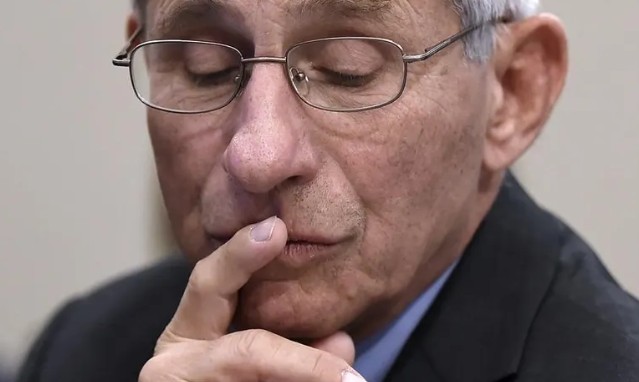
- Sen. Rand Paul has formally requested a Department of Justice investigation into Dr. Anthony Fauci for alleged perjury during a 2021 congressional hearing about COVID-19 origins.
- Paul asserts Fauci falsely testified that the NIH never funded gain-of-function research at the Wuhan Institute of Virology.
- Perjury carries a potential federal prison sentence of up to five years under U.S. law.
- Fauci has maintained he "never lied before the Congress" and declined to retract his statements.
- The dispute is part of broader congressional investigations into Fauci's conduct, including a recent contempt of Congress referral and a presidential pardon from Joe Biden.
The perjury allegation: What Fauci said under oath
Sen. Rand Paul, R-Ky., has called for a Department of Justice investigation into Dr. Anthony Fauci for allegedly lying under oath about the origins of COVID-19 during a 2021 congressional hearing, marking the latest escalation in a years-long conflict between the senator and the former top government health official.
Paul sent a letter Tuesday to Matthew Graves, a Justice Department attorney, demanding an investigation into what he described as one of the clearest cases of perjury in government testimony. The allegation centers on Fauci's sworn statement that "the NIH has not ever and does not now fund gain-of-function research at the Wuhan Institute of Virology."
Perjury, a federal offense carrying a potential prison sentence of up to five years, applies when a witness knowingly provides false testimony under oath. Paul emphasized the severity of the allegation during an appearance on Fox News, stating he believes no clearer case of perjury exists in the history of government testimony.
Refusal to retract: Fauci's defense
During a subsequent hearing, Paul directly warned Fauci of the criminal implications of lying to Congress and offered him an opportunity to recant his previous statements. Fauci declined, maintaining he had never provided false testimony before Congress and refused to retract his earlier claims.
Fauci, who served as director of the National Institute of Allergy and Infectious Diseases for nearly four decades, has repeatedly defended his testimony regarding NIH funding and the origins of the pandemic. His refusal to acknowledge any inaccuracy has fueled Republican criticism that he misled lawmakers and the American public.
Historical context: The Wuhan lab controversy
The dispute over gain-of-function research at the Wuhan Institute of Virology has been central to partisan debates about COVID-19 origins since early 2020. Gain-of-function research involves modifying pathogens to enhance their transmissibility or virulence, and critics have questioned whether U.S. funding indirectly supported such work in China.
The NIH has maintained its funding agreements did not support gain-of-function research at the Wuhan facility, though documents released through congressional investigations have raised questions about the precise nature of collaborative projects between American and Chinese researchers.
Broader investigation: Contempt referral and pardon implications
The perjury allegation emerges amid a wider investigation by Paul's Senate Homeland Security and Governmental Affairs Committee into Fauci's conduct. The committee previously voted to hold Fauci in contempt of Congress after he invoked his Fifth Amendment right against self-incrimination more than 100 times during a July 2026 hearing.
Former President Joe Biden issued a broad preemptive pardon covering all potential federal offenses Fauci committed between 2014 and 2024, a move that has complicated legal analyses of his Fifth Amendment invocation. Sen. Josh Hawley, R-Mo., has argued that the pardon eliminates Fauci's ability to shield himself from answering questions about past conduct.
Paul has suggested the pardon itself should be challenged, describing it as extraordinary and unprecedented in scope. The Justice Department will ultimately determine whether to pursue charges against Fauci for alleged perjury or contempt of Congress.
Legal and political stakes ahead
The intersection of a presidential pardon, constitutional protections against self-incrimination, and allegations of false testimony creates uncharted legal territory. If the Justice Department pursues an investigation, courts may need to resolve whether Fauci can be prosecuted for statements made after receiving a pardon covering the period in question. The outcome could set precedent for how Congress holds former officials accountable when broad pardons complicate traditional oversight mechanisms. For now, the dispute remains a politically charged standoff between the executive and legislative branches, with potential criminal consequences looming for one of the most recognizable figures in American public health.
Sources for this article include:








Please contact us for more information.


