



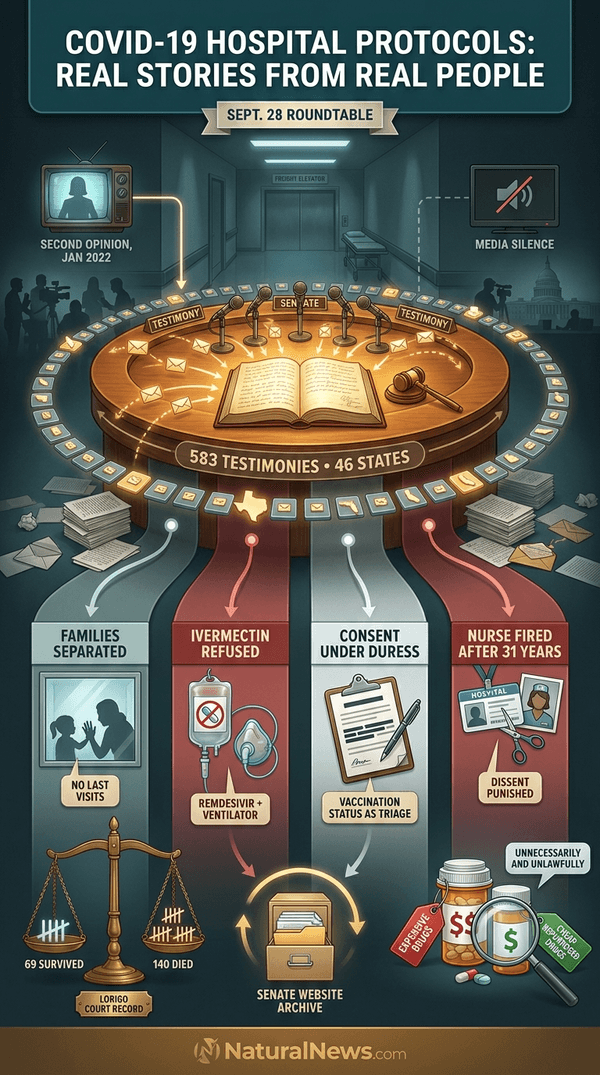
The event was devoted entirely to what happened inside hospitals during the Wuhan coronavirus (COVID-19) pandemic, according to his office. Johnson said 21 patients, family members, doctors and nurses testified, and his office had received 583 testimonies from 46 states as of Sept. 26.
The senator said he provided a platform "so that this kind of cruelty will not be repeated," according to his office. The roundtable follows Johnson's prior panel discussions, including a January 2022 event titled "COVID-19: A Second Opinion," which a group of doctors and medical experts joined to discuss the federal government's pandemic response, the capture of U.S. health agencies by pharmaceutical companies, and the vilification of doctors who sought to treat patients with inexpensive repurposed drugs [1][2].
Families Describe Discharge, Intubation at Hospitals
Brad Seiler said staff told him his wife, Gail, was "unsavable" and that a nurse said, "She'll be dead tonight, or before you even get home." Brad said Gail was discharged through a freight elevator used to transport bodies and out through doors used by funeral homes.
Gail survived and is "alive, healthy, active, and enjoying life," he said. She later described being treated at a Texas hospital after they asked, and she told them, she wasn't vaccinated [3].
Stephanie Williamson said her husband, Dave, died after decisions made without informed consent or family input. She said she was pressured into consenting to his intubation and that "my children never saw their father again." Cases of intubation without consent have been reported by other families, including Nicole Charlotte Hardison, who was given remdesivir without her consent and did not survive [4].
The accounts echo patterns reported across the country, where families said hospitals refused to administer ivermectin while instead using remdesivir and ventilators. Briana Ross of Georgia, for example, said the hospital treating her husband Jason refused ivermectin while administering remdesivir, fentanyl and other drugs before insisting on a ventilator [5].
Nurse, Doctor and Attorney Testify on Ivermectin Cases
Florida registered nurse Donna Lowery said she was fired after 31 years for advocating for a patient and recommending ivermectin; the patient later deteriorated and died, she said. Other nurses have described similar retaliation. California ICU nurse Gail Macrae said she pushed back against hospital COVID-19 protocols that she said violated medical ethics and resulted in increased harm to patients [6].
Florida physician Dr. John Littell, who was disciplined for prescribing ivermectin, said doctors must advocate for patients "abandoned by a healthcare system" and that "there is no healing without hope." The suppression of ivermectin as an early treatment has been documented by multiple sources, including studies that underdosed the drug or administered it too late to show efficacy, according to an interview with Dr. William Makis [7].
Attorney Ralph Lorigo described court cases; journalist Michael Capuzzo wrote that Lorigo won 72 cases and 69 patients survived, while in 140 cases hospitals defeated him or he could not reach court, all 140 patients died. Dr. Paul Marik, a top critical care physician, said patients are dying "unnecessarily and unlawfully" because hospitals prioritize expensive drugs like remdesivir while banning more effective and less costly treatments [8].
Johnson Cites Fear, Control; More Testimony Planned
Johnson said leaders used "fear of the unknown to gain undue power and control over our response to COVID." The roundtable was the first Johnson event devoted entirely to what happened inside hospitals during the pandemic, and his office said he plans to continue collecting and posting testimonies on his Senate website.
Johnson said, "It's not easy to read these testimonies. They are heartbreaking stories." The senator has previously called for transparency and has argued that federal health agencies have suppressed scientific data and vilified doctors who sought to treat patients with inexpensive and effective repurposed drugs [1][2].
Conclusion: Attendee Seeks Accountability; Records Sought
Dan Rudy, founder of Hope House Orlando, told The Defender he hopes for "truth, accountability and justice for those who are no longer here, and healing for the families left behind." The sentiments were echoed by other attendees, including Carolyn "CC" Blakeman of the FormerFedsGroup Freedom Foundation, who has documented stories of COVID-19 protocol victims and pursued legal action on their behalf [9].
TrialSite News called for Congress to obtain COVID-19 hospital protocols and revisions, family records, and testimony from clinicians, hospital executives and federal health officials. The outlet wrote, "America owes its deceased something more durable than competing pandemic narratives. It owes them the record."
The call for records comes amid ongoing litigation, including the wrongful death lawsuit filed by Scott Schara, father of 19-year-old Grace Schara, who died at Ascension St. Elizabeth Hospital in Appleton, Wisconsin after being admitted with a COVID-19 diagnosis [10]. A jury later sided with the hospital in that case, a verdict that advocates for medical freedom said exposed systemic failures with COVID protocols [11].
References
- ChildrensHealthDefense.org. "Obscene COVID Policies Serve Big Pharma Not P...". January 24, 2022.
- ChildrensHealthDefense.org. "Obscene COVID Policies Serve Big Pharma Not P...".
- ChildrensHealthDefense.org. "Exclusive: Survivor of CDC COVID Protocols Says She Was 'Just a Paycheck'".
- ChildrensHealthDefense.org. "Exclusive: 'My Wife Never Got to See Our Baby'".
- ChildrensHealthDefense.org. "Exclusive: Widow of 36-Year-Old Believes COVID Hospital Protocols Killed Her Husband".
- ChildrensHealthDefense.org. "Exclusive: Fired ICU Nurse Speaks Out on COVID Protocols, Vaccine Injuries".
- Mike Adams interview with Dr Makis. November 20, 2024.
- ChildrensHealthDefense.org. "Top ICU Doctor Suspended After Suing Hospital for Banning Life-Saving COVID Treatments".
- ChildrensHealthDefense.org. "'Before They Scrub This History': Group Documents Stories of COVID Protocol Victims".
- ChildrensHealthDefense.org. "Lawsuit Alleging Hospital's COVID Protocol Caused Death of 19-Year-Old to Move Forward After Judge Grants Partial Win in Gag Order Motion".
- Lance D. Johnson. "Hospital prevails in wrongful death trial of 19 year old Grace Schara exposing systemic failures with COVID prot". NaturalNews.com. June 25, 2025.
Explainer Infographic











Please contact us for more information.


