


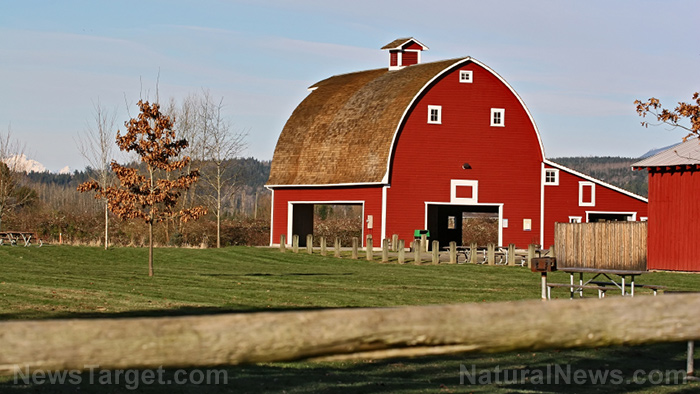
- Joel Salatin advocated studying a property for an entire year, visiting monthly and resisting the urge to immediately make changes so seasonal patterns can be understood.
- Wild grapevines, walnut trees and other vegetation can reveal naturally productive areas, while wetland vegetation can identify places where water collects.
- Snow, flooding, snowmelt and erosion can show how wind and water move across the property, helping farmers anticipate drainage and erosion problems.
- Salatin described discovering a natural corridor of warm air that explained why earlier farmers had planted apple trees there – the location offered protection from frost.
- The episode presented homesteading as an exercise in observation and cooperation with natural systems, arguing that careful attention can guide decisions about roads, orchards, ponds, fields and other infrastructure.
What if the first step toward building a productive farm was not building anything at all?
In the first episode of "Foundations in Farming and Homesteading + Pastured Laying Hens," which aired Sept. 26, Joel Salatin explored a deceptively simple approach to designing a homestead: slow down, observe and let the land reveal itself before imposing a plan upon it. Rather than treating a piece of property as a blank canvas, Salatin presented the landscape as a living system filled with clues about where water travels, where warmth gathers, where plants thrive and where future infrastructure might belong.
His advice was striking in its restraint. Drawing on principles of permaculture and regenerative agriculture, Salatin described the value of studying a property for an entire year – visiting once a month and resisting the urge to immediately transform it. "Don't do anything," he said, emphasizing the importance of watching seasonal changes before committing to major decisions.
That patience, he suggested, can uncover information that maps, property listings and conventional development plans cannot. A landscape can reveal its own patterns if someone takes the time to notice them.
The landscape was already talking
Salatin pointed to wild vegetation as one of the most accessible sources of information. Wild grapevines, for example, can indicate areas naturally suited to growing grapes. Existing walnut trees can suggest promising locations for nut trees or orchards. Hydrologic vegetation can identify wet areas – places that might be unsuitable for a house or corral but valuable for understanding how water behaves across the property.
Even weather leaves a signature.
Snow can reveal where wind deposits or removes moisture. Floods and snowmelt can expose the routes water naturally follows, while erosion can reveal where future drainage problems may develop. Salatin recalled going out after major water events specifically to observe these patterns so that later interventions could reduce damage.
Perhaps most intriguing was his description of invisible "tunnels" of warm air moving through the landscape. On his own farm, he discovered a narrow corridor where warmer air flowed along the edge of a hill. Previous generations had planted apple trees there and what initially seemed like an arbitrary planting decision suddenly made sense: the location provided protection from frost.
"The old-timers knew that," Salatin explained.
The discovery became a powerful example of what can happen when observation replaces assumption. The land had been providing information all along; someone simply had to learn how to read it.
Designing with the land, not against it
The episode ultimately offered a different philosophy of homesteading. Instead of beginning with a list of structures, roads, ponds and fields and forcing them into place, Salatin encouraged viewers to first understand the property's existing rhythms.
That approach could mean discovering where a road should run before constructing it, identifying naturally favorable growing zones before establishing an orchard or understanding water movement before attempting to control it. The objective was not to eliminate the forces of nature, but to work with them.
As Salatin put it, "The vegetation tells you a lot about the latent fertility in a certain area."
The lesson was both practical and philosophical: good landscape design may begin not with construction, but with attention. In a world increasingly accustomed to instant answers and immediate transformation, the episode made a compelling case for patience – and for recognizing that sometimes the smartest thing a farmer can do is simply walk the land, watch closely and listen.
Want to know more?
Discover practical strategies for building a productive, resilient homestead and raising pastured laying hens in "Foundations in Farming and Homesteading + Pastured Laying Hens," streaming on BrightU. Led by award-winning farmer Joel Salatin, this nine-episode series takes you step by step through the foundations of self-reliant homesteading, from designing your land and building efficient infrastructure to establishing a productive pastured egg operation. You'll explore practical approaches to housing, fencing, water systems, mobile infrastructure, flock health, pasture management, seasonal production and profitability.
Whether you're new to farming and homesteading or looking to expand your skills, you can purchase the "Foundations in Farming and Homesteading + Pastured Laying Hens" combo package here to get lifetime access to Salatin's practical guidance. The package includes 32 video sessions, more than nine hours of instruction, homework PDFs and complete video transcripts to help you learn, review and apply the lessons anytime.
Watch the trailer for "Foundations in Farming and Homesteading + Pastured Laying Hens" below.
This video is from the BrightU channel on Brighteon.com.
Sources include:





Please contact us for more information.


