


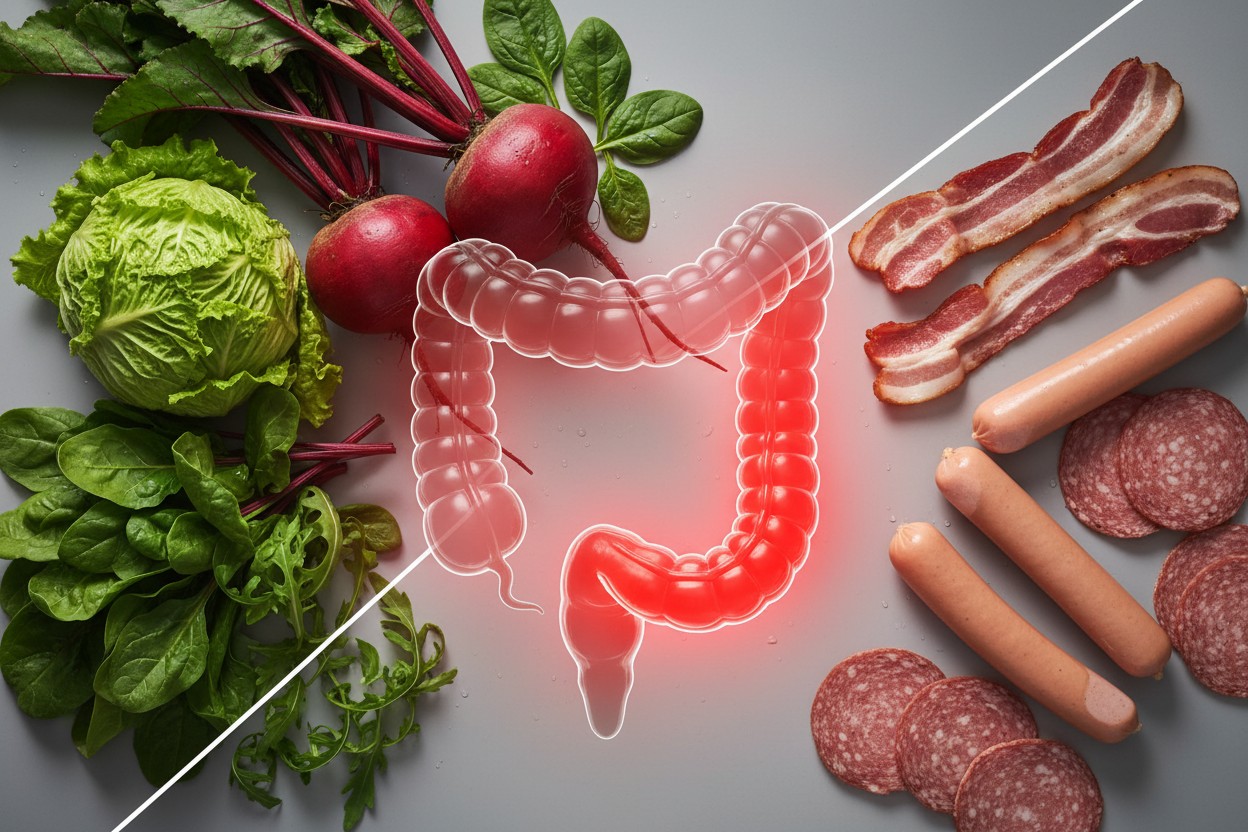
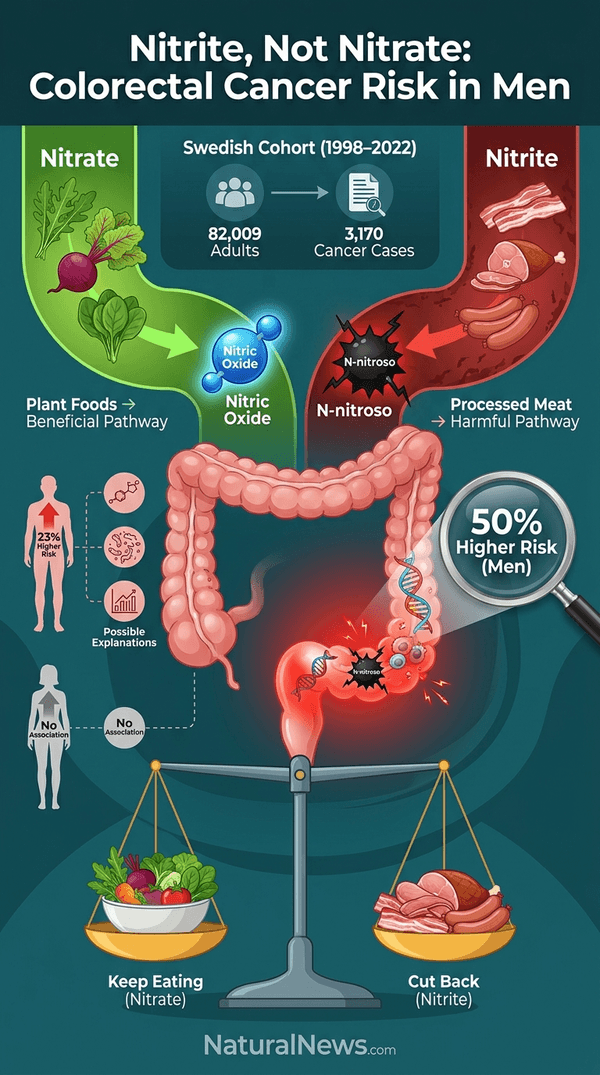
Nitrate intake showed no association with colorectal cancer risk, according to researchers. Nitrite intake produced a different result. Men in the highest fifth of nitrite intake had a 23% higher risk of colorectal cancer compared with the lowest fifth, the study found. Women showed no such pattern, researchers said.
Nitrate and Nitrite Differ in Dietary Sources and Effects
Nitrate occurs naturally in soil and is absorbed by plants as they grow, which is why vegetables carry most of the nitrate in a typical diet, according to the study. Nitrite works differently, entering the diet mainly as a food additive used to fight bacterial growth and preserve color in bacon, hot dogs, and deli meats, researchers said. The body does convert some dietary nitrate into nitrite naturally, so the distinction is not absolute, the study stated.
The surrounding context of each compound matters enormously. Vegetables arrive bundled with vitamin C, polyphenols, and fiber that appear to block the chemical reaction forming N-nitroso compounds, which turn nitrite dangerous in the gut, according to researchers. Processed meat lacks those protective compounds, the study stated.
The nitrosamine link itself has been documented in the toxicology literature, where nitrosamines are described as carcinogenic substances resulting from the digestion of sodium nitrate and/or sodium nitrite [1]. The study from Karolinska Institutet found that nitrate-rich vegetables such as spinach, beets, arugula, and lettuce showed no association with colorectal cancer risk [2].
Sex Differences and Anatomical Location of Risk
Researchers found the nitrite association in men but not women, a pattern they flagged for further study rather than fully explained, according to the study. Differences in typical processed meat intake between sexes remain one possibility, researchers said. Hormonal factors affecting how the gut handles N-nitroso compounds and differences in statistical power remain two more possibilities, the study stated.
The risk was concentrated in the distal colon, the section closest to the rectum, according to researchers. A risk concentrated in one anatomical location points toward a local exposure effect, the study stated. Earlier research has similarly reported that prolonged high consumption of red and processed meat increases the risk of cancer in the distal portion of the large intestine [3].
Whatever eventually explains the sex split, researchers said the practical takeaway does not depend on solving that question first. Cutting back on nitrite-heavy processed meat benefits colon health regardless of which biological pathway turns out to matter most, the study stated.
Common Nitrite Sources and Dietary Considerations
Bacon, hot dogs, and deli meats top the list of common nitrite sources because curing salts containing sodium nitrite are standard across the processed meat industry, according to the study. Some pepperoni and salami varieties carry particularly high concentrations given how heavily cured meats depend on nitrite for both safety and shelf-stable color, researchers said. Certain canned meat products use the same curing chemistry, and some plant-based deli alternatives use added nitrite to mimic the color and preservation of traditional cured meat, the study stated.
The broader evidence base on processed meat has drawn attention from international health bodies. Processed meats such as bacon, ham, and sausages have been classified by the International Agency for Research on Cancer of the World Health Organization as a proven human carcinogen, with a majority of experts concluding that consuming just 50 grams of processed meat daily increases colorectal cancer risk by 18% [4]. Earlier work has also linked nitrate- and nitrite-containing cold cuts to a nearly 30% increased risk of bladder cancer, with researchers noting that nitrate and nitrite are precursors to N-nitroso compounds that induce tumors in multiple organs [5].
The study recommended limiting processed meat to an occasional food rather than a daily staple. Researchers said nitrate-rich vegetables such as spinach, beets, arugula, and lettuce showed zero association with colorectal cancer risk. Pairing any processed meat with vitamin C-rich foods may help block the nitrosation reaction, according to the study. Commentators have noted that consuming vitamin C-rich fruits alongside barbecued meals can mitigate some of these risks, since the key to reducing cancer risk is to avoid known carcinogens while supporting overall health [6].
Conclusion: A Sharper Line Between Two Compounds
The Karolinska Institutet study's central contribution is precision. Over two decades of follow-up covering 82,009 adults and 3,170 colorectal cancer cases, nitrate intake showed no association with colorectal cancer risk, while nitrite intake was linked to a 23% higher risk in men and a 50% higher risk of distal colon cancer specifically, according to the study. Women showed no such pattern, a finding researchers flagged for further study.
The practical implications align with existing dietary guidance. Processed meats have already been classified as proven human carcinogens by the International Agency for Research on Cancer, which concluded that 50 grams daily raises colorectal cancer risk by 18% [4]. The new study's finding that nitrate-rich vegetables carry no association with colorectal cancer risk means those foods do not need to be restricted on nitrite grounds.
References
- Mercola.com. "Known Tumor Trigger Hides in These Popular Organic Foods". Mercola.com. October 22, 2019.
- Mercola.com. "Why Some Nitrates Are Healthy While Others Are Not". Mercola.com. March 19, 2018.
- NaturalNews.com. "Lunch meat may cause bladder cancer". NaturalNews.com. August 4, 2010.
- ANH International. "News Alerts Week 44 2015". ANHinternational.org. October 28, 2015.
- TheTruthAboutCancer.com. "CSOB 6th Edition Ebook". TheTruthAboutCancer.com.
- Bharat B Aggarwal, Sunil Krishnan and SuShovan Guha. "Front Matter".
- NaturalHealth365. "Nitrite, Not Nitrate, Tied To Colon Cancer". NaturalHealth365. September 23, 2026.
- Mike Adams. "Brighteon Broadcast News". Brighteon.com.
Explainer Infographic








Please contact us for more information.


