



Officials cited student privacy and learning concerns as parents and advocacy groups pressed for safeguards. The moves mark a shift for two of the nation's largest school systems, which had previously moved to expand classroom technology access. District officials said the pauses would allow time to study the technology's effects on students before broader adoption.
NYC and LA Districts Pause AI
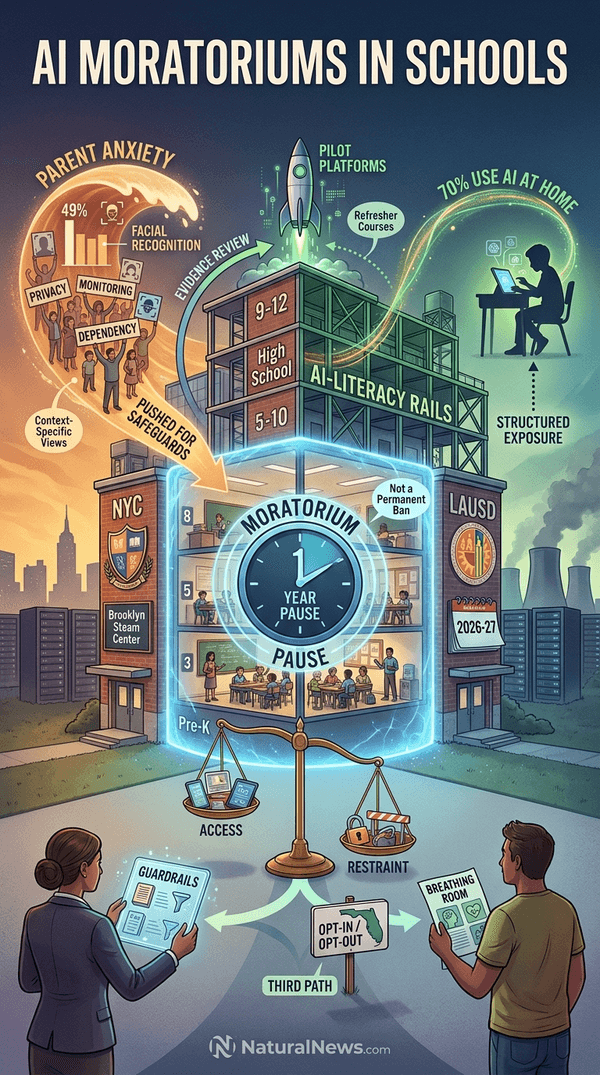
New York City Mayor Zohran Mamdani said on Sept. 2 that public schools serving pre-kindergarten through eighth grade will not use generative AI tools for at least one year, according to the announcement. "Just because technology is everywhere, doesn't mean it belongs everywhere," Mamdani said at a news conference at Brooklyn Steam Center School [1].
Mamdani said select high schools may use pilot platforms, and all public high school students will be required to complete AI awareness refresher courses twice a year [2]. The city's prohibition extends through middle school, with AI use permitted only in high school, according to the education department [3].
Meanwhile in the City of Angels, the LAUSD implemented an AI moratorium for the 2026-27 school year, according to district officials. The district said the pause would allow educators and families to assess the technology before classroom deployment.
Parents and Advocates Raise Concerns
Common Sense Media chief program officer Yvette Renteria applauded districts for putting children's safety front and center. Renteria said a pause should not stop work, adding that stakeholders, teachers, parents, organizations and students should engage to understand what is happening at home and in schools.
AI Education Project CEO Alex Kotran said parents increasingly hold a blanket opinion about AI rather than context-specific views. He said public comments in New York City focused on data centers and environmental impact.
A survey by the Center for Democracy and Technology found that more than half of parents and students surveyed were worried about the implementation of facial recognition and other monitoring technologies in schools, according to Children's Health Defense [4]. A separate Deloitte survey found that 49% of parents said they were worried their children rely on AI too much [5].
Students Use AI Despite School Bans
Common Sense Media found 70% of students said they use AI tools for schoolwork, while 65% said they first try to solve problems themselves or ask for help. The findings suggest that classroom prohibitions may not match students' actual behavior outside school.
Democracy Prep Public Schools CEO Tameka Royal said the pause is not avoidance. She said districts should study evidence, train educators, establish guardrails and determine where AI expands access without replacing student thinking.
Royal said high school lessons should focus on responsible tool use, while younger students need a pause to understand AI's meaning. Similar debates have played out nationwide, including a Florida Department of Education proposal that would let parents opt their children in or out of AI instructional tools [6].
Conclusion: Districts Seek Balance
There is consensus that schools need solutions quickly as students use AI at home and may encounter it in the workforce. The Goldman Sachs report warned that generative AI could replace the equivalent of 300 million full-time jobs worldwide [7].
AI faced similar school bans in 2023 over cheating concerns. Tensions eased as detection tools emerged, but fears have returned with growing focus on AI data centers and future dominance.
References
- TheEpochTimes.com. "NYC Public Schools Ban AI for Elementary, Middle Schools for 2026-2027". September 2, 2026.
- ZeroHedge.com. "NYC Bans AI For Public Elementary, Middle Schools For 2026-2027". September 3, 2026.
- NaturalNews.com. "NYC Schools Block Student AI Use Through Middle School". September 4, 2026.
- ChildrensHealthDefense.org. "Normalizing Surveillance From a Young Age: More Schools Using Facial Recognition, AI Technologies to Monitor Kids". December 22, 2023.
- YourNews.com. "Many Parents Now Worried Their Kids Rely On AI Way Too Much". July 10, 2026.
- JustTheNews.com. "Parents in Florida being given choice to opt their kids in or out for AI tools in class". July 28, 2026.
- NaturalNews.com. "Generative AI could replace up to 300 million mostly white-collar jobs worldwide". March 31, 2023.
Explainer Infographic











Please contact us for more information.


