


The warning follows U.S. Treasury Secretary Scott Bessent's declaration on Monday, Sept. 21, that "all the Iranian airlines will be shut down around the world" by Wednesday, according to a ZeroHedge report on the sanctions. Bessent's statement came as part of the Trump administration's broader economic pressure campaign against Iran, which it has described as an unprecedented economic operation [1].
"We ask all the countries of the region not to join America's adventure. If they do not allow Iranian aircraft to travel, their own airports will not be able to have flights either," Rezaei said in the statement. He added, "You are our friends, but you should not join America's ranks. You should prevent the war from spreading." The statement puts neighboring states allied with Washington on notice, according to the report.
U.S. Sanctions and Regional Compliance
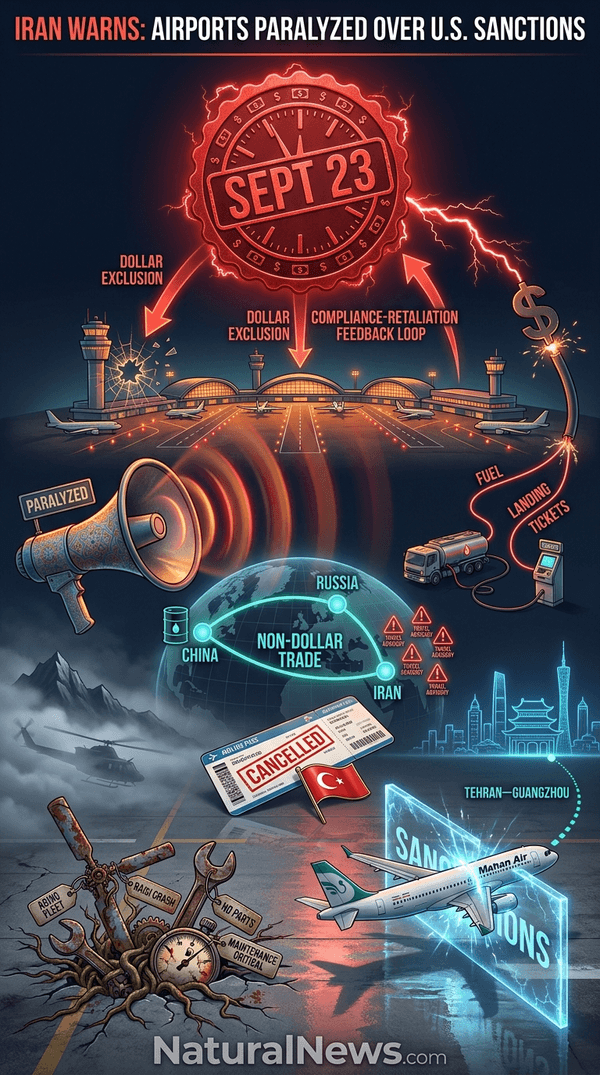
Bessent warned that any airports or companies providing fuel, landing and ticketing services for sanctioned Iranian entities risk exclusion from the dollar system, according to the report. The secretary's announcement is part of what the administration has called Operation Economic Outcast, an effort to isolate Iran from global financial networks [1].
Turkey has canceled all flights for various Iranian carriers in the foreseeable future, the report stated, marking one of the first visible compliance actions by a regional state. In contrast, an Iranian Mahan Air flight from Tehran landed in Guangzhou, China, on Wednesday as the new U.S. aviation sanctions took effect, according to flight tracking data cited by Open Source Intel. The ZeroHedge report stated that China is "clearly not caring about U.S. sanctions."
The split response reflects a broader geopolitical divide. President Donald Trump in August declared "ECONOMIC D-DAY" against Iran, warning that any country doing business with the Islamic Republic would face "TREMENDOUS economic consequences" [2].
China, Russia and Iran have meanwhile been described in prior interviews as pushing for a more diversified and less dollar-dependent financial system. Beijing purchased approximately 30% of its oil from Tehran, while the Islamic republic served as a critical trading partner and geographic gateway to Moscow [3].
Iran's Regional Warning and Civilian Hub Risk
The Iranian Supreme National Security Council statement put neighboring states allied with Washington on notice that their civilian aviation infrastructure could become a target, according to the report. Throughout the prior seven months of war with the U.S., Iran has shown a willingness to target major civilian hubs, particularly in neighboring Kuwait, the report stated. In June, a major Iranian attack on Kuwait International Airport killed one person and injured 63 others, according to Kuwaiti Ministry of Health [4].
Iran is defiantly planning to press forward with its commercial airline operations, according to the report. The statement escalates tensions as regional states weigh compliance with U.S. sanctions against the risk of Iranian retaliation. The U.S. Department of State has already updated travel advisories for five Middle Eastern nations, warning of security risks primarily posed by Iran in the region [5].
Background on Iran's Aviation Sector
Iran's aviation industry has faced long-standing U.S. sanctions targeting the sector, according to the report. In recent years, the Islamic Republic has suffered significant aerial disasters.
On May 19, 2024, President Ebrahim Raisi died in a military helicopter crash in a mountainous area of northwestern Iran. Iranian state media attributed the crash to a "technical failure," blaming U.S. sanctions on its aviation sector as the cause of the accident [6].
The Bell 212 helicopter carrying Raisi was at least 40 years old and was flying in heavy fog and bad weather conditions, though human error could also have been a contributing factor, according to the report. Some observers speculate that a lack of airline parts and aging aircraft, due to the long-standing U.S. targeting of the industry, has increased the chances of aviation disasters, the it stated.
Conclusion
Iran's warning raises the prospect of further regional disruption if neighboring states comply with U.S. sanctions, according to the report. Some countries are complying with the U.S. order, while China has not, the report stated. Turkey has canceled Iranian carrier flights, but an Iranian Mahan Air flight landed in Guangzhou, China, as the new sanctions took effect.
The Iranian government has not announced specific actions beyond the warning issued by its Supreme National Security Council, according to the statement. Regional airports and carriers have not publicly responded to the warning, the report said. The Treasury Department has not provided further details about enforcement mechanisms for the aviation sanctions beyond Bessent's initial announcement, according to the report.
References
- Antiwar.com. "Economic D-Day: Treasury Secretary Bessent Announces Operation Economic Outcast". August 24, 2026.
- The Times of Israel. "Declaring 'economic d-day,' Trump says any country trading with Iran will be sanctioned". August 19, 2026.
- Mike Adams. "Mike Adams interview with Michael Farris". June 19, 2025.
- ZeroHedge. "Major Iranian Attack On Kuwait International Airport Leaves One Dead, 63 Injured". June 3, 2026.
- The Epoch Times. "US Updates Travel Advisories for 5 Middle East Countries". August 29, 2026.
- NaturalNews.com. "Iran is blaming US sanctions for lack of aviation maintenance parts that led to deadly helicopter crash". May 22, 2024.
Explainer Infographic





Please contact us for more information.


