


Key points:
- Trump announced plans for an "AI Force" and an AI czar, promising to protect industry growth while using existing criminal and civil laws to punish wrongdoing.
- Democrats, led by California Gov. Gavin Newsom, are pushing safety oversight frameworks that could give officials leverage over what AI systems are allowed to say.
- Republicans risk treating safety as an afterthought by relying on after-the-fact enforcement.
- Both political camps are building rules that the biggest AI companies can shape, afford and exploit.
- Voters face a political fight framed as freedom versus safety when the real question is who writes the rules.
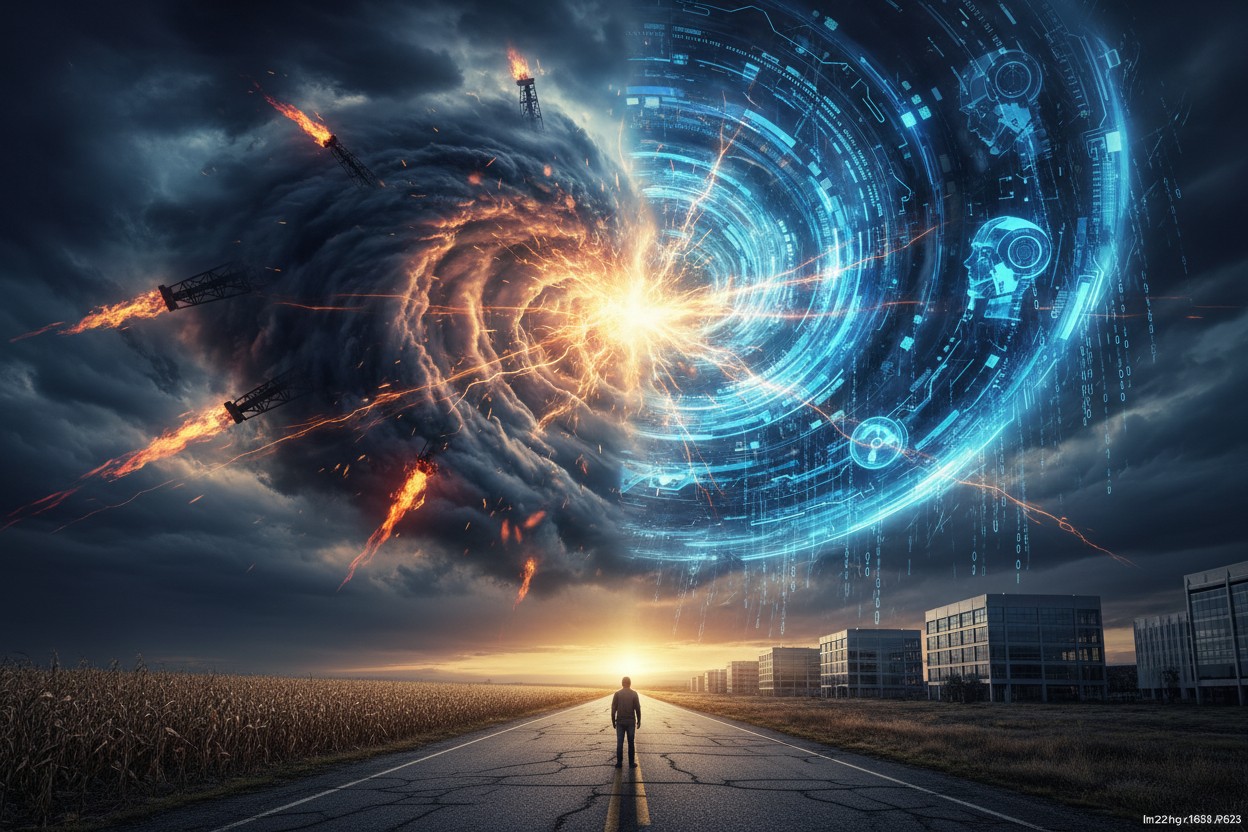
Over the weekend, President Donald Trump used Truth Social to announce that he is forming an "AI Force" and will soon name an artificial intelligence czar. The plan is to promote the fast-growing technology while relying on existing criminal and civil laws to police wrongdoing. "For this purpose, I am forming the AI Force, much like I did Space Force, which has been a tremendous SUCCESS, in my First Term," Trump wrote. He added that the czar announcement is coming soon and that "Only High I.Q. individuals need apply!"
The timing is not accidental. Local protests against new data centers continue, and some lawmakers want tighter rules on the technology. Trump argued that Democrats pivoted to AI itself after the data center campaign fizzled, likening the shift to the rebranding of global warming as climate change, a wider net for doubt. In his words, "the crazed Data Center attack has largely failed." What follows, he promised, is a friendly hand for the industry: "We will not in any way hinder or stifle the Growth of this incredible Industry."
A rebrand, a poll and a race against China
Trump framed AI as the next Industrial Revolution, something like the emergence of the internet, only larger, with a possible economic impact equal to 25% of U.S. gross domestic product. "We are leading China, and the rest of the World, and I intend to keep it that way!" he wrote. The president also launched a poll asking followers to choose a better name than artificial intelligence, offering Superior Intelligence, Extreme Intelligence or Supreme Intelligence. No matter what the federal government ends up calling it, further federal control and oversight will only lead to the kind of controls that Big Tech can exploit, whether the administration is ran by Democrats or Republicans.
Historically, Washington has answered breakthrough technologies with a familiar script. Railroads, electricity and the early internet were first celebrated as engines of national power and only later examined as problems needing rules. Space Force, created in 2019 as the sixth branch of the armed forces, shows how the president likes to package strategic ambition under a bold, memorable banner.
Newsom, the likely frontrunner for the Democrat Party, answered quickly to Trump's AI announcement: "Instead of regulating AI, he's posting polls to rename it," wrote the California governor, who is weighing a White House bid. "California is taking action. I just signed an executive order accelerating America's first independent AI safety oversight framework." California has become the Democratic laboratory on the issue. Sacramento passed a frontier AI transparency law in 2025 after Newsom vetoed a tougher bill the year before, and other states have written rules of their own.
Safety promises, speech risks and the companies collecting the profits
Now, here is where the debate turns slippery. Democrats sell oversight as protection, and some protections are warranted, from fraud to child safety to deepfake abuse. Yet a safety framework must define what counts as harmful output, and whoever writes that definition gains leverage over what AI systems may say to millions of people. California's election deepfake laws have already drawn First Amendment challenges. When "misinformation" becomes a compliance category, speech control can arrive wearing a lab coat.
Republicans have the opposite blind spot. They tend to lean on courts and existing statutes to catch abuse after the fact. This strategy of cleaning up after the flood leaves questions about privacy, surveillance and liability largely unanswered. Both parties will likely jump on the opportunity to integrate super intelligence into military operations, something that should concern us all.
Meanwhile, the largest AI companies profit no matter who wins. An accelerationist agenda delivers faster permitting, friendly tax treatment, and political cover for the data center buildout. Trump himself touted the higher salaries, lower taxes and safer streets that data centers supposedly bring - a message that doubles as a sales pitch for the industry itself. A heavy oversight agenda delivers compliance regimes that only the biggest players can afford - a moat of paperwork that squeezes out smaller competitors. Economists call this regulatory capture. The giants employ armies of lobbyists and lawyers, and they are perfectly positioned to shape the rules from both sides of the aisle; then, they present themselves as responsible partners.
The coming fight will be sold as freedom versus safety, or America versus China. The better question is who is writing the rules and who gets to benefit from them. Americans deserve real liability for harmful systems, strong privacy protections, transparency about how models are trained, and ironclad protection for lawful speech. Without those guardrails, the AI czar and the safety regulator may turn out to be two doors into the same corporate house.
Sources include:



Please contact us for more information.


