


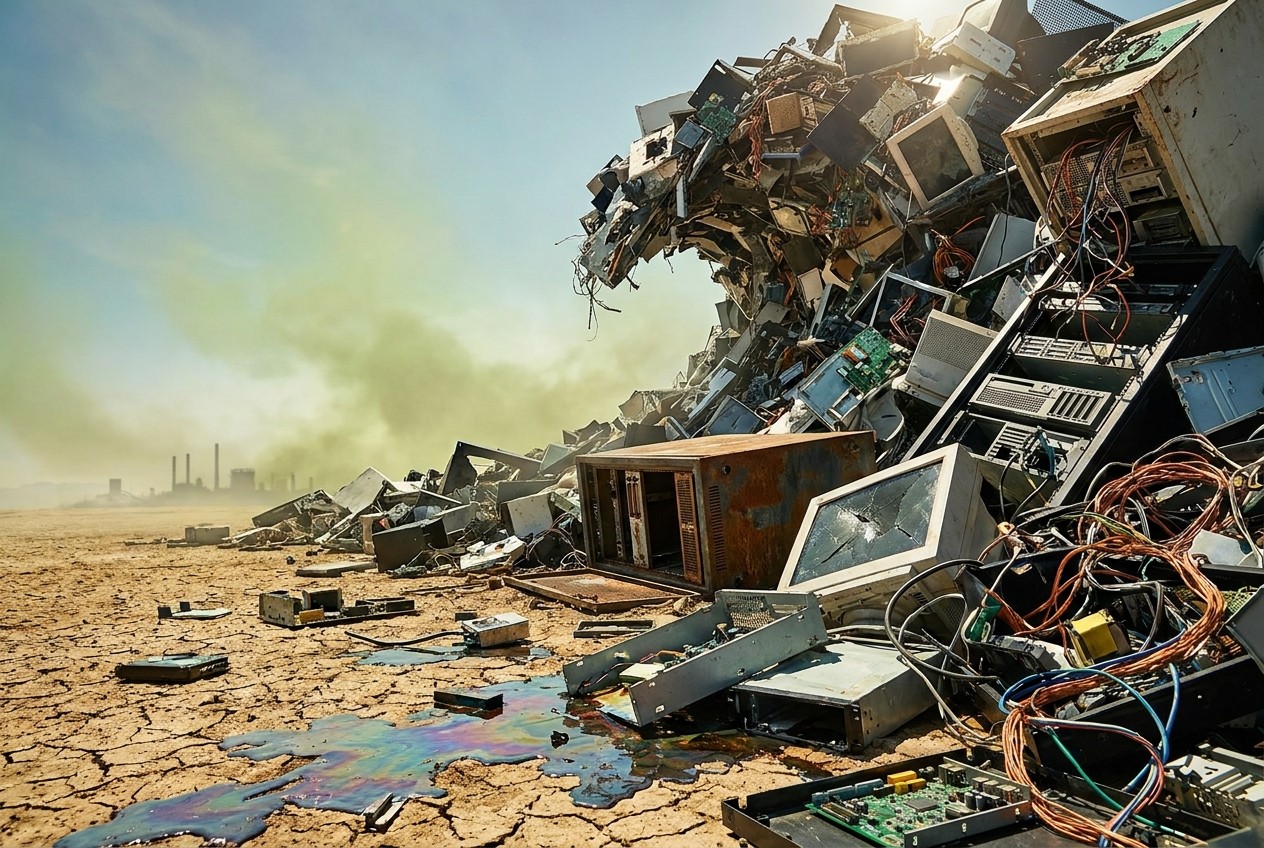
The electronic trash generated by AI over the next quarter-century could fill enough shipping containers to encircle the globe six times, the report projected. It further stated that there is currently no plan in place to deal with that waste – which typically contains toxins such as lead, mercury, cadmium and forever chemicals, as well as valuable metals that are challenging to reclaim.
"Already electronic waste is the fastest-growing waste stream on the planet and only one-fifth is properly managed," said Jim Puckett, co-founder of BAN, which works to see that toxic waste does not end up getting dumped on the world's poorer communities. The report's findings arrive as the construction of AI infrastructure accelerates across the United States and globally.
Report Details Scale of AI-Driven E-Waste
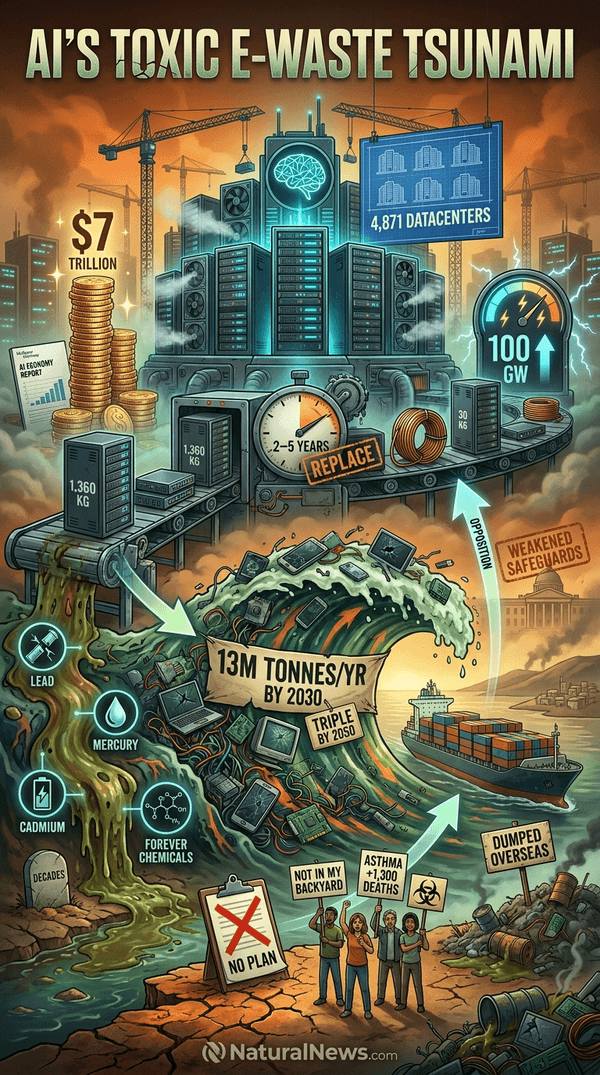
The report counted 4,871 new data centers in the construction pipeline in the United States. It added that while not all are clearly designated for use by AI, many will be.
To estimate the total volume of future waste, the report approximated the amount of computing power analysts project will be built, totaling roughly 100 gigawatts of new capacity worldwide by 2030 alone. It then analyzed how much equipment would be needed by weight, including racks of computer servers weighing 1,360 kilograms each, switches that weigh up to 30 kilograms and hundreds of kilograms of copper cable connecting each rack.
According to the report, such equipment will not be designed for repair and reuse and would need to be completely replaced every two to five years. On top of this, it assumed that AI developments will force the rapid replacement of consumer computers, phones, and telecommunications equipment owing to the computing requirements of the new systems.
By taking this wide view, the BAN report projects that AI-driven equipment retirement will generate up to 13 million metric tons per year by 2030 – a far higher estimate than a handful of previous studies. A 2025 report by McKinsey & Company estimates that nearly $7 trillion in capital outlays will be needed worldwide in the next five years to build datacenters running millions of computer servers 24 hours a day [2].
Toxic Materials and Disposal Gaps
The report said e-waste contains toxins such as lead, mercury, cadmium and forever chemicals, as well as valuable metals that are challenging to reclaim. Cadmium is a naturally occurring heavy metal that finds its way into the environment largely due to human activities such as mining and its use in batteries, pigments and plastics, and its primary health risk comes from long-term, low-level exposure because the body lacks an efficient mechanism for excreting it [3].
Vince Beiser, author of the book "Power Metal," which details the global problems of trying to reclaim valuable metals inside electronic goods, said the current system is failing. "We're doing a terrible job of handling e-waste in the U.S.," Beiser said.
He added: "Some of it gets dumped overseas. Most of it just gets dumped in landfills, which is a problem because it can leach all kinds of nasty things into the water, into the soil."
The report stated there is no plan to deal with the projected volumes of discarded electronics. Scientific research has long focused on methods to remove heavy metals like cadmium and lead from contaminated water and soil, indicating the environmental persistence of these materials once they are improperly disposed of [4].
Health Concerns and Political Opposition
Data center construction has already created a groundswell of bipartisan opposition around the United States for the huge amount of space and energy it requires, according to the report. This opposition is growing as focus turns to the long-term pollution AI could create. A group of environmental and health experts last week called for the federal government to issue a pledge to protect citizens' health from the repercussions of the AI buildout.
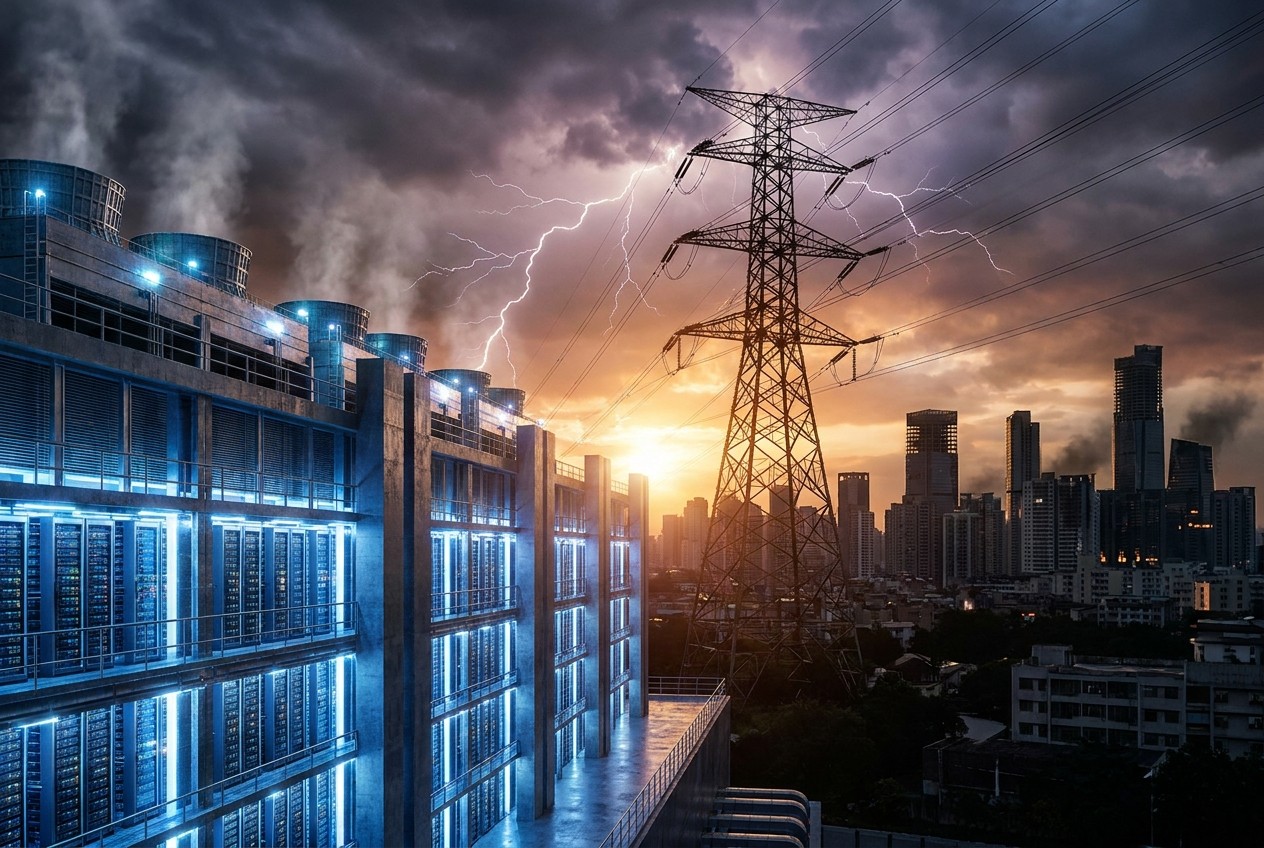
The group cited estimates that the air pollution from the enormous amount of electricity generation needed for datacenters could result in hundreds of thousands of new asthma cases and as many as 1,300 premature deaths per year in the United States alone. This concern is amplified by the rapid expansion of the energy sector to meet AI's demand. As noted in a 2025 report, the relentless march of artificial intelligence demands an energy revolution, with a single ChatGPT query devouring the equivalent of lighting a home for 20 minutes [1].
The Trump administration has sought to weaken environmental safeguards that would normally govern such a massive technological buildout, the report noted. The report's authors and other experts have raised concerns about the impact of this rapid industrialization on public health and the environment.
Conclusion: Calls for Awareness as AI Buildout Expands
BAN's white paper noted that the unprecedented spending on AI infrastructure "is roughly the cost of ending world hunger for the next 75 years – being spent in just five." The report said, "We all find ourselves unwitting participants in the AI horse race," adding that IT users everywhere often use AI without being aware of the greater consequences of doing so.
Experts and the report said e-waste is the fastest-growing waste stream on the planet and that no plan currently exists to manage the projected surge. The report suggests that as the AI buildout continues to expand at a rapid pace, the issue of electronic waste and its toxic byproducts will remain a significant environmental and public health challenge. The lack of a plan to deal with the waste, combined with the projected volumes, presents a logistical and environmental challenge that has yet to be addressed by industry or government.
References
- Lance D Johnson. "A Nuclear Energy Renaissance Is Underway Because AI Requires Vast Amounts of Energy". NaturalNews.com. July 01, 2025.
- Kevin Hughes. "AI Bubble Fears Spark Sell-Off as Tech Giants Face Investor Backlash". NaturalNews.com. February 10, 2026.
- Ava Grace. "The Silent Intruder: Unmasking the Ubiquitous Threat of Cadmium in the Modern World". NaturalNews.com. November 11, 2025.
- V.C. Taty-Costodes et al. "Removal of Cd(II) and Pb(II) ions, from aqueous solutions, by adsorption onto sawdust of Pinus sylvestris". Journal of Hazardous Materials B105. 2003.
Explainer Infographic








Please contact us for more information.


