


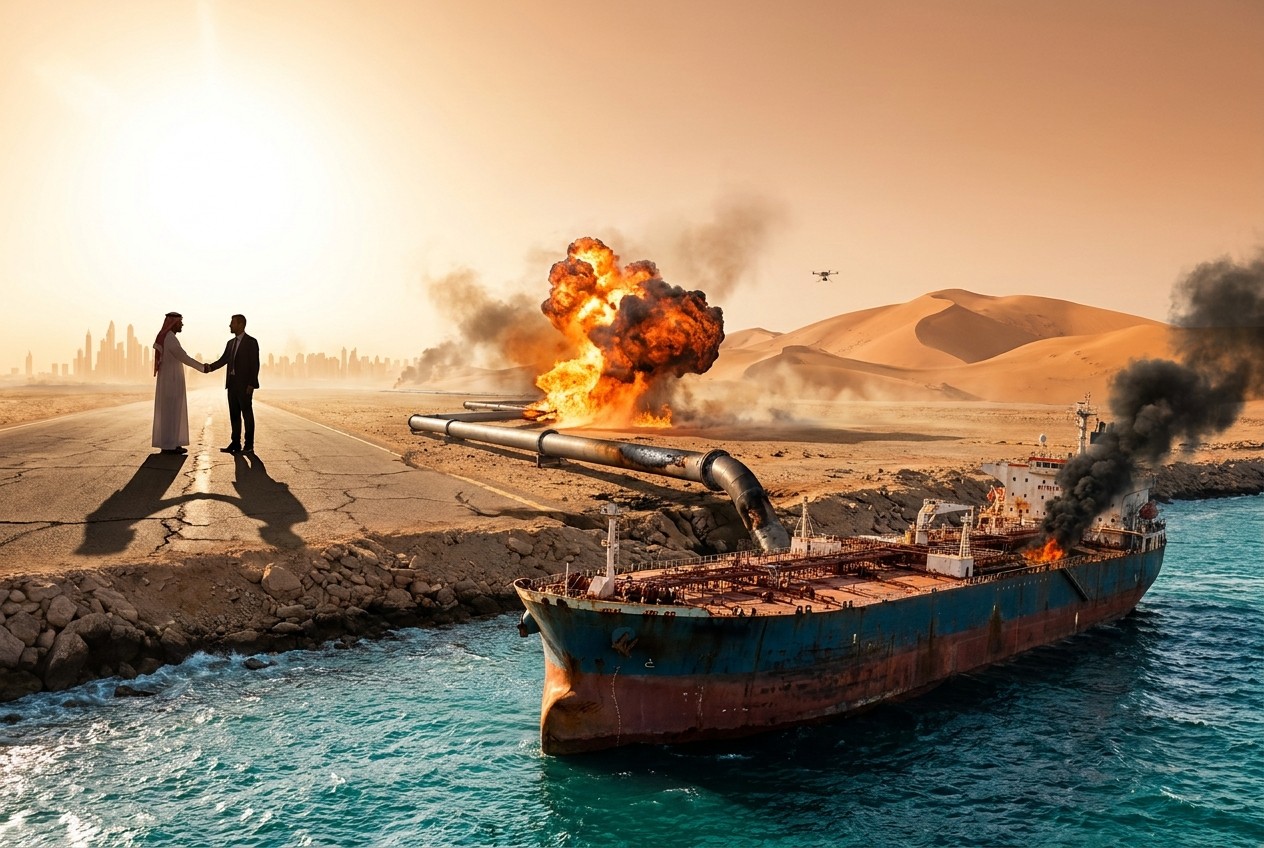
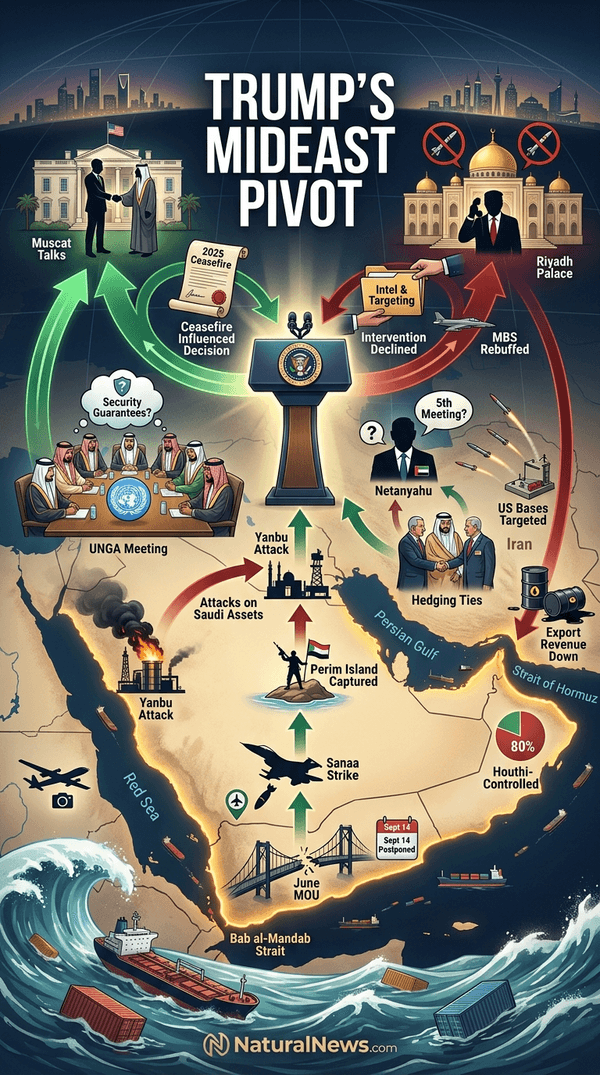
On the same day, Reuters reported that US officials met with an Ansar Allah delegation at the US embassy in Muscat, Oman, over the weekend. The group, often called the Houthis, assured continued adherence to an Oman-brokered 2025 ceasefire with the United States. The meeting was said to have influenced the Trump administration's decision not to heed Saudi pleas for US military involvement in Yemen, officials said [2].
The US opted against military intervention in Yemen on Saudi Arabia's behalf, according to officials [3]. Two US officials said that Saudi Crown Prince Mohammed bin Salman called Trump twice on Thursday and urged direct US strikes against the Houthis as the group advanced toward the Bab al-Mandab Strait. The president declined, while agreeing to provide Riyadh with intelligence and targeting support [3].
Gulf States Face Economic and Security Pressures Amid Iran War
Persian Gulf states are experiencing effects from the US-Israeli war on Iran, including missile fire, diminished export revenue and increased business risk, according to the report. US bases in the region have served as targets for Iranian missiles and drones. A Monday, Sept. 14 meeting between several Gulf nations and Iran was postponed; Iran and Oman were to present a proposed arrangement for Strait of Hormuz traffic management [4].
Trump told reporters, "Hopefully, we are toward the end of the war. [Iran] wants to make a deal very badly." Iranian officials have said they are not interested in renewed negotiations "until Iran's conditions are met" [5]. The June memorandum of understanding briefly halted the war and opened shipping through the Strait of Hormuz, before the hot war resumed [5].
Israeli Prime Minister Benjamin Netanyahu is seeking a fifth in-person meeting with Trump next week, but no meeting has been scheduled [6]. The Gulf states are also reassessing security partnerships, with some deepening defense ties with Israel [7].
US-Houthi Meeting in Oman Influenced Yemen Decision
US officials met with an Ansar Allah delegation at the US embassy in Muscat, Oman, over the weekend, Reuters reported. The Houthis said it would continue adhering to the 2025 ceasefire with the US and only intended to target Saudi forces and Saudi shipping entering the Red Sea [2].
The meeting was said to have influenced the Trump administration's decision not to heed Saudi pleas for US military involvement in Yemen, the report stated. About 80% of Yemen's population lives in territory controlled by Ansar Allah. Saudi Arabia has long backed forces in Yemen seeking to defeat the Yemen-based organization [8].
Trump said on Saturday that the group asked the United States not to intervene in their spiraling conflict with Saudi Arabia. "The Houthis called us, and they don't want to fight with us," Trump told reporters during a visit to Dublin, Ireland. "They don't want us to go after them … they would much prefer not having us involved" [9]. Vice President JD Vance said Monday that Washington was in direct contact with the Houthis as the group solidified its gains across Yemen's Red Sea coast, arguing that the US is "on top of" the rapidly deteriorating situation in the country [10].
Saudi-Yemen Truce Ended July 13; Fighting Intensifies
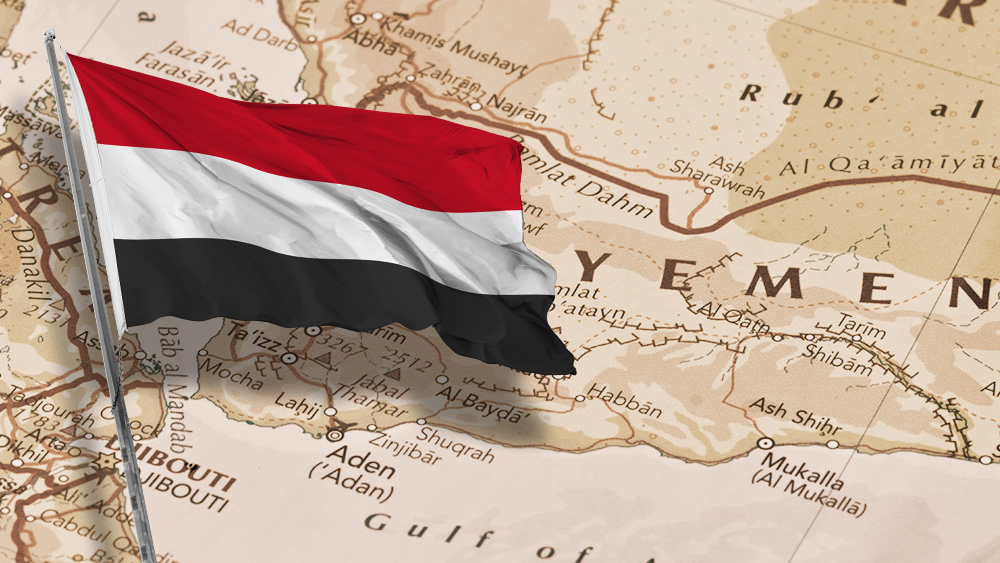
A four-year truce between Saudi Arabia and the Houthis ended on July 13 when Saudi Arabia bombed an airport in Sanaa, Yemen, to prevent an Iranian airliner from landing there, according to the report [11]. The group retaliated, declared a blockade on Saudi traffic entering the Red Sea, and captured the remainder of Yemen's western coastline, positioning forces at the Bab al-Mandeb Strait. Saudi Arabia asked Trump to intervene and was rebuffed [12].
Robert Barnes said on the Daniel Davis Deep Dive program that Trump encouraged Saudi Arabia to attack the airport; Barnes said he has sources inside the Trump White House. "MBS feels betrayed...it was Trump's idea to start that back up. He said, 'you know, I bet you can take them out,'" Barnes said. "When it went sideways, Trump pretended he had nothing to do with it. 'Sorry, good luck! I'll send you some advisors'" [13].
Saudi jets have pounded Ansar Allah, and the group has attacked Saudi military installations and the Saudi Red Sea oil hub at Yanbu [14]. The Houthis have also captured Perim Island, a strategic island in the Bab al-Mandab Strait, building upon recent territorial gains in Yemen, confirmed by both Houthi and Yemeni officials [15].
Economic Impact and Outlook
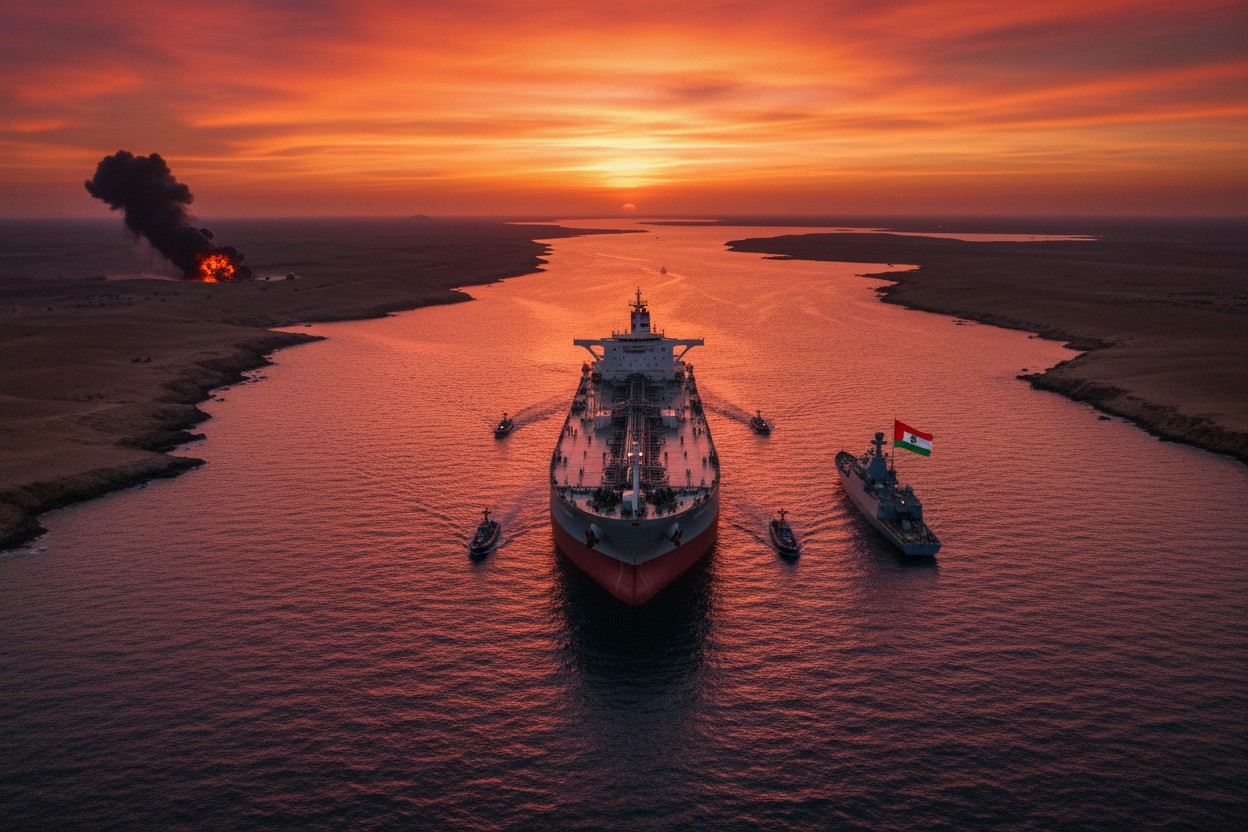
Shipping through the Strait of Hormuz is greatly diminished, and Saudi Arabia's east-west pipeline is closed after an Iran-allied Iraqi militia attacked it at multiple locations [16]. The East-West Pipeline, which runs 1,200 km across the country towards the port of Yanbu on the Red Sea, will remain mostly out of service for three to five weeks [17].
Saudi Arabia is facing an economic crisis and earlier this month was gauging interest in an $8 billion loan from commercial lenders, the report stated. On Wednesday, it was reported that Saudi Arabia could restore roughly half the pipeline's capacity within days, assuming no subsequent strikes [18]. Riyadh has begun canceling crude cargoes scheduled for loading later in September for European customers [19].
The US military has seen its interceptor supply shrink; in one engagement last week in Jordan, the US used about 60 to 80 interceptors at a cost of around half a billion dollars [11]. Trump's meeting with Gulf leaders is set for next week, with no end to the war in sight; Netanyahu's requested meeting has not been scheduled, and further fighting remains possible [1].
References
- Middle East Eye. "Trump says Houthis asked US not to intervene in Yemen". Middle East Eye. September 12, 2026.
- Antiwar.com. "Report: US Officials Met With Ansar Allah Representatives in Oman". Antiwar.com. September 16, 2026.
- 100PercentFedUp. "President Trump Rejects Saudi Call for U.S. Strikes as Houthis Threaten Red Sea Chokepoint". 100PercentFedUp. September 11, 2026.
- ZeroHedge. "Houthis Unleash Major Missile Barrage On Saudi Arabia's Sprawling King Khalid Air Base". ZeroHedge. September 14, 2026.
- Middle East Eye. "Trump says Iran war will end 'very soon', oil prices will fall". Middle East Eye. September 12, 2026.
- Middle East Eye. "'Few cards to play': Saudi Arabia faces limited options against Houthis with allies out". Middle East Eye. September 16, 2026.
- Willow Tohi. "Iran demands Gulf states pay REPARATIONS for role in US Israeli war". NaturalNews.com. May 26, 2026.
- ZeroHedge. "MbS Begs Trump For Bigger Anti-Houthi Intervention, As Over 100 US Advisers On Ground". ZeroHedge. September 11, 2026.
- Antiwar.com. "Trump's Comments on Yemen War Suggest US-Ansar Allah Ceasefire Still in Effect". Antiwar.com. September 13, 2026.
- Responsible Statecraft. "Vance claims US 'on top' of Red Sea crisis. Houthis say otherwise.". Responsible Statecraft. September 15, 2026.
- RT. "Saudi Arabia seeking support after US declines to strike Houthis – AP". RT. September 17, 2026.
- Daily Reckoning. "Putin, Persia and a Perfect Storm for Diesel". Daily Reckoning. September 16, 2026.
- ZeroHedge. "Yemen Blame Game Begins: 'Saudi-American F**k Up Of Epic Proportions'". ZeroHedge. September 13, 2026.
- ZeroHedge. "Houthis Pummel Southwest Saudi Arabia With Ballistic Missiles, As Yemen Air & Ground War Erupts". ZeroHedge. September 8, 2026.
- NTD. "Houthis Capture Strategic Island in Bab al-Mandab Strait". NTD. September 12, 2026.
- The War Zone. "The Outlook Is Getting Grimmer By The Day For Oil Exports From The Red Sea". The War Zone. September 12, 2026.
- RT. "Drone-hit Saudi oil pipeline to remain non-operational for weeks – AP". RT. September 15, 2026.
- NaturalNews.com. "The Saudi Pipeline Is Gone: Why the Global Energy Shock Just Got Far Worse". NaturalNews.com. September 14, 2026.
- NaturalNews.com. "Saudi Oil Halt Is a Self-Inflicted European Catastrophe … and a Warning to the West". NaturalNews.com. September 16, 2026.
Explainer Infographic








Please contact us for more information.


