


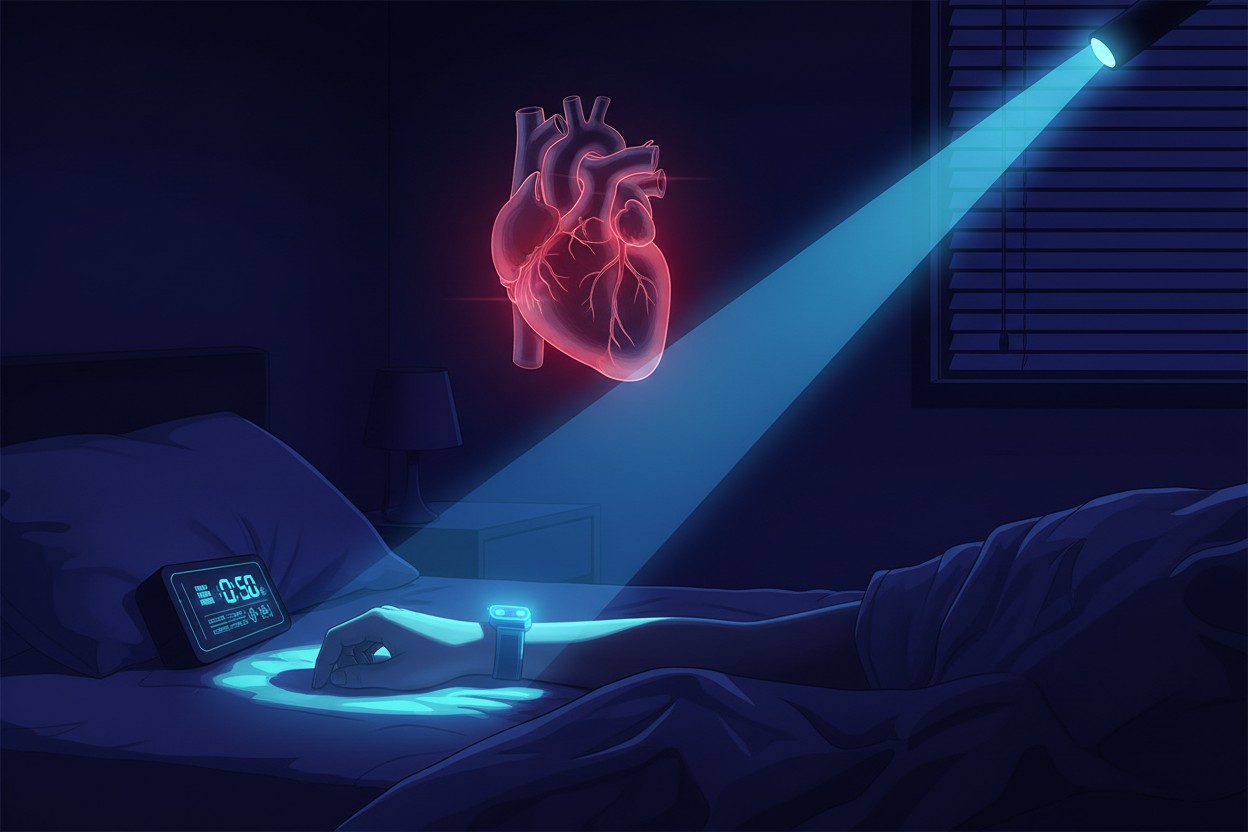
The study included 11,071 participants from the UK Biobank who wore wrist light sensors for seven days. Three years later, participants underwent cardiac MRI scans, the society said. Researchers compared participants exposed to nighttime light levels above 3 lux with those exposed to almost no light at night, the study stated.
Qi said previous observational studies linked nighttime light exposure with a higher risk of cardiovascular disease, but little was known about related cardiac structure and functional changes. "We carried out this research to find out what happens to the heart over time when people are exposed to too much light at nighttime," Qi said. The study is observational and does not prove that nighttime light causes the heart changes, according to the published findings.
Study Tracked Light Exposure and Heart Images Over Three Years
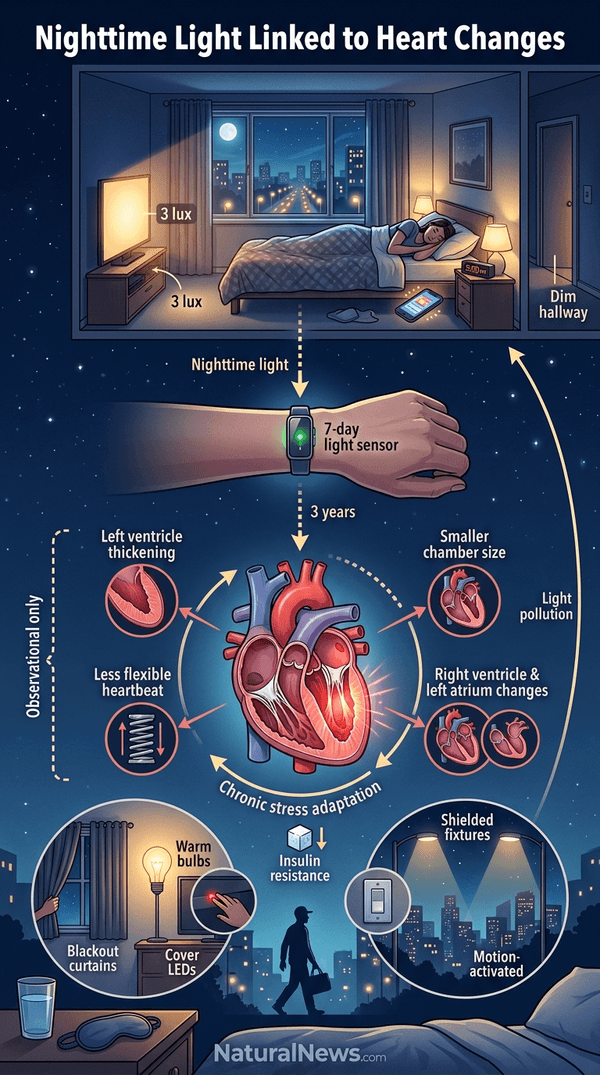
Participants were drawn from the UK Biobank, a large biomedical database and research resource. Each person wore a light sensor on the wrist for seven days, allowing researchers to measure how much light they were exposed to during the night, according to the study.
Three years after the light monitoring period, participants underwent cardiac MRI scans to examine heart structure and function. Measurements included left ventricular wall thickness, internal chamber size, and the heart muscle's ability to flex during each heartbeat, the study stated.
The researchers then compared participants who experienced nighttime light levels above three lux with those exposed to almost no light at night. Qi said the purpose was to determine what happens to the heart over time when people are exposed to too much light during nighttime hours, according to the published findings.
Findings Show Cardiac Remodeling in Multiple Heart Chambers
People exposed to higher levels of nighttime light showed thickening in the wall of the left ventricle, one of the chambers of the heart, according to the study. As the wall became thicker, the amount of space inside the chamber was reduced. The scans also revealed signs that the heart muscle was less able to flex normally during each heartbeat, which researchers described as an early sign that the heart is beginning to function less effectively. Changes were also detected in the right ventricles and left atria, two other chambers of the heart, the study stated.
Qi said the study is the first of its kind and shows that exposure to higher levels of nighttime light is linked to cardiac remodeling. "This is where the structure and function of the heart changes, and we typically see it in response to chronic stress or injury to the heart," Qi said. "It's our body's way of adapting to that stress, but ultimately it weakens the heart and can lead to heart failure."
Qi said light pollution has emerged as a new risk factor for cardiovascular disease. "Our findings, together with evidence from other studies, suggest that reduction of nighttime light exposure should be considered as one of the potential strategies for preventing heart disease by clinicians and policy makers," Qi said. The findings are based on observational data and do not establish a causal mechanism, according to the study. Separate research presented at the American Heart Association's 2025 Scientific Sessions found that artificial light at night was associated with increased stress-related brain activity and arterial inflammation in more than 450 adults without pre-existing heart disease [1].
Editorial Urges Clinicians to Assess Sleep Environment
An editorial by Professor Thomas Muenzel of University Medical Center Mainz in Germany and colleagues accompanied the study. The editorial argued that doctors may need to pay more attention to how much light patients encounter at night, particularly among people already dealing with certain heart conditions.
"It is time for clinicians, particularly those managing patients with heart failure or atrial fibrillation, to start asking about the sleep environment: how dark the bedroom is, whether the patient works night shifts, and how much screen use occurs after sunset," the editorial stated. Recommended measures included blackout curtains, warm-colored bedside lighting, and covering the small standby LEDs on household electronics. Qi's own research team has documented that even dim light at night can disrupt sleep architecture and raise heart rate and insulin resistance [2], and Qi's findings add imaging evidence to a broader body of work linking nighttime light to metabolic and cardiovascular harm [3][4].
For public health, the editorial pointed to shielded fixtures, warm-spectrum bulbs, and dimming or motion-activated streetlights, describing them as already available, energy-efficient, and climate-friendly. The authors argued that light pollution is one of the few environmental hazards that cities can control directly and affordably, according to the editorial. Cardiologist Dr. Mercola has similarly advised keeping bedrooms pitch-black at night to reduce the risk of chronic diseases, noting that light exposure from televisions, windows, cellphones, and alarm clocks can all contribute to health problems [5]. Sleep masks and blackout solutions offer an economical way to block ambient light, according to reporting on the subject [6].
Conclusion: Study Adds Evidence but Does Not Prove Causation
The editorial said the study provides a crucial link between what satellites already show, a planet glowing ever brighter at night, and the clinical reality unfolding inside human chests. The authors stated that "more light, worse outcomes" and that "darkness deserves recognition as a vital sign."
Qi's team has previously published research linking circadian disruption to obesity and metabolic syndrome [7], and the broader literature documents that artificial evening light delays melatonin release, suppresses melatonin by over 50 percent compared with printed-book reading, and reduces REM sleep [8][9]. The latest findings add structural heart imaging to that body of work. No funding or conflict-of-interest details were included in the source material reviewed.
References
- NaturalNews.com. "Study: Artificial Light at Night Linked to Increased Cardiovascular Risk via Brain Stress Activity". NaturalNews.com. May 21, 2026.
- NaturalNews.com. "In the Dark: How Even Dim Nighttime Light Rewires Your Health — From Cancer to Diabetes". NaturalNews.com. September 8, 2025.
- NaturalNews.com. "The silent saboteur: How modern night habits are fueling a heart disease epidemic". NaturalNews.com. August 16, 2026.
- NaturalNews.com. "Nighttime light exposure: The hidden metabolic threat that rivals genetics in driving diabetes risk". NaturalNews.com. June 24, 2026.
- Dr. Mercola. "Light at Night Boosts Obesity, Diabetes, High Blood Pressure". Mercola.com. August 11, 2022.
- Dr. Mercola. "Surprising Health Benefits of Using a Sleep Mask". Mercola.com. March 16, 2023.
- Siim Land. "The Longevity Leap: A Guide to Slowing Down Biological Aging and Adding Healthy Years to Your Life".
- Matthew Walker. "Why We Sleep".
- Matthew Walker. "Why We Sleep: Unlocking the Power of Sleep and Dreams".
Explainer Infographic






Please contact us for more information.


