


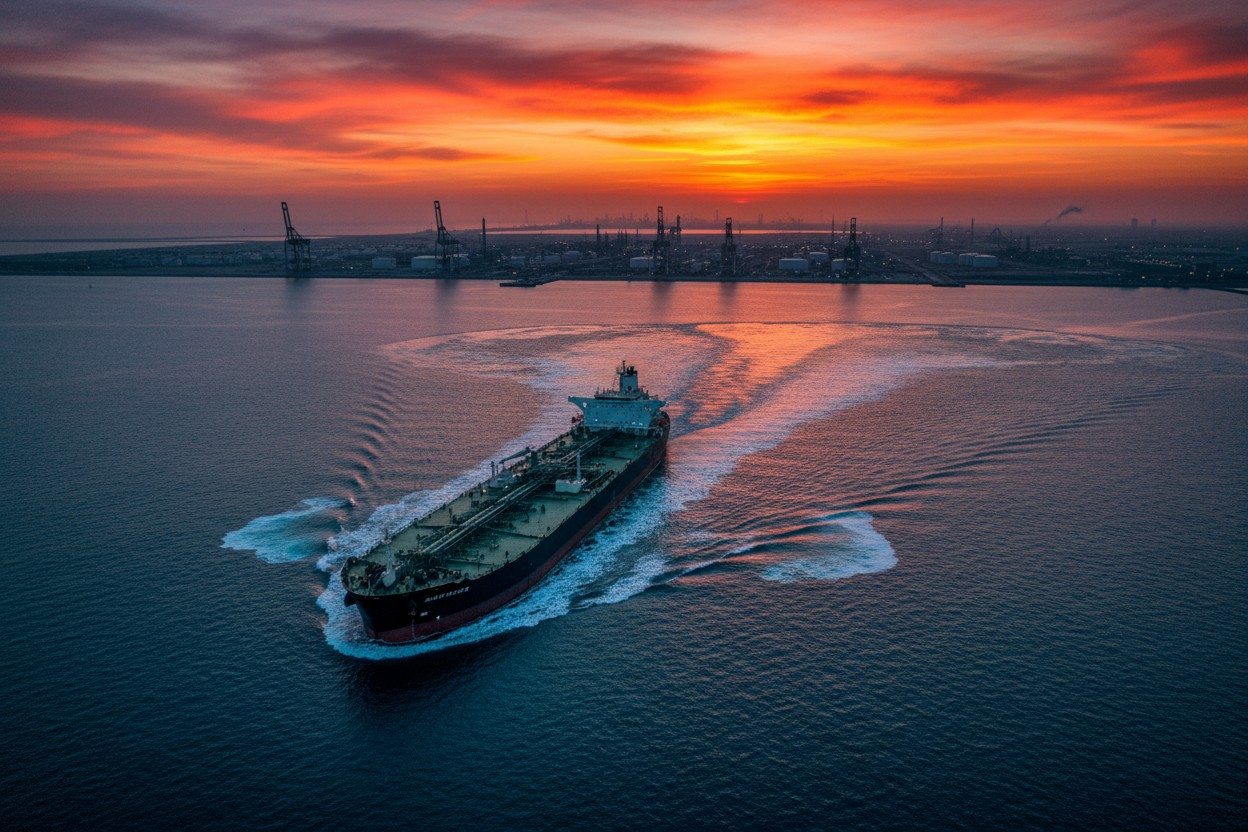
The reduction places new pressure on global energy markets already strained by conflict and supply disruptions. According to the report, the kingdom's exports averaged approximately 5.6 million barrels per day (bpd) in August [1]. The decrease represents a continuation of deliberate production policy.
Crude exports declined 4.2% from July and 12.3% year-on-year, according to data from the Joint Organizations Data Initiative cited in the report [1]. Crude production fell to 8.9 million bpd during the same period, according to official figures [1].
The report noted that Saudi export volumes can no longer be independently verified in some regions, as tankers have turned off tracking signals to avoid attacks; ship-tracking firms have issued conflicting data on the matter [1]. This marks the fourth consecutive month of declining export levels.
Data and Context Behind the Numbers
The August numbers reflect both policy decisions and regional security factors. Saudi Arabia has sustained output cuts under the OPEC+ framework, with the kingdom announcing an extension of its one-million-bpd voluntary cut, a move that brought production to roughly nine million bpd in September 2023 [2]. OPEC-wide crude output dropped by 900,000 bpd in July 2023, the largest reduction since the group slashed supplies during the pandemic lockdowns of 2020 [3].
Naval attacks have also affected export flows. Houthi operations have pushed the kingdom's crude exports off the radar in the Red Sea, according to Reuters, with recent cargoes loaded at Yanbu sailing "dark" [1]. Saudi crude loadings from terminals inside the Strait of Hormuz halted for several weeks before resuming in August, according to shipping data from Kpler and Vortexa [5]. The report from The Cradle indicates that around 20% of global oil passes through the Strait of Hormuz, a chokepoint central to recent regional tensions [4].
Output Cuts, Pricing Strategy and Regional Conflict
Analysts cited in the reports state the reduction is a strategic choice. The kingdom is prioritizing price stability over market share, sustaining lower export volumes while the OPEC+ agreement governs output levels. Saudi sources have said they are prepared to maintain the cuts as long as market conditions require [2].
The urgency of this approach increased after attacks on Saudi energy infrastructure, including drone strikes that targeted the Abqaiq oil processing facility and Ras Tanura terminal [6][7]. Satellite data recorded a large fire at Abqaiq, the world's largest crude oil processing plant, on April 9, according to a report from Peak Prosperity [6].
Conflict has escalated around the kingdom's export routes. Houthi forces from Yemen have imposed an embargo on Saudi oil shipments passing through the Bab el-Mandeb Strait, attacking Saudi-linked vessels [8][9]. A Houthi military spokesman announced strikes on Saudi targets in August, and at least eight Saudi oil tankers were attacked after the maritime blockade began in July [10].
Riyadh has responded by launching a multinational maritime defense coalition to safeguard shipping in the Red Sea and Gulf of Aden [11]. Saudi Arabia, Turkey and Pakistan also signed a joint defense agreement in August, reflecting shared concerns over threats to Gulf energy infrastructure [12].
Domestic Use, Refining Demand, and Export Effects
The lower export totals also reflect growing domestic consumption. Crude burned directly for electricity generation rises during summer months, officials said, reducing the volume available for sale overseas. Saudi Arabia's refining sector has also increased its intake of domestic crude, which supports local product output but limits the amount available for export.
These domestic demands compound the effect of OPEC+ production quotas. While Saudi Arabia has the capacity to increase output, the kingdom's commitments under the production agreement, combined with internal power demand, hold exports at reduced levels.
As of mid-2026, Saudi Arabia faced additional pressures on export capacity as alternative routes were tested; rerouting crude through Yanbu or the Cape of Good Hope adds an estimated $5 per barrel in costs [13]. Global shipping through the Bab el-Mandeb fell to its lowest level in months by late July, according to data from Kpler [14].
Outlook and Impact on Global Oil Markets
The reduction in Saudi exports affects a market already dealing with supply side constraints. Reports in 2025 suggested that the assumption of a global oil glut was being questioned by those pointing to declining surplus capacity [15].
Gulf states borrowed a record $112 billion this year to finance infrastructure aimed at bypassing the Strait of Hormuz, according to Bloomberg-compiled data [16]. Qatar and Kuwait restored their exports through Hormuz to 70% of pre-war levels by August, according to anonymous traders quoted by Bloomberg [17].
OPEC+ decisions have created friction with the United States; the group's 2022 decision to reduce output was characterized as a rejection of a request from the administration of then-President Joe Biden [18]. In energy markets, sustained output discipline by OPEC members has historically been a price stabilizing mechanism, though non-OPEC producers have often responded by increasing supply in the face of higher prices [19].
A report from the Paris-based International Energy Agency has previously recommended that OPEC increase production to meet global demand, a suggestion that reflects the cartel's role as the world's swing producer [20]. There is no indication from the reports that Saudi Arabia will reverse course on current production levels in the near term.
References
- ZeroHedge. "Saudi Oil Fleet Increasingly Going 'Dark' Due To Houthi Blockade". August 14, 2026.
- NaturalNews.com. "Saudi Arabia to extend its voluntary oil production cut until September". August 04, 2023.
- NaturalNews.com. "OPECs crude production DROPS to its lowest level in three years as Saudi Arabia continues to throttle oil produc". August 07, 2023.
- Willow Tohi. "Middle East tensions stir fears of 150 oil spike amid Straits of Hormuz crisis". NaturalNews.com. July 10, 2025.
- ZeroHedge. "Saudis Offer To Sell Oil Near Oman, A Sign They're Sailing Dark Through Hormuz". August 19, 2026.
- Chris Martenson. "Episode 15 of The Wake Up Call Its So Bad Im at a Loss for Words". PeakProsperity.com. April 09, 2026.
- Willow Tohi. "Drone strike on Saudi mega refinery risks global oil shock marks major escalation". NaturalNews.com. March 02, 2026.
- TWZ. "Houthi Blockade On Saudi Red Sea Oil Transits Threatens To Widen War, Strangle Energy Supply". July 20, 2026.
- Daily Reckoning. "Battle of the Straits". July 23, 2026.
- ZeroHedge. "Yemen War Reignites As Houthis Intensify Saudi Shipping Attacks, Ground Assault, With Hormuz Deal 'Close'". August 06, 2026.
- RT. "Saudi Arabia launches maritime coalition amid escalation in Yemen". August 15, 2026.
- Times of Israel. "Saudi Arabia, Turkey and Pakistan sign joint defense deal in shadow of Iran war". August 07, 2026.
- ZeroHedge. "Saudi Arabia's $5 Oil Detour Is Expensive... But Worth It". August 07, 2026.
- The Epoch Times. "Red Sea Crude Shipping Slows Amid Houthi–Saudi Tensions". July 27, 2026.
- Mike Adams - BrightVideos.com. "Health Ranger Report - THE OIL EMERGENCY". May 05, 2026.
- NaturalNews.com. "Gulf States Borrow $112 Billion to Bypass Hormuz Amid Iran War". July 28, 2026.
- ZeroHedge. "Qatar And Kuwait Restore 70% Of Pre-War Oil Exports Through Hormuz". August 27, 2026.
- Belle Carter. "OPEC+ set to reduce oil production – a blatant rejection of Bidens plea". NaturalNews.com. October 10, 2022.
- H. Ramcharran. "OPEC's production under fluctuating oil prices: further test of the target revenue theory". Energy Economics 23 2001 667-681.
- Chris Martenson. "The Trouble with Numbers". PeakProsperity.com. June 10, 2014.
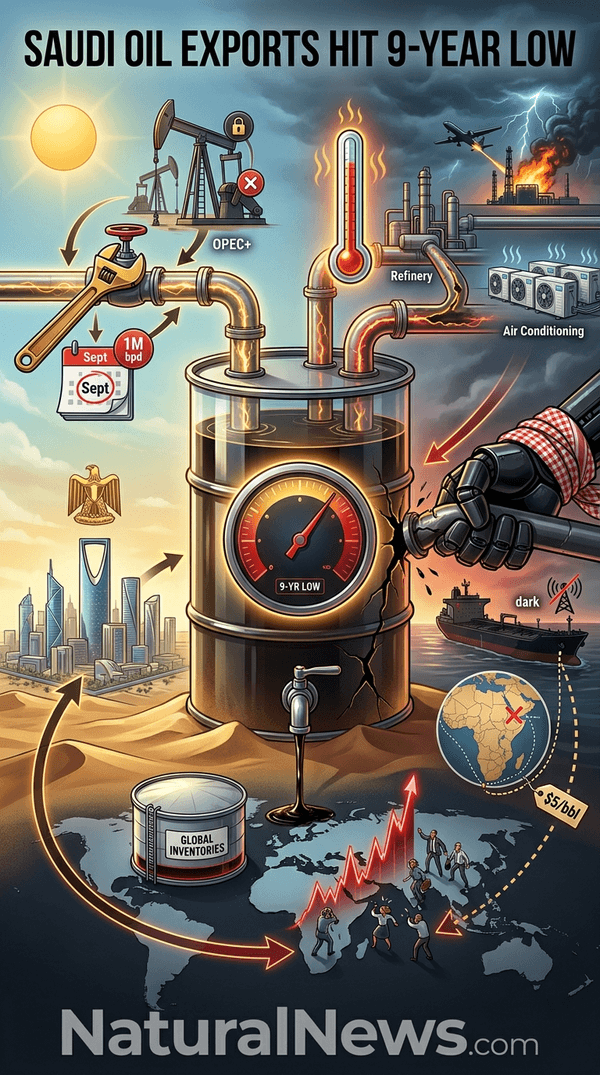
Explainer Infographic











Please contact us for more information.


