


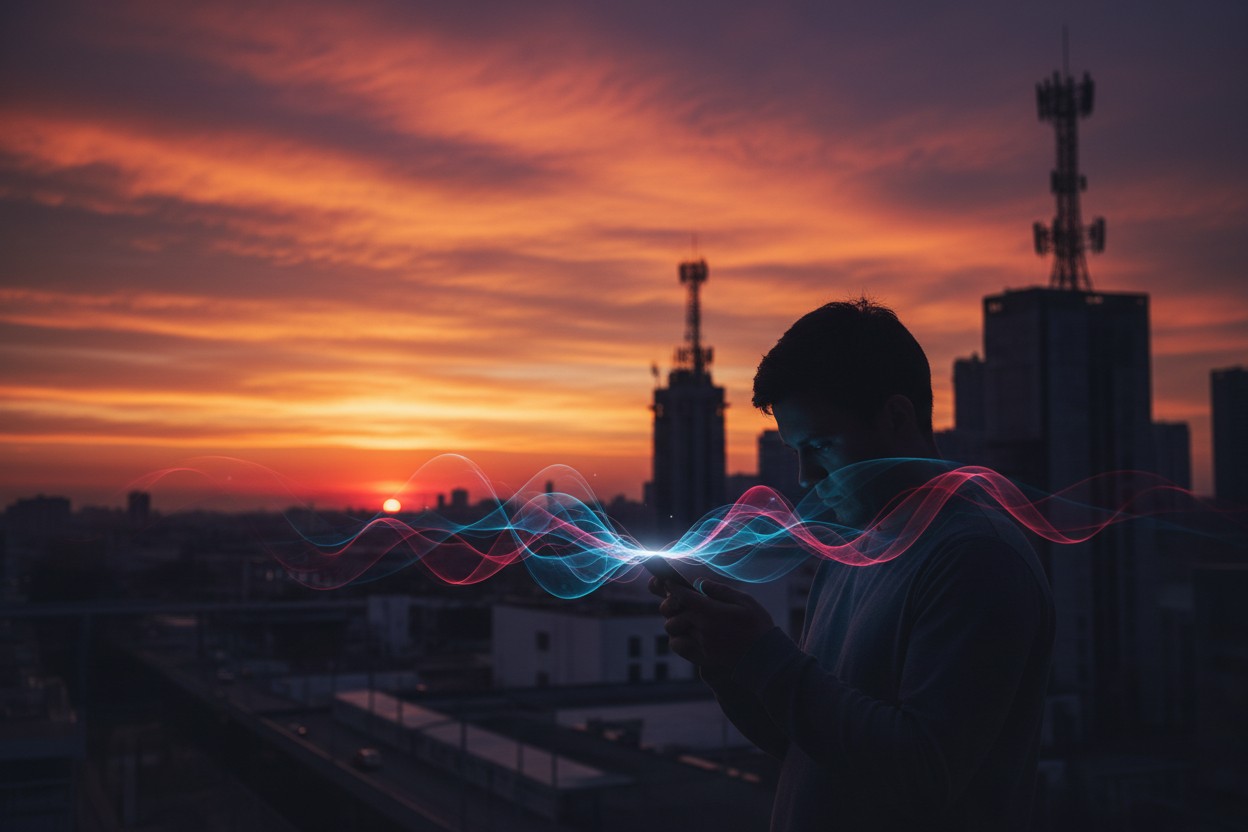
- Modern life involves near-continuous exposure to transmitting devices, including smartphones, Wi-Fi routers, Bluetooth earbuds, smart meters and smartwatches.
- Mike Adams argued that electromagnetic fields may affect voltage-gated calcium channels (VGCCs), potentially causing excess calcium influx and triggering oxidative processes involving compounds such as superoxide and peroxynitrite, which he links to DNA damage.
- Rather than one dramatic exposure, the episode emphasized the potential significance of repeated, low-level electromagnetic-field exposure throughout everyday life.
- Adams highlighted phones held against the head, earbuds positioned near the brain, Wi-Fi routers operating overnight and continuously transmitting smartwatches, while questioning whether many of their conveniences are necessary.
- The episode discussed practical measures such as increasing distance from phones, using airplane mode when appropriate, limiting unnecessary wireless transmissions and choosing non-transmitting alternatives.
Modern life is increasingly surrounded by devices that communicate wirelessly almost without interruption. Smartphones sit beside our beds, Wi-Fi routers remain active around the clock, Bluetooth earbuds transmit close to the head, smart meters send radio-frequency signals from outside homes, and smartwatches can remain in contact with the body throughout the day.
In Chapter 7 of "UNBREAKABLE," aired on Sept. 4, Mike Adams took a provocative look at this increasingly connected environment and asked whether society has become so accustomed to constant connectivity that it has stopped questioning the biological consequences of continuous electromagnetic-field exposure.
Adams' argument centered on what he describes as a mechanism involving voltage-gated calcium channels or VGCCs. He contended that electromagnetic fields can affect these channels without producing the heating traditionally associated with radiation exposure, potentially triggering an influx of calcium into cells and a cascade of oxidative chemistry. The interview followed that chain into compounds such as superoxide and peroxynitrite, ultimately connecting the process to DNA damage. Adams emphasized the cumulative nature of exposure, arguing that the concern is not necessarily one dramatic encounter but the relentless accumulation of low-level exposures throughout everyday life.
The wireless world we rarely notice
The examples were remarkably ordinary. People carry phones in pockets, hold them against their heads, sleep within feet of Wi-Fi routers and wear Bluetooth-enabled devices for hours. Adams singled out earbuds in particular because their transmitters are positioned extremely close to the brain. He also questioned the need for smartwatches, suggesting that many functions they provide can be accomplished without maintaining a continuously transmitting device on the wrist.
Unlike an obvious environmental hazard, wireless radiation is largely invisible, silent and difficult to perceive. A person can spend an entire day surrounded by transmitting devices without ever noticing them. That made the question of cumulative exposure particularly compelling – and particularly difficult to ignore.
The episode also explored the potential role of distance and simple behavioral changes, including moving phones away from the body, switching devices to airplane mode when appropriate, reducing unnecessary wireless transmissions and replacing some connected technology with non-transmitting alternatives.
As Adams put it, "You don't need a smartwatch." Whether viewers agree with his conclusions or not, the episode raised a timely question: In a world where nearly everything is connected, have we become so accustomed to devices transmitting around us that we rarely stop to ask what constant exposure might mean?
Want to know more?
Discover the concepts explored in Mike Adams' "UNBREAKABLE" course, which examines DNA integrity, cellular repair pathways, radiation exposure and the relationship between nutrition and genetic resilience, streaming on BrightU. Across 13 chapters, the course takes viewers through the fundamentals of DNA damage and repair, including NHEJ, homologous recombination, double-strand breaks and cellular mechanisms involving BRCA1, 53BP1 and CHK1. It also explores Adams' perspectives on spike protein, nuclear fallout, environmental stressors and the nutritional strategies he believes may support DNA repair.
Whether you're new to the subject or looking to explore the science presented in the course in greater depth, you can purchase the "UNBREAKABLE" course package here to learn more about its framework for genetic preparedness and cellular resilience. Upon purchase, you'll gain access to the full 13-chapter course and accompanying educational materials covering DNA repair, nutrition, environmental exposure and Adams' proposed strategies for supporting the body's natural repair mechanisms.
Sources include:








Please contact us for more information.


