


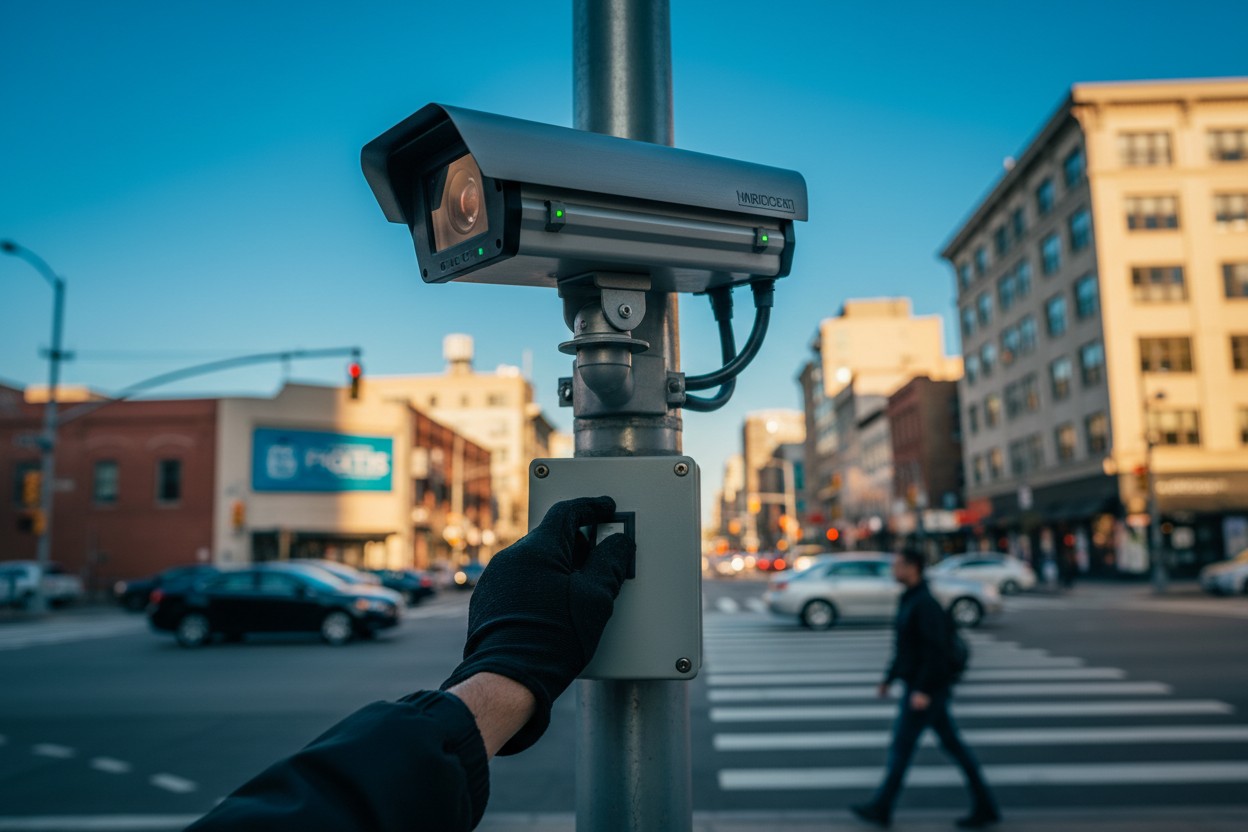
The department announced the move in a social media post Tuesday, Sept. 1. [1] It said the cameras, which were supported by grant funding, will no longer be eligible for that support. [1]
Despite the shutdown, officials said more than 300 Flock cameras will remain operational throughout Dallas, according to the department's statement on X. [2] The announcement positions Dallas among a growing list of jurisdictions that have ended or scaled back contracts with the surveillance technology provider.
Governor's Funding Directive
According to Andrew Mahaleris, a spokesperson for Abbott, the governor's office ordered all state agencies to pause funding for Flock camera systems. [1] Mahaleris added that while most municipal funding for the cameras comes from the federal government, Texas agencies are clarifying that their funds cannot be used for the technology. [1]
The funding pause is part of a broader state-level reassessment of the technology. Texas's decision followed an incident in Lufkin where a police officer was indicted on 100 felony counts for allegedly misusing the surveillance data. [3] The Dallas Police Department said in its post that the cameras are an important investigative tool, stating, "These cameras remain an important investigative tool and are used daily by detectives and officers to develop leads, identify vehicles associated with criminal activity, and assist in solving crimes." [2]
Technology and Privacy Concerns
Flock cameras are artificial intelligence-driven ALPRs that capture vehicle details and license plates, with more than 120,000 cameras deployed nationwide. [2] The systems take images of passing vehicles, logging plates, make and model to create searchable databases that law enforcement can access – a network that critics have described as a nationwide tracking system. [4]
These networks, deployed in thousands of communities, record not just plates but also vehicle characteristics, creating a digital "fingerprint" for each vehicle. [4] The technology has drawn scrutiny over data privacy and surveillance overreach. [1] Officials in Florida said the prevalence of such systems has grown exponentially, leading to "concerning reports of misuse" and "surveillance schemes" associated with them. [5]
Broader Jurisdictional Actions
The Florida Department of Transportation also moved to end its relationship with Flock, issuing a memo on Aug. 31 to revoke approvals for license plate readers on state highways. [1] Will Watts, the department's chief operating officer, cited the "recent exponential increase" in deployments and "concerning reports of misuse, data privacy concerns, and surveillance schemes" in the one-page memo. [1]
Days before the Dallas announcement, the cities of Tempe and Cave Creek in Arizona moved to cancel their contracts with Flock. [1] Regarding the Tempe decision, a Flock spokesperson said the company "respects the City's decision, even though Tempe has acknowledged that Flock helped officers do their jobs and found no improper use by its own police department." [1]
The spokesperson emphasized accountability features, stating, "Flock has built the most accountable tool in police technology, and our technology gives communities control over how their systems are used." [1] But according to the Institute for Justice, a nonprofit law firm, more than 100 jurisdictions have canceled contracts with Flock and other ALPR providers. [2]
Conclusion
The Dallas Police Department said it will continue evaluating available resources and technology to support investigations. [2] The department's statement noted a commitment to ensuring officers have effective tools while the funding landscape for surveillance technology remains in flux. [2]
Flock Safety did not respond to a request for comment by publication time. [2] The decisions by Dallas, Florida and the two Arizona cities mark a shift in municipal approaches to the technology, which has been the subject of debate over privacy versus crime-fighting utility. [1]
References
- The Epoch Times. "Dallas Police to Shut Down Hundreds of Flock Cameras". September 2, 2026.
- ZeroHedge.com. "Dallas Police To Shut Down Hundreds Of Flock Cameras". September 2, 2026.
- NaturalNews.com. "Florida joins Texas in ordering removal of Flock license plate cameras". September 2, 2026.
- Willow Tohi. "The Digital Panopticon: License Plate Readers Are Tracking You Everywhere You Go". NaturalNews.com. September 1, 2025.
- TechCrunch. "Florida and Texas move to block Flock cameras over privacy concerns". September 1, 2026.
Explainer Infographic











Please contact us for more information.


