


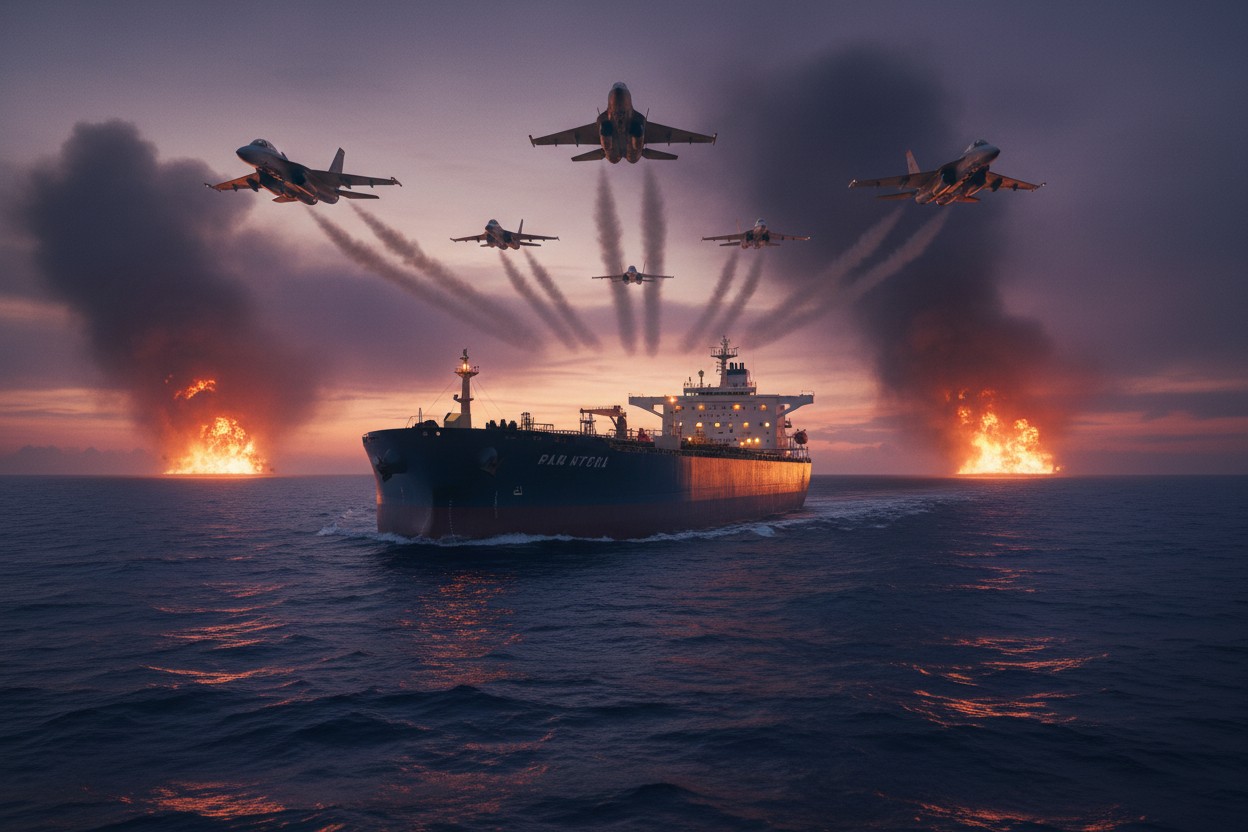
The operation began at 12 p.m. Eastern Time and was described as a response to recent attempted attacks by the Islamic Revolutionary Guard Corps against commercial shipping in the Strait of Hormuz and American service members deployed to the region [1][2]. The strikes came one day after President Donald Trump vowed that Washington would "hit them hard" following Iranian missile attacks on U.S. bases in Jordan [1].
The renewed hostilities mark a significant escalation after about a month in which the U.S. had refrained from striking Iranian territory, according to reports [3]. The first U.S. strike on Iran since late July occurred on Sunday, Aug. 30, when U.S. forces hit two Iranian rocket launchers on Larak Island [4].
The Department of State has not issued a new travel advisory as of writing. However, earlier advisories in the region urged Americans to leave Lebanon, and the conflict has already triggered severe travel disruptions across the Middle East [5][6].
Targets and Justification
The Sunday strike targeted IRGC forces that were "observed preparing to launch rockets with sea mines into Strait of Hormuz," according to a statement from CENTCOM spokesman Commander Tim Hawkins, quoted by CBS News [4]. Iranian officials said the attack on Larak Island killed at least two people and wounded several others, and the IRGC vowed "response and punishment" [3][4].
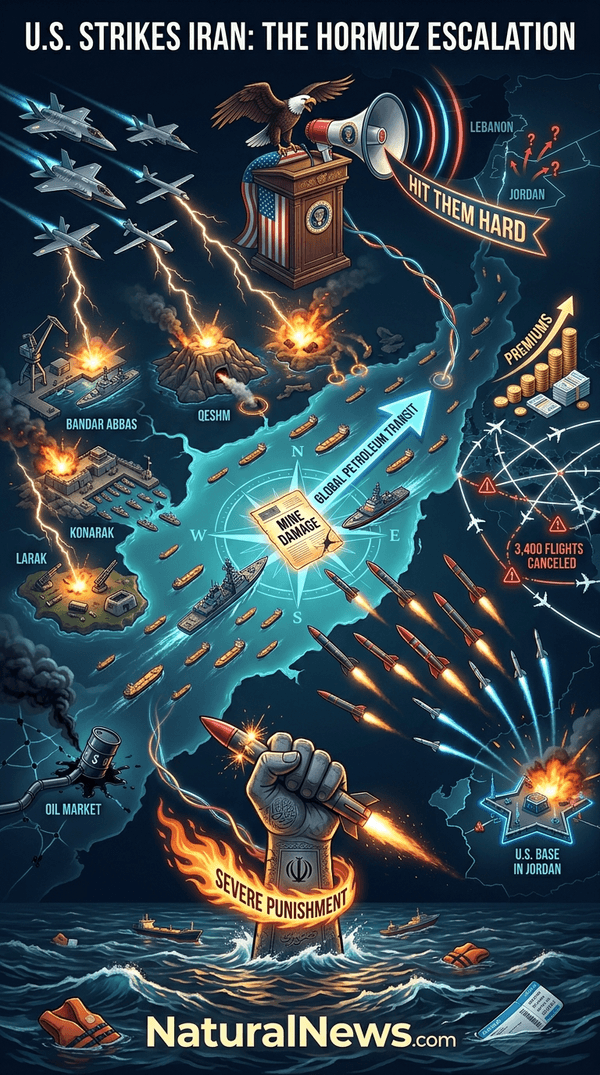
Meanwhile, the Tuesday strikes expanded to areas along and east of the Strait of Hormuz, including Bandar Abbas, Qeshm Island and as far southeast as Konarak on the Gulf of Oman, according to Iranian media [7]. Trump said the strikes were a justified response to Iranian attacks, which he claimed included eight missiles fired at U.S. bases in Jordan [8].
U.S. officials have said the strikes are intended to prevent Iran from disrupting commercial shipping in the vital waterway [9]. The U.S. military has also denied Iranian claims that mines had damaged a supertanker in the strait, calling the allegation an IRGC "attempt to intimidate regional commercial shipping through disinformation" [10]. The U.S. Department of War has stated that no ships have hit mines in the Strait of Hormuz [10].
Trump's Warning and Attribution
Trump warned on Monday, Aug. 31 that Iran would face “much harder and higher” attacks if it retaliated against U.S. strikes [11]. “If the failed Nation of Iran retaliates for this very justified attack, they will be hit again at a much harder and higher level, but it will not be the biggest attack of them all, that is waiting in the wings,” Trump said, according to a report from Middle East Eye [11].
He also claimed that all but one of the Iranian missiles fired at U.S. bases in Jordan were intercepted, saying the U.S. allowed that missile to pass through because officials determined it was not going to hit anything significant [8]. Iranian state television broadcast footage of missile launches, and Jordanian air defenses intercepted eight missiles, according to a report from Russia Today [12].
The IRGC said its retaliatory operation targeted the King Hussein and Al-Azraq air bases, claiming to have inflicted "significant damage" [12]. In response to the renewed U.S. strikes, IRGC spokesman Hossein Mohebi said, "Severe punishment awaits the aggressors; the United States will regret its new attacks" [13]. Iranian President Masoud Pezeshkian has said that Tehran will respond decisively to further attacks [14].
Regional Tensions and Travel Advisories
The escalating conflict has already caused widespread travel chaos in the region. Following U.S.-Israeli strikes on Iran and Tehran's retaliatory attacks in March, key Middle Eastern airspaces – including Dubai, Abu Dhabi, Doha, Bahrain, Iran, Iraq, Israel, Jordan, Kuwait and the United Arab Emirates – were abruptly shut down, leading to over 3,400 flights being canceled in a single day [6]. Major airlines including Emirates, Etihad, Qatar Airways, Lufthansa, Air France and British Airways suspended operations indefinitely at that time [6].
The U.S. Embassy in Beirut has previously issued its highest-level advisory, urging all American citizens to leave Lebanon immediately while commercial flights are still available [5]. The embassy warned that neither the U.S. nor the Lebanese government can guarantee safety for citizens if violence breaks out [5]. While the State Department has not issued a new advisory specific to this latest round of strikes as of the time of reporting, the complex security environment in the region indicates a potential for unforeseen escalation and travel disruptions, according to earlier warnings [5][6].
Market Impact and Strategic Context
Oil prices climbed about three percent following the renewed U.S. and Iranian exchange of strikes, according to a report from ZeroHedge [15]. Brent futures rallied almost 4%, topping the $90 handle, while West Texas Intermediate contracts rose above $86 a barrel [15].
This marks a significant move in energy markets, which have been sensitive to the conflict since the initial U.S.-Israeli strikes on Iran began in February [16]. The joint attack, initially estimated to last a few weeks, has now continued for six months [16].
The Sunday strike was the first known U.S. attack on Iran since late July [4]. The Strait of Hormuz is a critical global oil chokepoint, and any disruption to shipping there has profound implications for the world economy [17].
The U.S. Navy has been escorting commercial oil tankers through the strait since March, according to an order announced by Trump [18]. Some analysts have suggested the closure of the Strait of Hormuz is a strategic threat, with geopolitical analyst Michael Yon speculating that if the strait were closed, it would likely be the U.S. doing it and blaming Iran [19][20].
References
- NTD. "US Strikes Iran After Attempted Attacks on US Troops, Shipping". September 1, 2026.
- BBC. "US launches more strikes on Iran as state media reports explosions". September 1, 2026.
- Antiwar.com. "Trump Says He Will ‘Hit’ Iran ‘Hard’ After IRGC’s Retaliatory Strikes on US Base in Jordan". August 31, 2026.
- BBC. "US strikes Iranian launchers on Larak Island in first known attack in weeks". August 30, 2026.
- NaturalNews.com. "US Embassy in Beirut urges Americans to flee Lebanon as regional war fears mount". April 29, 2026.
- NaturalNews.com. "Middle East conflict triggers worst global travel chaos since COVID stranding hundreds of thousands". March 3, 2026.
- Antiwar.com. "US Launches Airstrikes Across Iran's Coast". September 1, 2026.
- The Epoch Times. "Trump Says US Will Hit Iran Hard in Response to Attacks on US Bases in Jordan". August 31, 2026.
- Just The News. "U.S. resumes strikes on Iran, citing attacks on commercial shipping". September 1, 2026.
- The Epoch Times. "US Denies Iranian Claim That Supertanker Hit Mines in Hormuz". August 31, 2026.
- Middle East Eye. "Trump warns of 'much harder' action if Iran retaliates after strikes". September 1, 2026.
- RT. "Oil prices rise after US and Iran exchange strikes: As it happened". August 31, 2026.
- Middle East Eye. "IRGC say US will 'regret' renewed attacks". September 1, 2026.
- Middle East Eye. "Araghchi blames ‘serpent’ Netanyahu for luring Washington into war on Iran". August 31, 2026.
- Zero Hedge. "Stock Futures Drop To Close Out August As Oil Jumps On Renewed Iran Hostilities". August 31, 2026.
- Zero Hedge. "'No End In Sight': Democrats Make Trump Foreign Policy A Central Issue After 6-Months Of Iran War". August 30, 2026.
- Chris Martenson. "Closing This Global Oil Chokepoint Crashes the World’s Economy". PeakProsperity.com. June 20, 2025.
- NaturalNews.com. "Trumps Hormuz Escort Order is a Desperate Deadly Gambit That Will Sink America". March 4, 2026.
- NaturalNews.com. "Operation EPIC FAIL The Staggering Surrender Trump Wont Admit". March 31, 2026.
- Mike Adams interview with Michael Yon. June 26, 2025.
Explainer Infographic







Please contact us for more information.


