



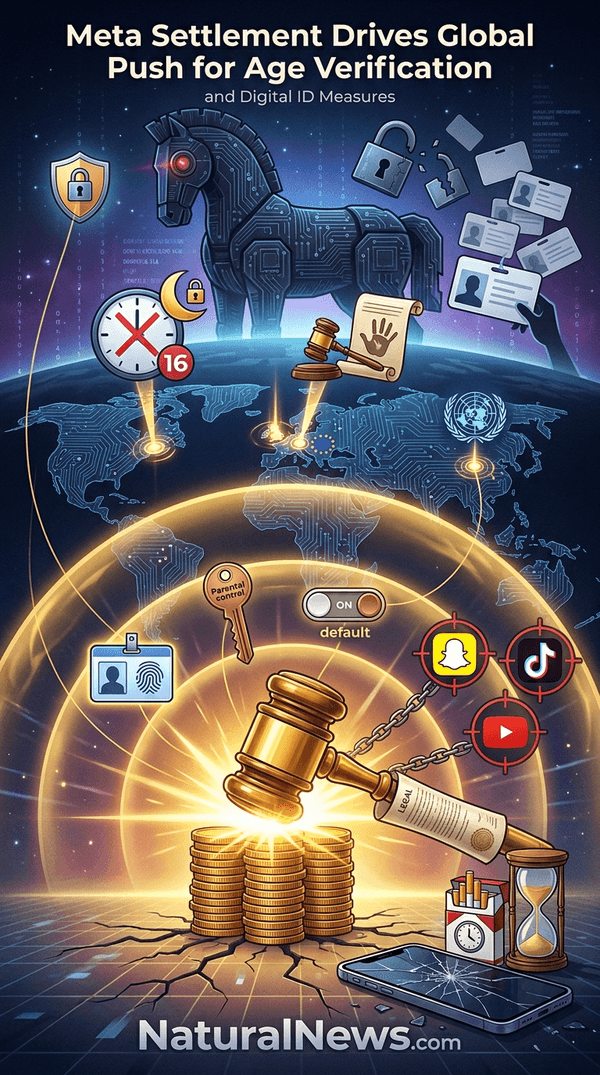
The settlement finalized Wednesday, Aug. 26, resolves claims that the company violated child privacy laws by designing addictive features on Facebook and Instagram. Almost immediately, officials in the United Kingdom, the European Union and the United Nations have cited the agreement as a template for new age-verification and digital identity mandates in their jurisdictions.
U.K. and EU Move to Adopt Comparable Rules
In the U.K., Work and Pensions Secretary Pat McFadden stated that Meta should apply the new protections to British users, according to the BBC. "We don't want a situation where young people in America have got a higher rate of protection than young people in the U.K.," he said.
The British government has announced plans to ban social media for children under 16 by spring 2027 and to impose nighttime curfews on older teenagers – a move that will require platforms to determine user ages, according to reports. The enforcement of such rules depends on age-check systems, similar to those mandated by the U.K.'s Online Safety Act, which regulators have linked to identity verification tools [1].
U.S. Officials Signal Broader Enforcement
U.S. officials involved in the settlement have stated that other platforms are next. "Meta will not be the last" company to face such terms, said D.C. Attorney General (AG) Brian Schwalb, according to reporting. California AG Rob Bonta said Meta is "not the only player in the industry" to have "visited enormous mental health harms on kids through their products and their designs," adding that "others rightfully must be held accountable."
The settlement document includes financial incentives for states to pursue similar cases against other companies, specifically naming Snap, TikTok and YouTube [2]. Snap and TikTok have already settled separate addiction cases, though terms were not disclosed [3]. Some provisions of the Meta agreement establish a court-supervised identity system for all Facebook and Instagram users, a structure that privacy advocates have compared to a mandatory digital credential [4].
Academic researchers have warned that such systems act as "Trojan horses for government and corporate surveillance," eroding digital anonymity [5]. The push for platform-level identity requirements is not limited to the U.S., however. Greece has enacted a ban on social media for under-16s using a state-developed app [6], and Australia has deleted millions of underage accounts following its own ban, according to official figures [7].
Criticism and Meta's Defense
Critics of the settlement, however, argue that its protections are insufficient. "The limitations that are in the agreement are the equivalent of saying: 'Well, you can smoke as many cigarettes as you can in two hours a day,'" said Arturo Béjar, a former Meta employee who testified during the trial. "It doesn't make the cigarettes any safer."
Meta disputed this characterization, with a spokesperson pointing to provisions such as non-algorithmic feed defaults and stronger parental controls. "We have a huge raft of built-in protections," the spokesperson said, and argued that teenagers derive "substantial" benefits from using social media.
The company did not admit wrongdoing as part of the deal, according to court documents [8]. The settlement includes a provision allowing states to shield Meta from lawsuits over children's data use specifically for training its age-assurance model, a clause that observers note is unusual in a case centered on child privacy [9]. Research cited by experts indicates that the age-verification technologies the settlement relies on remain unreliable in practice [10].
Implications for Global Digital ID and Privacy
The agreement has accelerated a broader international movement toward centralized identity requirements for internet access. UN High Commissioner for Human Rights Volker Türk said all social media "should be designed to be safe for children" and called on governments to "step up rather than wait for courts and companies to act" [11].
Institutions promoting digital identity systems argue they preserve privacy while enabling verification, describing wallets that hold cryptographically secured credentials such as national IDs or driver's licenses [12]. However, they acknowledge that neither the original internet architecture nor current platforms provide a native identity layer, and that all user data is stored on private corporate servers [12].
The combination of government mandates and corporate identity systems has prompted warnings from surveillance scholars that age checks will require invasive confirmation for routine online activities [5]. New York and California have introduced bills requiring age assurance on internet-enabled devices and broader platform oversight, with implementation set for 2027 [13] [14]. The expansion of such mandates suggests that the Meta settlement marks a turning point, shifting power over digital identity from individuals to a combination of state regulators and technology companies.
References
- NaturalNews.com. "Bluesky to roll out age verification for UK users ahead of Online Safety Act deadline". July 18, 2025.
- NTD. "Meta Reaches $17 Billion Settlement in Landmark Trial Over Teen Social Media Addiction". August 26, 2026.
- TechCrunch. "After TikTok, Snap settles social media addiction case". July 21, 2026.
- Reclaim The Net. "The Meta Settlement: What It Means for Your Speech and Privacy". August 26, 2026.
- Patrick Lewis. "Global academics sound alarm on age verification: A dangerous path toward mass surveillance". NaturalNews.com. March 09, 2026.
- Ramon Tomey. "Greece becomes first EU nation to BAN social media for minors aged 16 and below". NaturalNews.com. October 02, 2025.
- Belle Carter. "Australia blocks 5 million underage social media accounts in landmark crackdown". NaturalNews.com. January 17, 2026.
- BBC. "Meta agrees to pay up to $16.7bn to settle social media case". August 26, 2026.
- TechCrunch. "Buried in Meta's $18B settlement is a legal pass on kids' data". August 27, 2026.
- TechCrunch. "Meta's $18B child-safety deal hinges on age verification tech that doesn't work well". August 26, 2026.
- BBC. "Reform of all social media should come with Meta changes, UN says". August 28, 2026.
- Shermin Voshmgir. "Token Economy: How the Web3 reinvents the Internet".
- Laura Harris. "New York bill proposes age checks for internet enabled devices". NaturalNews.com. March 11, 2026.
- Belle Carter. "California enacts sweeping digital regulations under the guise of child protection". NaturalNews.com. October 18, 2025.
Explainer Infographic











Please contact us for more information.


