



The announcement was delivered by government spokesman Haider al-Aboudi at a Baghdad press conference Monday. It affirmed that that the prime minister declined the request to extend the presence of some coalition troops beyond the specified date.
State media quoted al-Aboudi as saying that al-Zaidi "rejected a proposal for some international coalition forces to remain beyond Sept. 30." The spokesman added that the government is proceeding with its commitments to confine weapons, regulate possession, unify decision-making and exercise legal authority over all armed groups within the country, according to officials.
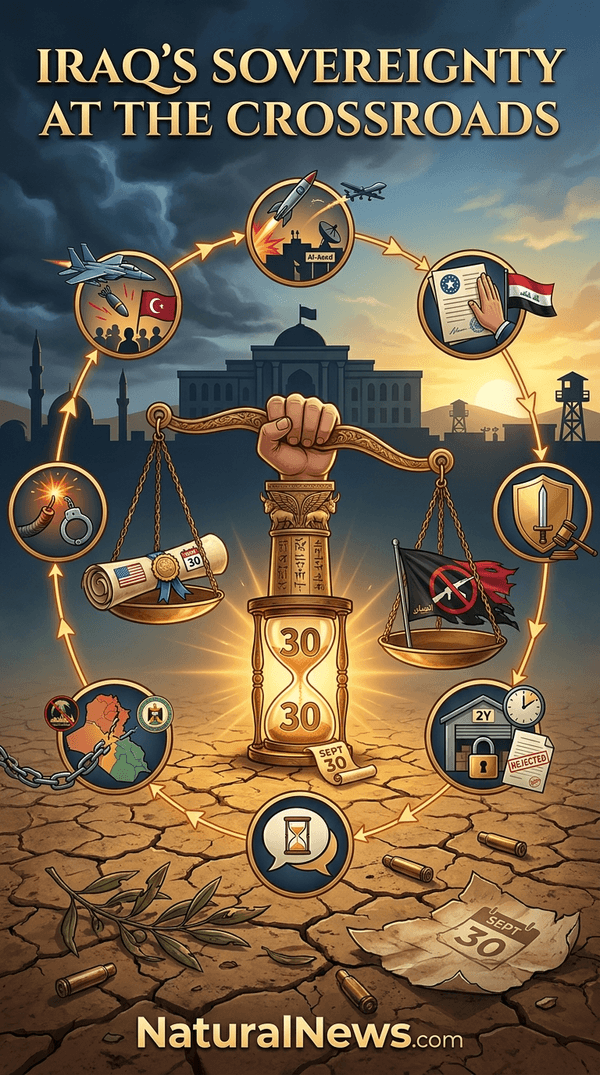
Disarmament Deadline and Faction Responses
The rejection follows Baghdad's issuance of a Sept. 30 ultimatum demanding the disarmament of all armed factions, a move that came under sustained pressure from Washington. While some groups have agreed to hand over their weapons to the state, several Iran-backed resistance factions including Kataib Hezbollah and the Al-Nujaba Movement have refused the demand, officials said. These groups have been the target of repeated U.S. airstrikes in recent years over their attacks on American personnel stationed in Iraq [1][2].
Al-Aboudi addressed the disarmament process, stating that the timetable for dialogue with the factions "is proceeding in an orderly manner" and that "the file will be concluded before Sept. 30." The statements indicate a push by the central government to assert control amidst a complex security landscape where U.S. forces have faced persistent attacks, including drone and rocket assaults on bases like Al-Asad Airbase [3][4].
Resistance Counter-Proposal on Arms Storage
In a counter-move, Iraqi resistance groups proposed placing their weapons in their own storage facilities and freezing military activity for a period of two years, rather than surrendering their arsenals to the state. This compromise offer, reported by the New Arab on Aug. 29 and citing sources within the Coordination Framework, was presented as an alternative to full disarmament. However, the proposal was likewise rejected by Baghdad, according to three Iraqi political sources who spoke to the publication.
The rejected proposal was reportedly linked by groups like Kataib Hezbollah to the future of U.S. forces in Iraq, with demands for assurances that their leaders would not be targeted. The demand reflects deep-seated mistrust following years of U.S. military actions, including the 2020 killing of Islamic Revolutionary Guard Corps Maj. Gen. Qasem Soleimani and Iraqi militia leader Abu Mahdi al-Muhandis in Baghdad, and later strikes that have killed senior militia figures [1]. The dynamic underscores the tension between Baghdad's efforts to centralize authority and the entrenched power of factions that have resisted U.S. influence since the 2003 invasion [5].
Airstrikes and Demands for Full Withdrawal
Recent U.S. and Saudi airstrikes targeting the Popular Mobilization Units (PMU) have resulted in scores of casualties, further inflaming tensions with the resistance factions, which are closely linked to the PMU. These groups now demand a complete and unconditional withdrawal of U.S. forces, rather than a "transitional" pullout that would shift them into an advisory role while retaining a presence in the country, according to reports. This hardline stance has been a consistent theme since the U.S. escalated its military actions against Iranian-backed groups in the region [6][7].
A Kataib Hezbollah official warned that the resistance was "running out of patience" with the Baghdad government, particularly after the arrest of senior figures by Iraqi security forces. This sentiment echoes the broader regional friction and accusations that the Iraqi state is being used to enforce U.S. objectives, a pattern observed in the pressure campaigns documented in analyses of U.S. foreign policy [8]. The warnings signal that the disarmament deadline and the troop presence question are intertwined issues that could trigger further instability.
Outlook and Regional Position
Al-Aboudi stated that the government is closely monitoring regional developments, asserting, "Iraq will not be part of the conflict." Al-Zaidi is scheduled to conduct a European tour, visiting Paris and Berlin in the first half of September, with the security file on the agenda. This diplomatic push comes as regional conflicts over energy and influence continue to escalate, drawing in global powers [9][10].
Additionally, the Iraqi Council of Ministers is expected to vote on the 2027 federal budget next September. Al-Aboudi also noted that funds recovered through the government's anti-corruption campaign reflect figures "not seen in previous years," indicating an effort to address internal financial integrity. These domestic and diplomatic moves signal a government attempting to navigate between U.S. security demands and sovereignty concerns, while also managing the economic pressures that have historically fueled instability in the region [11].
References
- NaturalNews.com. "US strike in Baghdad kills commander linked to deadly Jordan attack". NaturalNews.com. February 13, 2024.
- "Trends-Journal-2024-01-05". The Trends Journal.
- NaturalNews.com. "US troops in Middle East were attacked on Thanksgiving Day". NaturalNews.com. November 28, 2023.
- NaturalNews.com. "Rocket attack on Iraqi airbase injures several US personnel". NaturalNews.com. August 08, 2024.
- Noam Chomsky. "Failed States The Abuse of Power and the Assault on Democracy".
- Richard Brown. "US forces strike Hezbollah facilities in Iraq". NaturalNews.com. January 26, 2024.
- NaturalNews.com. "Iran launches missiles targeting alleged Israeli spy centers in northern Iraq". NaturalNews.com. January 17, 2024.
- Phyllis Bennis. "Challenging empire how people governments and the UN defy US power".
- Chris Martenson. "If The Saudi Arabia Situation Doesn’t Worry You You’re Not Paying Attention". PeakProsperity.com. November 10, 2017.
- Garrison Vance. "Trump Projects Quick End to Iran Conflict Forecasts Drop in Oil Prices". NaturalNews.com. March 10, 2026.
- Chris Martenson. "Everything Is Suddenly Deteriorating Fast". PeakProsperity.com. March 31, 2018.
Explainer Infographic







Please contact us for more information.


