


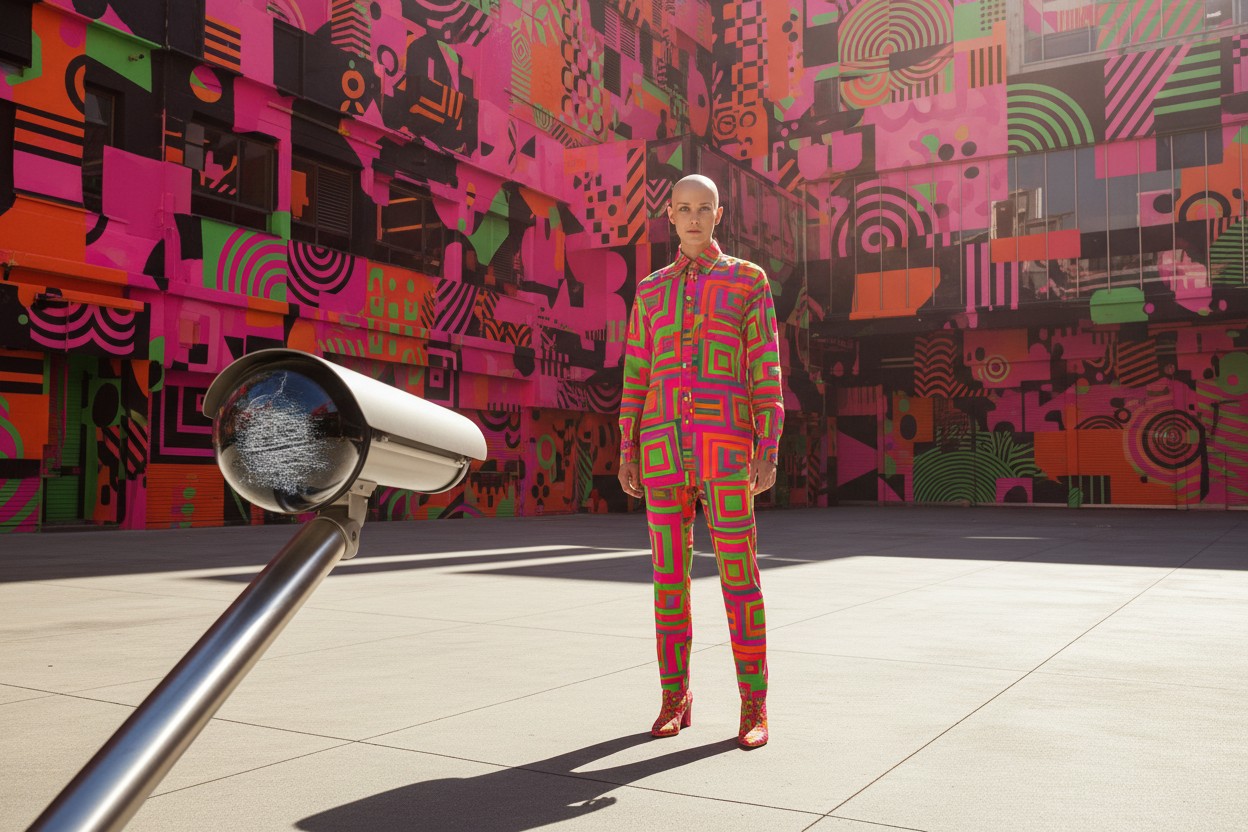
The garment – which features a clashing arrangement of pink, orange and green shapes – is designed to exploit vulnerabilities in how machine vision algorithms recognize human figures. Weckert stated that the design exploits a "statistical weakness" in AI models.
"AI systems are made of multiple layers and never learned what a human is – they learned what humans statistically look like in millions of training images," he told Dezeen. "A 'person,' for the machine, is a bundle of visual statistics – and that is exactly its weakness."
How the Shirt Works
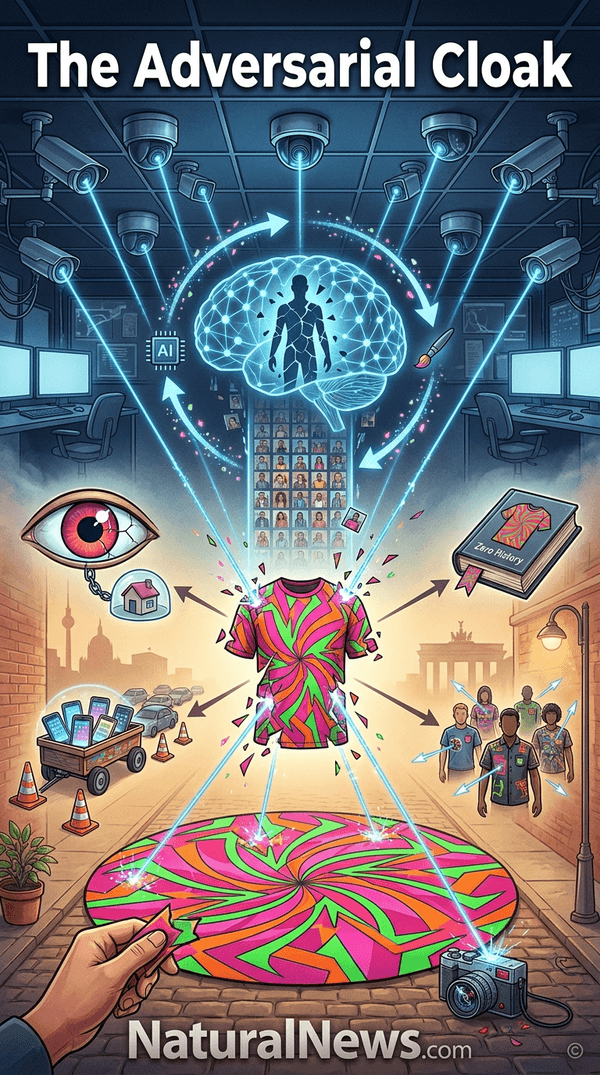
The shirt's clashing colors and shapes are designed to "break the continuity of the body's outline," Weckert explained, "so the detector can no longer bind the parts into one figure." This technique targets a known limitation in computer vision systems, which rely on pattern recognition algorithms to identify objects based on statistical features rather than semantic understanding [1].
Weckert stated that the design was created using an adversarial loop, where AI was used to generate and refine the pattern. This approach is similar to prior research that demonstrated how small, printed patches could trick surveillance systems into failing to detect a person [2].
"To a human, it reads as an almost hypnotic textile. To the AI model, it reads as nothing at all," Weckert said.
The methodology aligns with established concepts in computer vision, where deep-learning algorithms require massive sets of training images to create benchmarks for object identification [3]. These statistical benchmarks, rather than true understanding, are what the garment targets.
Context: AI Surveillance and Privacy Concerns
The shirt is a response to the increasing deployment of AI surveillance cameras that can identify and track individuals, a trend underscored by reports that more than one billion cameras will soon be watching people worldwide [4]. Weckert previously made headlines in 2020 when he used a wagon filled with smartphones to trigger fake traffic jams on the streets of Berlin, according to the report.
The designer's work draws comparison to the "ugliest T-shirt in the world" described in William Gibson's 2010 novel "Zero History," which was described as "beyond punk, beyond art, and fundamentally, somehow, an affront."
This form of resistance comes amid growing privacy concerns regarding surveillance infrastructure. Products like Amazon's Ring have been characterized as building a surveillance dragnet [5], while other technologists are developing similar "adversarial patterns" that can prevent surveillance cameras from detecting people [6]. AI-driven surveillance remains a significant concern for privacy advocates [7].
Conclusion: The Significance of the Shirt
The shirt highlights a practical vulnerability in AI-based person detection systems, demonstrating how adversarial design can undermine algorithms [8]. Weckert's work represents a novel form of resistance against pervasive surveillance, according to the Dezeen report.
As surveillance technology advances, individuals are exploring creative approaches to protect privacy, the story suggests. The garment joins a larger conversation about digital autonomy and the right to move through public spaces without being tracked by AI systems [9].
References
- Vikas Garg, Richa Goel, Pooja Tiwari, and Esra S. Döngül. "Handbook of Artificial Intelligence Applications for Industrial Sustainability."
- NaturalNews.com. "How can a small patch of printed material fool AI surveillance." October 21, 2019.
- S R Vijayalakshmi and S Muruganand. "Embedded Vision: An Introduction."
- Mercola.com. "More Than 1 Billion Cameras Will Soon Be Watching You." February 12, 2020.
- Activist Post. "With Ring, American Consumers Built a Surveillance Dragnet." February 24, 2026.
- TechCrunch. "This 'adversarial' pattern can prevent surveillance cameras from detecting you." August 9, 2026.
- Aaron Day. "s2e33 The Technocratic Takeover of MAHA." December 8, 2025.
- Acrobat 3.0 Capture Plug-in. "Interpreting a dynamic and uncertain world: task-based control." Artificial Intelligence 100 (1998).
- Mike Adams interview with Hakeem. June 27, 2024.
Explainer Infographic












Please contact us for more information.


