


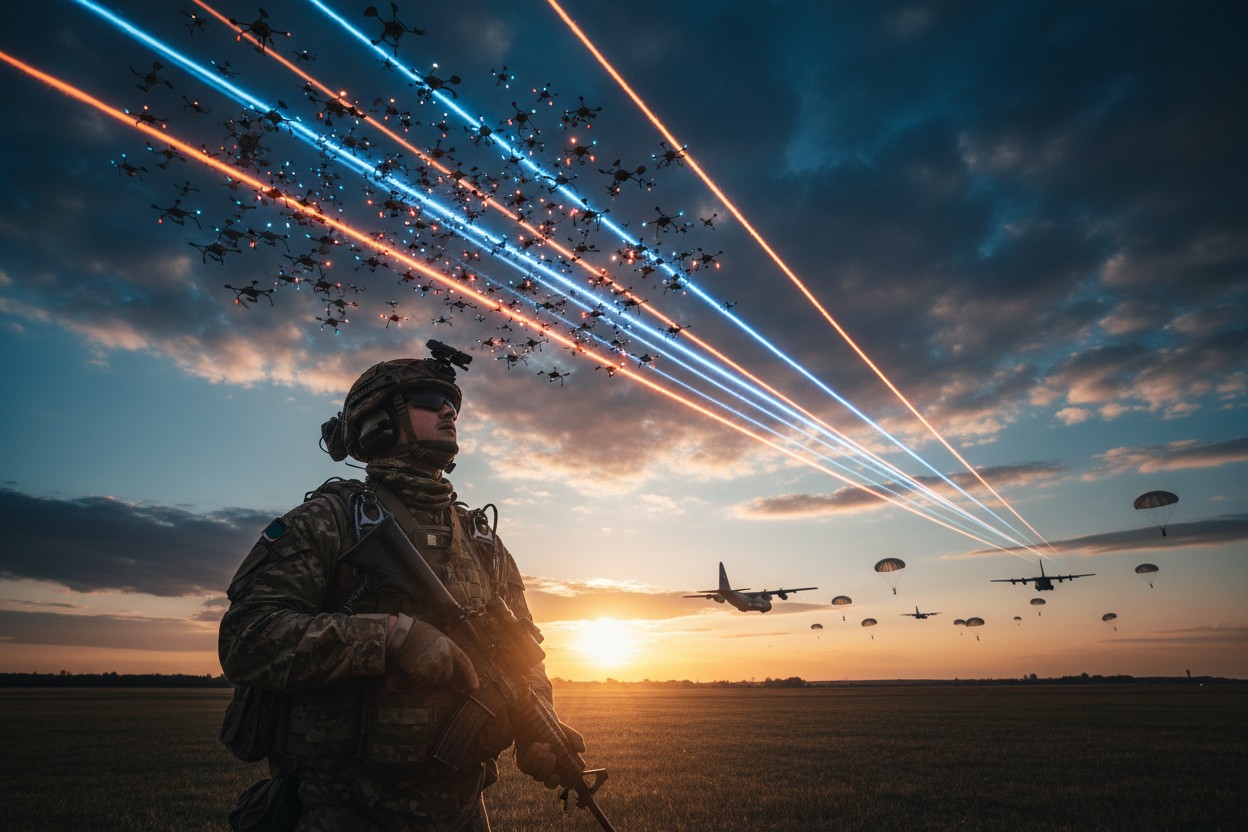
Army to Phase Out Drone Unit Championed by Ousted Commanders
The U.S. Army plans to phase out a drone battalion that was championed by two senior commanders removed by Defense Secretary Pete Hegseth, an Army official confirmed to The Hill.
The Unmanned Assault Battalion will participate in exercises in Germany this month and next month before refocusing on airborne infantry duties, according to the official. The unit was championed by former Army Chief of Staff Gen. Randy George and former U.S. Army Europe and Africa commander Gen. Chris Donahue, both of whom were ousted by Hegseth. The Army did not respond to The Hill's request for comment. The Wall Street Journal first reported the planned phaseout.
Unit's Mission and Planned Refocus
The battalion is part of the 173rd Airborne Brigade in Vicenza, Italy, and was created to study lessons from foreign wars, including the Russia-Ukraine conflict. The war in Ukraine has featured extensive use of small drones and other unmanned systems, with NATO nations using the conflict as a testing ground for drone technologies [1]. Infantry units face an increasing threat from small unmanned aircraft systems, which can be operated without human pilots and are difficult to track [2].
U.S. Army Europe and Africa, with support from the Army and U.S. European Command, tasked the battalion to prototype an employment concept for a tactical unmanned systems battalion, the official said. After exercises at the Joint Multinational Readiness Center, the battalion will return to core airborne infantry tasks assigned to a Mobile Brigade Combat Team (Airborne), according to the official.
The phaseout comes as the United States and Ukraine have been discussing a defense partnership that would combine Ukraine's battlefield drone technology with U.S. manufacturing and military programs [3].
Experts Warn of Drone Capability Gap
Stacie Pettyjohn of the Center for a New American Security said the United States is behind in adopting and fielding small drones and risks investing in the wrong or obsolete technology. Pettyjohn cited a recent European exercise in which Ukrainian forces beat U.S. Army forces, showing the United States has much to learn from Ukraine, according to the report. Ukraine's battlefield experience has made it a proving ground for drone warfare, including AI-enabled systems [4].
Cameron McMillan of the Foundation for Defense of Democracies called the phaseout "several puzzling steps," noting U.S. drone defense gaps in the Middle East and Europe. McMillan said the drone unit was designed to apply desperately needed lessons from Ukraine to help the U.S. Army adapt.
Senior military officials have described U.S. drone defenses as insufficient. Army Lt. Gen. Joseph Jarrard, deputy commander of U.S. Northern Command, said Aug. 13 that U.S. military bases are "ill-equipped" to defend against swarms of small attack drones and lack the sensors needed to detect them [5][6].
Army Transformation Initiative Context
Army Secretary Dan Driscoll and Gen. George launched the Army Transformation Initiative last year to deliver capabilities, optimize force structure, and eliminate waste and obsolete programs. A May 1, 2025, release said the initiative would field long-range missiles, modernized unmanned aircraft systems, the M1E3 tank, and close the counter-small unmanned aircraft systems capability gap.
In May Senate testimony, Driscoll praised Ukraine's integrated drone operating system, saying it fully integrates every drone, sensor, and shooting platform into one network, while the U.S. does not. The military has a history of adapting new technologies into its force structure, including networked simulation systems developed ahead of the Gulf War [7].
Leadership Changes and Friction
Hegseth removed George and Donahue from their posts earlier this year, a decision that divided Republican lawmakers, particularly regarding Donahue's removal. Driscoll and Hegseth have engaged in a public turf war throughout President Trump's second term, with the defense secretary increasingly imposing his will on the Army, according to reporting by The Hill.
The phaseout announcement follows this leadership turmoil, according to The Hill. The Army has not responded publicly to requests for additional details on the timeline for the transition.
Outlook
The decision comes as drone warfare continues to reshape military planning. "Technology has changed the way war is fought to an incredible extent," military fiction author William S. Frisbee Jr. wrote, and current advances could change warfare even more [8]. The growing role of autonomous systems in combat has also prompted debate over their control and ethical use [9].
The battalion's scheduled exercises in Germany will proceed before the unit returns to airborne infantry duties, the official said. No timeline for completing the phaseout has been announced.
References
- Willow Tohi. "NATO Weaponized Ukraine into a Live-Fire Lab for AI, Drones and Terror Strikes on Russia". NaturalNews.com. May 28, 2026.
- NaturalNews.com. "Infantry Units Under Increased Risk from Drone Attacks". NaturalNews.com. April 22, 2018.
- yournews.com. "U.S. and Ukraine Draft Drone Defense Deal as Pentagon Expands Focus on UAV Warfare". May 13, 2026.
- Craig S. Smith. "Ukraine Becomes World's AI Weapons Laboratory". Zero Hedge. April 3, 2026.
- The Epoch Times. "US 'Ill-Equipped' to Stop Drone Swarm Attacks, Top Military Official Says". August 18, 2026.
- The War Zone. "U.S. Not Prepared To Handle Drone Attack From Inside Homeland: NORTHCOM Deputy Commander". August 13, 2026.
- Turse Nick. "The Complex: How the Military Invades Our Everyday Lives".
- William S Frisbee Jr. "Writing Military Science Fiction Infantry".
- Patrick Lin. "Robot Ethics: Mapping the Issues for a Mechanized World". Artificial Intelligence.
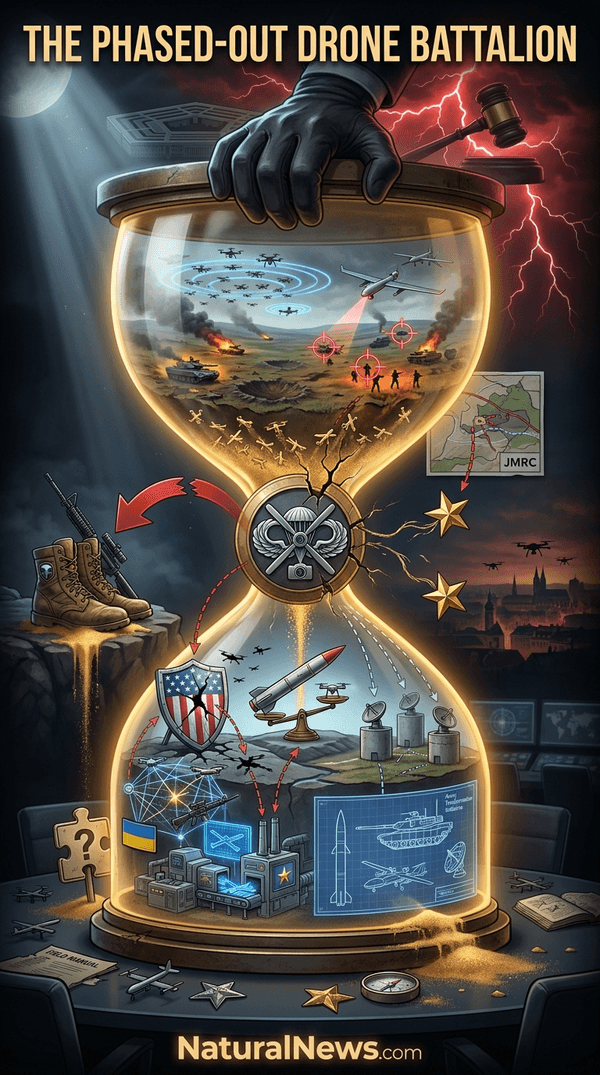
Explainer Infographic






Please contact us for more information.


