


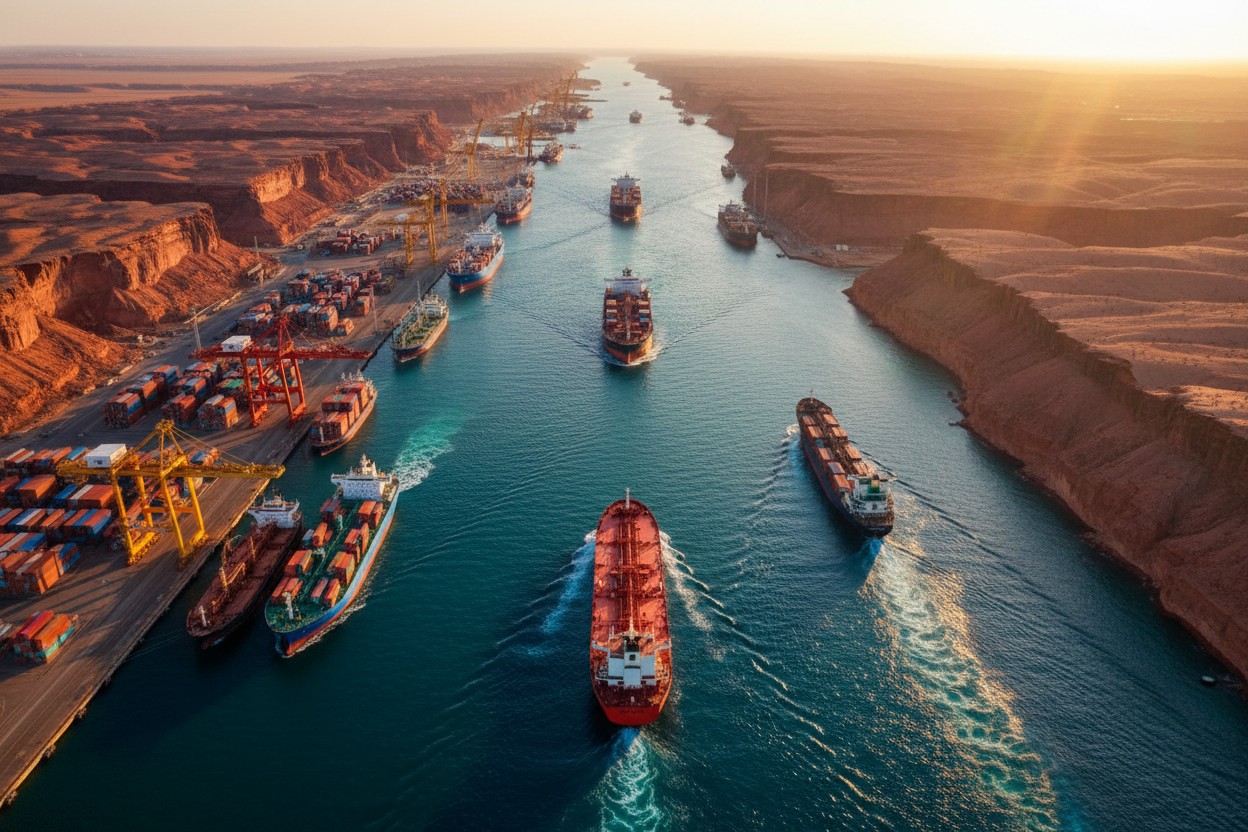
The Strait of Hormuz handles about 20 percent of global oil trade, according to NaturalNews.com [2].
Global supply-chain stress remains near its highest level since the pandemic, and any normalization could take months even if shipping traffic resumes, the report stated [1]. UBS senior international economist Pierre Lafourcade highlighted the bank's proprietary Global Supply Chain Stress Index, which showed that although pressures eased modestly in July from their highest level since the pandemic, disruptions stemming from the Hormuz chokepoint continue to strain global shipping networks.
Supply Chain Stress Index Remains Above Pre-Conflict Levels
According to UBS, the median reading of the 23-component Global Supply Chain Stress Index fell 0.4 standard deviations from June but remained 0.9 standard deviations above its pre-Iran conflict level. The average reading declined 0.3 standard deviations from June while holding 1.35 standard deviations above February levels, the report stated [1].
Lafourcade said the July data show a modest easing in pressure from the June reading, which marked the highest level of stress since the pandemic. "Markets are optimistic about some form of imminent resolution, as reflected in the ~$20/b drop in Brent since the July 23 peak, but stress in supply chains is likely to linger on far beyond any implemented accord," he said [1].
In early June, UBS had reactivated its supply-chain watch after stress across global supply chains was "rising at its fastest pace since the early pandemic," according to Zero Hedge [3].
Mixed Signals Across Shipping, Air Freight, and Delivery Times
Lafourcade said marginal relief for supply chains relative to the June peak has been recorded, though stress is likely to linger beyond any implemented accord. The divergence across components is increasing, according to UBS, with oil and gas shipping volumes in the Asia region retracing about half of the drop since the Strait closure while the global volume of other cargo shipping remained roughly the same [1].
Air-freight costs fell in July, but shipping costs increased across major indexes including Baltic, Harper Petersen, Drewry, and Freightos, according to the UBS analysis. Delivery times improved in Asia excluding China but worsened in the United States, the report stated [1].
A FreightWaves report said the Iran conflict had driven up the Asia-U.S. container rate by a staggering 276%[4].
Economic Risks From Prolonged Disruption at Hormuz
Longer disruptions through the Strait of Hormuz are expected to produce greater knock-on effects across global supply chains, according to the UBS analysis. Potential consequences include higher energy and freight costs, depleted inventories, longer delivery times, and renewed inflationary pressure, the report stated [1].
The United Nations Food and Agriculture Organization has warned that the ongoing disruption could trigger a global food price crisis within six to 12 months [5].
The International Monetary Fund has described the conflict's impact as a "major global energy supply shock" that will push up prices and force a downgrade to world economic growth, according to Managing Director Kristalina Georgieva [6]. Markets remain optimistic about a resolution, reflected in the roughly $20-per-barrel drop in Brent since July 23, but Lafourcade said supply chain stress may persist [1].
Earlier analyses documented U.S. policy commitments to protect Persian Gulf oil flows, including a 1983 National Security Decision Directive that stated the United States was ready to deter attacks on critical oil infrastructure, according to Robert Bryce [7].
Analysts have also noted that the world's dependence on Arab, Persian, and Venezuelan oil would intensify as demand rises while global supply shrinks [8].
Outlook for Hormuz Reopening and Global Trade
As of Aug. 10, no official confirmation of a final agreement between Iran and Oman had been provided, and the timeline for reopening the chokepoint remains unclear, according to reports [1].
According to FreightWaves, an interim 14-point U.S.-Iran memorandum of understanding was signed in June, and tanker traffic through the waterway was slowly resuming, though a full return to pre-war or near-pre-war energy flows could take months [9][10].
Even if shipping traffic resumes, normalization of global supply chains could take months, officials warned. Energy analysts have also advised that oil and gas supply chains may require extended recovery periods after any de-escalation, with some projecting a recovery period of up to two years [11].
Analysts continue to monitor Hormuz traffic data and price movements in crude and freight markets as indicators of the broader economic impact.
References
- Zero Hedge. "Race To Reopen Hormuz Intensifies As Global Supply Chain Stress Remains At COVID Levels". Zero Hedge. August 10, 2026.
- Belle Carter. "Strait of Hormuz Closure Sparks Global Oil Crisis, with Long-Term Price Surge Expected". NaturalNews.com. March 31, 2026.
- Zero Hedge. "Alarming Supply-Chain Stress Sends Transport Cost Soaring, Fueling Inflation Fears". Zero Hedge. June 5, 2026.
- FreightWaves. "Iran conflict drives up Asia-US container rate by 276%". FreightWaves. July 13, 2026.
- Coco Somers. "United Nations: Strait of Hormuz Disruption Could Trigger Global Food Price Crisis Within a Year". NaturalNews.com. May 21, 2026.
- Sterling Ashworth. "IMF Reports Major Energy Supply Shock, Growth Downgrade Following Middle East Conflict". NaturalNews.com. April 14, 2026.
- Robert Bryce. "Gusher of Lies: The Dangerous Delusions of Energy Independence".
- Gerald McNerney and Martin Cheek. "Clean Energy Nation".
- FreightWaves. "How the 14-Point U.S.-Iran MOU Could Reshape Global Supply Chains". FreightWaves. June 18, 2026.
- Zero Hedge. "Energy Cliff, Supply Chain Shock: The Toxic Cocktail Behind The Urgent Push For An Iran Deal". Zero Hedge. June 18, 2026.
- Patrick Lewis. "Iran's Strait of Hormuz Blockade Threatens Global Energy Catastrophe". NaturalNews.com. April 20, 2026.










Please contact us for more information.


