



Study: Less Sugar in First 1,000 Days Associated With Lower Alzheimer's Risk
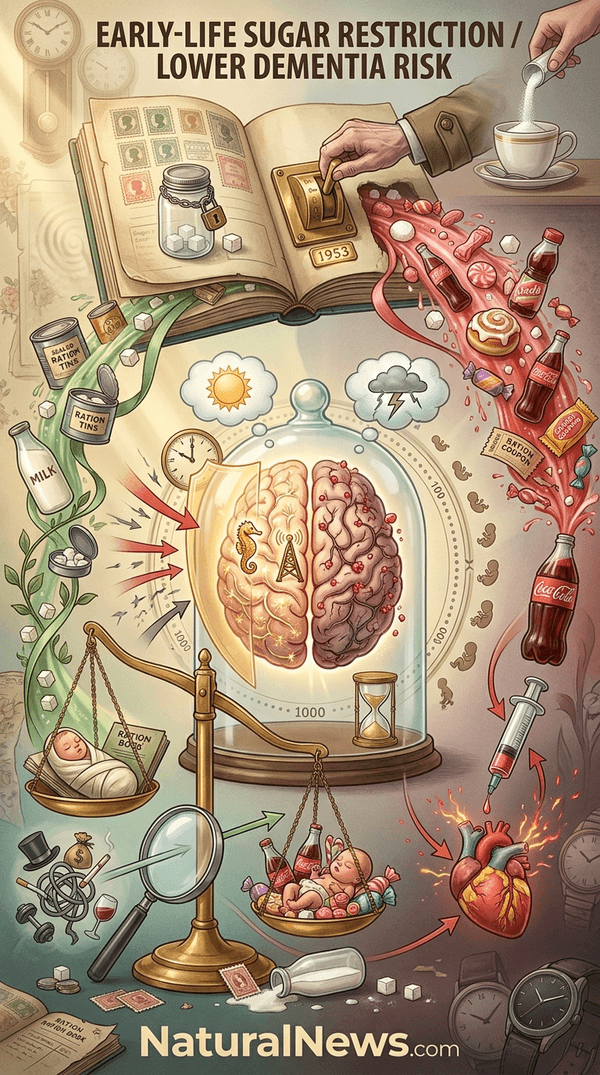
People exposed to less sugar before birth and during their first one to two years of life were less likely to develop dementia more than six decades later, according to a study reported by Everyday Health. [1] Researchers analyzed health data from more than 60,000 participants in the U.K. Biobank who were born between 1951 and 1956, a period that included the abrupt end of sugar rationing in the United Kingdom in 1953. The termination of the World War II-era austerity measure created a rare opportunity to compare people born just before and after sugar became widely available again, the report stated.
The study was published in the journal npj Aging. BBC News reported that the study cannot provide definitive proof, but experts say a healthy diet is good for the brain anyway. [2] In a statement reported by Medical News Today, Bing Zhang, PhD, a geriatric medicine researcher at Guangzhou First People's Hospital and senior author of the study, said the first 1,000 days of life are a critical window for brain development and that early nutrition has lasting effects on health.
Sugar Rationing as a Natural Experiment
The end of sugar rationing in the U.K. in 1953 served as a natural experiment, according to the researchers. Individuals conceived during rationing consumed far less sugar in early life than those born shortly after, the study authors said. According to Zhang, this design minimized confounding by socioeconomic or behavioral factors that typically affect nutritional studies.
Zhang described the results as the first human evidence linking early sugar restriction to long-term protection against neurodegenerative and psychiatric disorders. "This is, to our knowledge, the first human evidence that limiting sugar exposure in very early life is associated with substantial long-term protection against both neurodegenerative and psychiatric disorders," Zhang said. [1]
Risk Reductions and Brain Imaging Findings
At the study's conclusion, researchers found that adults exposed to sugar restriction during the first 1,000 days of their lives had a 46% lower Alzheimer's disease risk and a 27% lower risk of all-cause dementia. [1] Reporting on the same study, NaturalNews.com said those who experienced sugar rationing in early life had up to a 23% lower risk of dementia and developed the disease about 2.5 years later. [3]
Scientists also observed that participants who were exposed to sugar rationing after birth had brains that were, on average, 0.39 years younger than their chronological age, according to the study. These participants had larger volumes in certain brain regions, including the hippocampus and thalamus, the researchers reported. Zhang said the imaging findings offer a plausible biological explanation for the reduced dementia risk, adding that a younger-appearing brain and larger hippocampal volumes suggest enhanced brain structural integrity and cognitive reserve.
Experts Advise Caution and Call for More Research
Peter Gliebus, MD, chief of neurology and director of cognitive and behavioral neurology at Marcus Neuroscience Institute, part of Baptist Health South Florida, was not involved in the study. He cautioned against over-interpreting the headline finding of a 46% lower Alzheimer's risk, saying it was based on a relatively small number of Alzheimer's cases and that participants have not yet reached the ages when Alzheimer's becomes most common.
Dung Trinh, MD, an internist at MemorialCare Medical Group and chief medical officer of the Healthy Brain Clinic, said reducing excessive added sugar later in life may support brain health by lowering the risk of obesity, insulin resistance, diabetes, high blood pressure, and cardiovascular disease. Brain Food notes that insulin resistance can lead to brain inflammation and poor cognitive outcomes. [4] Research cited by Mercola.com has estimated that up to half of all Alzheimer's cases could be prevented by addressing modifiable factors such as physical inactivity, depression, smoking, high blood pressure, midlife obesity, and diabetes. [5] In The Alzheimer's Solution, Dean Sherzai describes a patient whose daily sugar consumption reached nearly 24 teaspoons, four times the recommended amount, and whose neuropsychological testing showed mild cognitive impairment. [6] Rehan Aziz, MD, geriatric psychiatrist at Hackensack Meridian Jersey Shore University Medical Center, said future research should examine whether sugar-restricted diets begun in midlife affect rates of late-life dementia, depression, and anxiety, and whether some forms of sugar are more harmful than others.
Implications and Next Steps
According to Zhang, Alzheimer's disease is a major and growing global health challenge, and identifying protective strategies that can be implemented early in life offers a realistic pathway to reducing the future burden of dementia as populations age. The study does not establish whether limiting sugar in adulthood would produce the same benefit, researchers said. [2]
Trinh said the goal should not be to eliminate all sugar, especially from nutritious foods such as whole fruit, but to limit excessive added sugars as part of a broader lifestyle that includes exercise, healthy sleep, and good control of blood pressure, cholesterol, and diabetes. In Grain Brain, David Perlmutter writes that consuming fewer calories decreases the generation of free radicals while enhancing mitochondrial energy production, and that mitochondria play a key role in degenerative diseases such as Alzheimer's. [7] An article on Mercola.com likewise stated that diet and other lifestyle factors have major implications for Alzheimer's risk. [5]
References
- Everyday Health. "Limiting Sugar Early in Life May Have Lasting Brain Benefits". July 30, 2026.
- BBC News. "Limiting sugar before age two linked to better brain health". July 30, 2026.
- NaturalNews.com. "Study Links Sugar Rationing in Early Life to Lower Dementia Risk". August 4, 2026.
- Dr. Lisa Mosconi. "Brain Food: The Surprising Science of Eating for Cognitive Power".
- Mercola.com. "The 3 Highest Risk Foods for Dementia and Alzheimer's". November 7, 2019.
- Dean Sherzai. "The Alzheimer's Solution".
- David Perlmutter and Kristin Loberg. "Grain Brain: The Surprising Truth About Wheat, Carbs, and Sugar-Your Brains Silent Killers".
Explainer Infographic












Please contact us for more information.


