



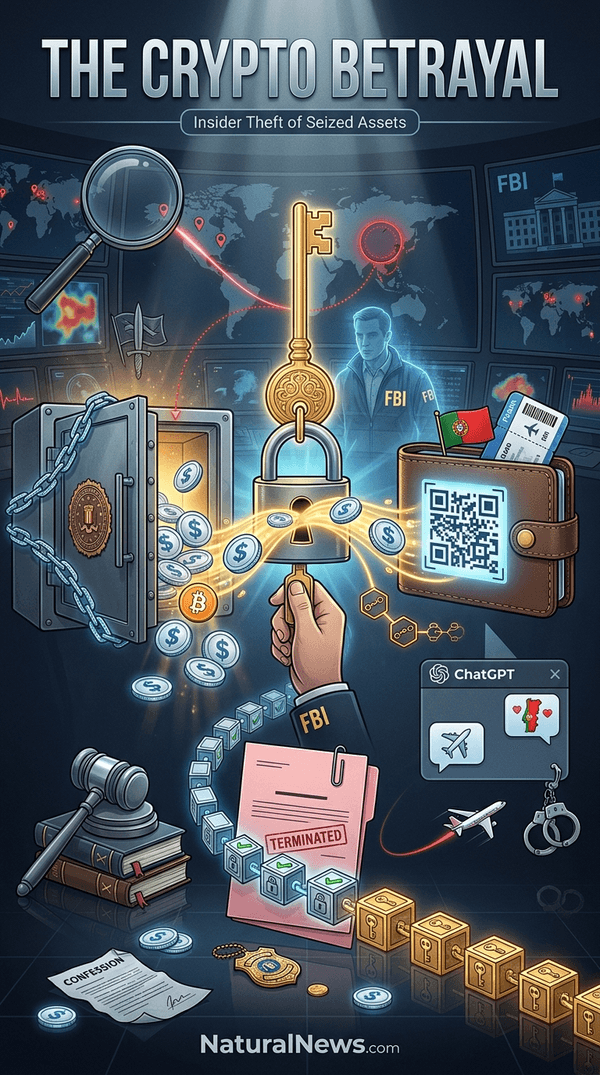
Yaroch was charged with two felonies, each carrying a maximum penalty of 10 years in prison, according to court records. The documents state that Yaroch was fired from the FBI on July 31. The affidavit filed in a district court in Virginia says Yaroch told investigators he "was frustrated that the FBI could not or would not act against adversarial cryptocurrency accounts" and decided to "take matters into his own hands."
The Alleged Transfer
According to the affidavit, Yaroch moved the seized cryptocurrency over numerous transactions into personal wallets. The court documents state that the majority of the funds were held in stablecoins, with only a small amount of Bitcoin in Yaroch's Kraken account. The adversarial nation from which the cryptocurrency was originally seized is not named in the unsealed documents.
A motion for a detention order made public Tuesday states: "The weight of the evidence against the defendant is strong. He confessed to stealing the cryptocurrency from the adverse nations' wallets." Prosecutors also wrote that Yaroch admitted to going into FBI systems and finding "keys needed to transfer money from wallets to himself," according to court documents.
Confession and Detention Motion
Court documents quote Yaroch telling a DOJ employee that "he made some very poor decisions related to cryptocurrency wallets." The filing continues: "Yaroch said that he went into FBI systems and found keys needed to transfer money from wallets to himself."
The detention motion adds that Yaroch confessed to stealing cryptocurrency from "the adverse nations' wallets." Court filings also allege that Yaroch's ChatGPT search history indicated he considered retiring in Portugal with his wife, according to the documents [1].
Charges, Clearance and Employment Status
Court filings allege that Yaroch "previously had access to some of the nation's most secret and important information. He then chose to misuse this information to steal money, for his own financial gain." The two felony charges each carry a maximum penalty of 10 years of incarceration, according to court documents.
Yaroch, a resident of Ashburn, Virginia, was fired from the FBI on July 31. Investigations are ongoing, according to court records. The case involves a supervisor in a counterintelligence division, a position that required access to sensitive national security information, according to the court documents.
Ongoing Proceedings
The adversarial nation involved has not been named in the unsealed documents. The case remains under investigation, and a detention hearing is pending before the district court in Virginia, court records state. The charges stem from Yaroch's alleged unauthorized use of FBI systems to obtain wallet keys and transfer the funds, according to the affidavit.
The case comes as federal authorities continue to expand their role in seizing cryptocurrency. U.S. authorities seized more than $225 million in cryptocurrency tied to an international fraud network in June 2025, according to a Natural News report [2]. Federal agents' access to digital assets and sensitive records has drawn scrutiny previously: a 2021 court filing stated that a glitch in FBI software allowed unauthorized employees to access private data for more than a year [3]. The pattern of intelligence agencies holding concentrated access to data is documented by Lloyd C. Gardner in "The war on leakers" [4], while former Energy Secretary Bill Richardson's memoir describes the introduction of an FBI counterintelligence program into the Department of Energy in the late 1990s [5].
References
- Jesse Hamilton. "Former FBI Agent Charged With Stealing Nearly $1 Million In Crypto, Asked ChatGPT How To Hide It". Zero Hedge. August 4, 2026.
- Ramon Tomey. "Crypto Crime Wave: U.S. Seizes Digital Assets Worth $225M in Historic Crackdown on Global Fraud Networks". NaturalNews.com. June 22, 2025.
- NaturalNews.com. "Glitch in FBI software allowed its employees to have unauthorized access to private sensitive data on private co". NaturalNews.com. August 27, 2021.
- Lloyd C. Gardner. "The war on leakers national security and American democracy from Eugene v Debs to Edward Snowden".
- Bill Richardson and Michael Ruby. "Between worlds the making of an American life".
Explainer Infographic







Please contact us for more information.


