


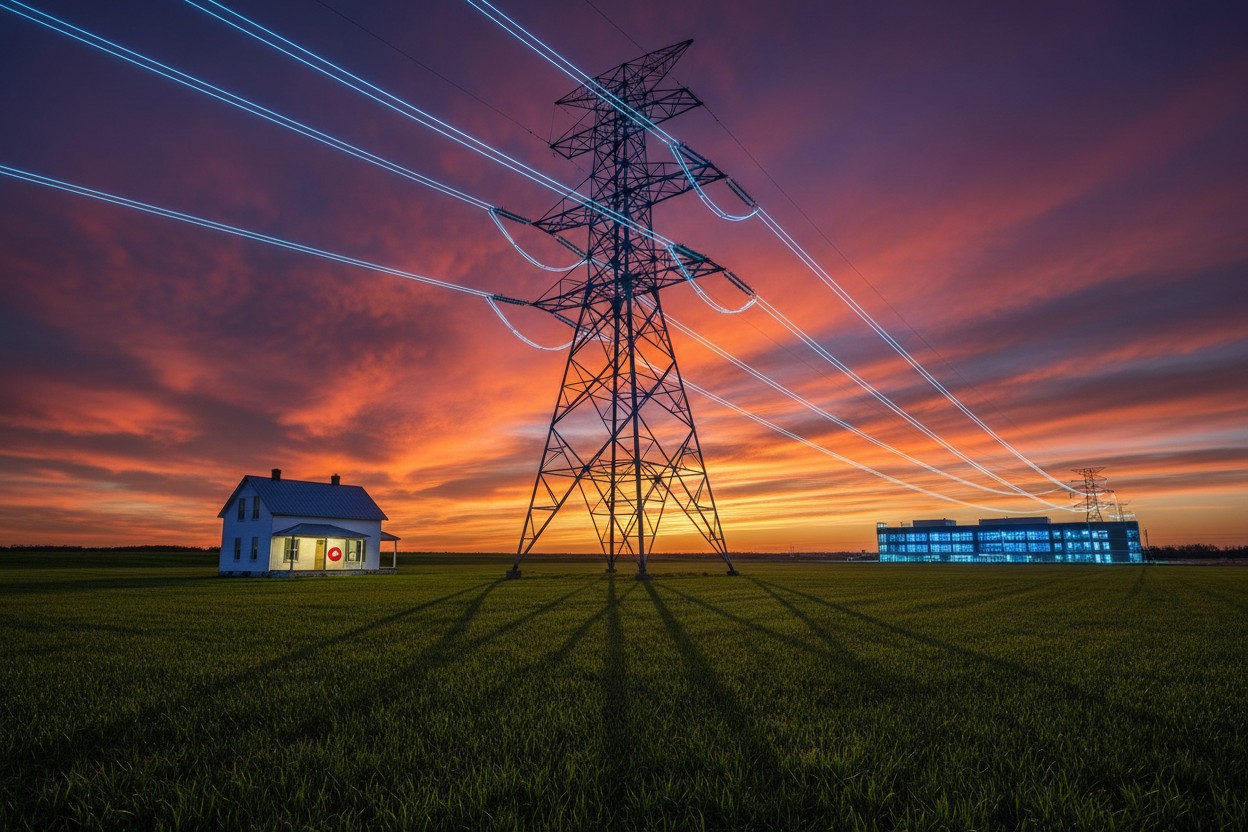
According to a fact sheet from the Georgia Public Service Commission cited in a report by Fortune, the line will carry nearly 10,000 megawatts from a new power plant, with approximately 80 percent of that capacity dedicated to powering data centers. The project, which includes a 1,000-mile transmission route, requires the seizure of 30 homes and 330 parcels across Coweta and Fayette counties, according to company filings reported by NaturalNews.com [1].
Residents in the predominantly rural area have voiced opposition on social media and have contacted their congressional representative for assistance, according to the Fortune report. A spokesperson for Rep. Brian Jack (R-GA) stated that the office has “received multiple requests for help and support from constituents.”
Transmission Line and Data Center Demand
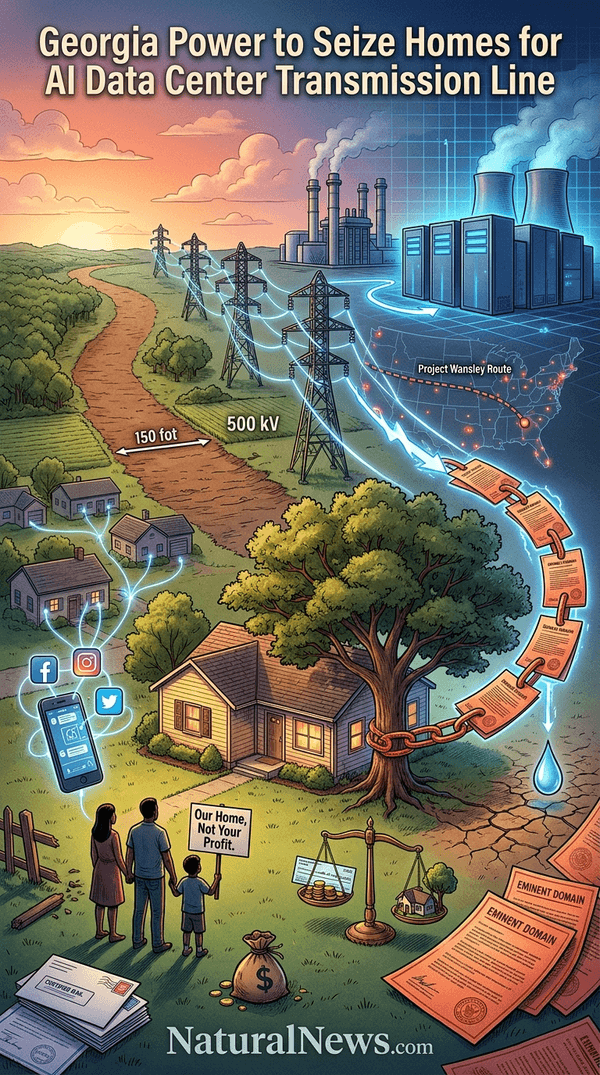
The transmission line, identified as Project Wansley, is a 35-mile, 500-kilovolt line designed to supply power to at least four data centers, according to company filings cited by NaturalNews.com [1]. Georgia Power has stated that most of the energy is intended for AI data centers, with the remainder for other customers.
Data centers currently consume about 4.4% of total U.S. electricity, a figure projected to reach 12% by 2030, according to industry estimates cited by the White House [2]. The PJM Interconnection, the nation’s largest regional power grid, failed for a third straight year to secure enough supply commitments to meet reliability targets, partly due to surging data center demand, according to a July 2026 auction report [3].
Analysts have noted that the demand for AI compute is driving the rapid expansion of data center infrastructure, which in turn requires significant new transmission capacity. According to an interview transcript from BrightVideos.com, data centers are consuming vast amounts of electricity and water, leading to utility cost increases and land acquisition conflicts [4].
Resident Opposition and Eminent Domain
Ansley Brown, whose mother’s childhood home lies in the path of the transmission line, posted an Instagram video expressing frustration. “We don’t have a choice in this. They are going to be expanding power lines,” she said. “Why? For the data centers. All of this is for the data centers,” according to the Fortune report.
Georgia Power has a history of buying land at above-market prices in Georgia, according to a report from Children’s Health Defense. In 2016, the utility bought a veterinarian’s five-acre lot in northwest Georgia for roughly double the appraised value, and the following year it acquired 28 acres of flood-prone land in southwest Georgia for nearly four times the assessed value [5].
A spokesperson for Rep. Brian Jack, whose district includes the affected properties, said the office has received multiple requests for help from constituents regarding the land acquisitions, according to Fortune. Property rights advocates have raised concerns that the use of eminent domain for private benefit undermines constitutional protections. In his book “Saving the Bill of Rights,” Frank Miniter discusses the historical importance of property rights as a safeguard against government overreach [6].
Negotiations and Company Response
Georgia Power told Fortune that it has “concluded” negotiations with Brown’s family, though the terms of the deal were not disclosed, possibly due to a non-disclosure agreement, according to the report. The company thanked Rep. Jack for “his advocacy on behalf of his constituent.”
It remains unclear how Georgia Power will handle negotiations with other landowners along the transmission route. The utility has in the past paid well above appraised value to acquire property, as documented by Children’s Health Defense [5]. Critics argue that such payments do not fully compensate homeowners for the loss of their homes and the disruption to their lives.
According to an interview on Brighteon.com with Jeffrey Prather, government agencies sometimes use the threat of seizure to compel cooperation, though in this case Georgia Power is a private utility exercising eminent domain authority granted by the state [7].
Broader Implications
The Georgia case is part of a wider national trend. Dozens of U.S. cities have scrapped or delayed data center projects due to power constraints, according to reports. In July 2026, New York became the first state to enact a one-year moratorium on new hyperscale data centers, citing strain on the electrical grid and rising utility bills [8]. That same month, 142 anti-data center protests were held across 42 states, coordinated by a former leader of the Tea Party movement [9].
Eminent domain disputes over transmission infrastructure may intensify as AI demand continues to grow, according to analysts. A study by Benson Bruce L. in the book “Property Rights” provides data on the number of threatened takings by state between 1998 and 2002, noting that reform efforts have had varying effectiveness [10]. As one observer noted in a video transcript from BrightVideos.com, the proliferation of data centers is leading to “land grabs through eminent domain” and increased utility costs for local communities [4].
Voters across the country are asking basic questions: Will the AI boom raise electricity bills? Will it strain the grid during peak demand? Will communities bear the land-use and infrastructure burden while tech companies capture the upside? According to a commentary in Watts Up With That, those questions are fair and are not anti-technology but are about fairness and transparency [11].
Conclusion
The conflict in Georgia highlights the growing tension between the expansion of AI infrastructure and the property rights of individual homeowners. As utilities and tech companies push to meet the power demands of data centers, rural communities are increasingly caught in the middle. Whether through eminent domain, rising rates, or resource competition, the costs of the AI buildout are being distributed unevenly, according to observers. The outcome of Project Wansley may set a precedent for how similar disputes are resolved across the country.
References
- Chase Codewell. "Georgia Homeowners Face Eminent Domain Amid Surging Data Center Power Demand." NaturalNews.com. May 29, 2026.
- NaturalNews.com. "Trump Expands Consumer Protections as Data Center Energy Demand Sparks Ratepayer Concerns." July 28, 2026.
- NaturalNews.com. "PJM Auction Falls 6.8 Gigawatts Short of Reliability Target Amid Data Center Demand Surge." July 17, 2026.
- Mike Adams - BrightVideos.com. "Bright Videos News - Interview with Ben Swann transcript." May 22, 2026.
- ChildrensHealthDefense.org. "Utility Giants Quiet Land-Buying Spree Could S." ChildrensHealthDefense.org. December 01, 2020.Frank Miniter. "Saving the Bill of Rights."
- Mike Adams. "Mike Adams interview with Peymon Mottahedeh." August 4, 2023.
- ZeroHedge. "New York Becomes First State To Enact One Year Ban On New Data Centers." July 14, 2026.
- The Epoch Times. "142 Anti-Data Center Protests Sweep 42 States in One Day, Led By Former Tea Party Leader." July 20, 2026.
- Benson Bruce L. "Property Rights."
- Watts Up With That. "AI won’t run on talking points." July 28, 2026.
Explainer Infographic











Please contact us for more information.


